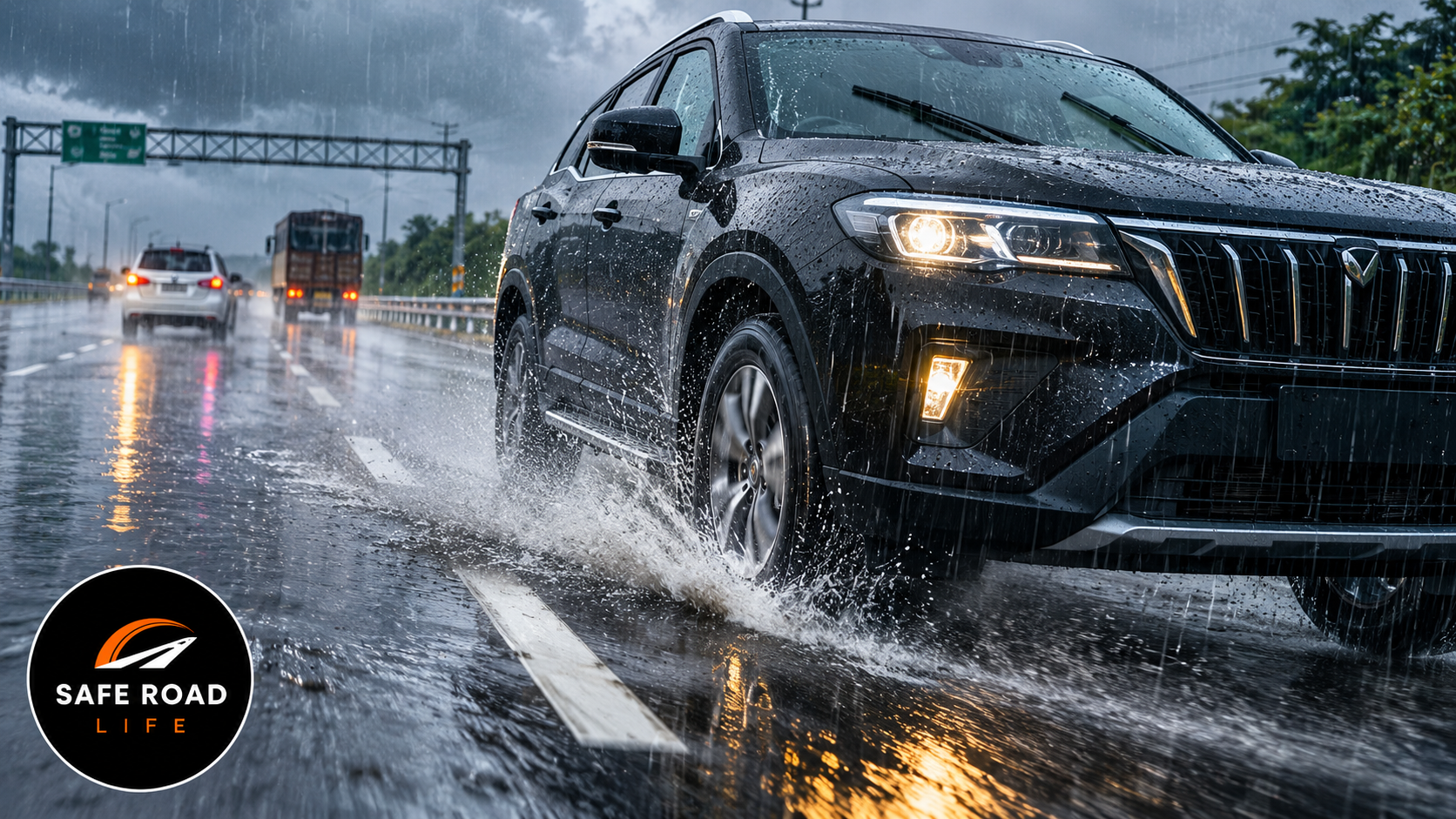
The road looks wet. The tyres look fine. Then, without warning, the steering suddenly feels light. Your vehicle may be aquaplaning — a dangerous loss of tyre contact with the road that can leave you with very little control for a few critical seconds.
Rain does not have to be deep enough to flood a road to create danger. When water builds up between the tyres and the road surface, the tyres can ride on a thin film of water instead of gripping the asphalt. This is also called hydroplaning.
What exactly is aquaplaning?
Aquaplaning happens when a tyre cannot clear water quickly enough from its contact patch. Water pressure can then lift the tyre away from the road, reducing steering response, braking ability and traction. The risk depends on several factors — including vehicle speed, water depth, tyre tread and condition, tyre pressure, and the road surface. There is no single speed at which every vehicle will aquaplane.
That is why simply having new tyres or driving an SUV does not make you immune. The safest response is to reduce speed whenever the road is wet and avoid standing water wherever it is safe to do so.
9 aquaplaning warning signs and safety rules
1. The steering suddenly feels unusually light
If the steering wheel feels less responsive than usual, do not make a sharp correction. A sudden loss of steering feel on a wet road can be a warning that the front tyres have lost grip. Keep your movements smooth and avoid abrupt lane changes.
2. The engine revs rise without a matching increase in speed
If the driven tyres lose traction, the engine may sound louder or the revs may rise while the vehicle does not accelerate as expected. Treat this as a warning, not an invitation to press the accelerator harder.
3. The vehicle begins to drift or fishtail
A rear end that moves from side to side can indicate reduced grip. Avoid fighting the vehicle with sudden steering inputs. Look where you want to travel and keep the steering controlled.
4. Slow down before reaching standing water
Reduce speed smoothly as soon as rain begins or you see pooled water, shiny patches, wheel spray or water-filled ruts. Do not wait until the vehicle starts sliding. Keep a larger following distance because wet roads increase stopping difficulty.
5. Check tyre tread and pressure regularly
Tyre grooves help channel water away from the contact patch. Worn, damaged or incorrectly inflated tyres can reduce wet-road performance. Check pressure when tyres are cold and follow the vehicle manufacturer’s recommended figures. Inspect tread wear indicators and replace tyres when they reach the manufacturer’s or applicable legal replacement limit.
6. Avoid sudden braking, acceleration and steering
Hard braking or a sharp steering movement can make a loss of grip worse. If aquaplaning begins, stay calm, gently ease off the accelerator and keep the steering steady. Avoid stamping on the brakes. Allow the vehicle to slow until the tyres regain contact with the road. Once control returns, reduce speed further and continue only when it is safe.
7. Switch off cruise control in heavy rain
In heavy rain or on waterlogged sections, do not rely on cruise control to manage speed. Stay fully engaged with the road and control the accelerator yourself. Follow your vehicle handbook for any model-specific guidance.
8. Do not follow another vehicle too closely
Large vehicles can throw water spray across your windscreen and reduce visibility. Keep a generous gap from cars, buses and trucks. Do not copy another driver’s speed through standing water; their tyres, vehicle load and road position may be different from yours.
9. Never confuse aquaplaning with safe floodwater crossing
Aquaplaning is loss of tyre grip over water; floodwater can hide potholes, open drains, damaged road edges and strong currents. Never assume a flooded road is safe because another vehicle has crossed it. Turn around and choose another route when water depth or road condition is uncertain.
What should you do if your vehicle starts aquaplaning?
- Stay calm and look ahead towards a safe path.
- Gently ease off the accelerator; do not accelerate to regain grip.
- Keep the steering wheel steady and avoid sudden turns.
- Do not brake hard while the tyres are sliding over water.
- Wait for the tyres to regain contact and steering response.
- Once control returns, slow down further and find a safe place to stop if you need to check the tyres or conditions.
These are general precautions. Vehicle systems differ, so always follow the owner’s manual and local road rules. If conditions are severe, delay the journey or stop somewhere safe.
Rainy-road safety checklist before you start
- Tyres inspected for tread wear, damage and correct pressure
- Wipers and washers working properly
- Headlights, tail-lights and indicators working
- Speed reduced for visibility and road conditions
- Extra following distance maintained
- Route checked for waterlogging and closures
- No attempt to drive through uncertain floodwater
Useful SafeRoadLife guides
Prepare for other wet-weather hazards with our guides: Flooded Road Ahead? Turn Back — 8 Rules Every Driver Must Know, Tyre Burst on a Highway? 7 Steps to Stay in Control, and Headlight Glare at Night? 7 Rules to Protect Yourself.
Learn from trusted road-safety guidance
For further reading, see National Highways’ advice on driving in rain and aquaplaning, the California Driver Handbook’s hydroplaning guidance, and Road Safety Scotland’s advice for driving in different conditions.
A wet road can take away your grip in seconds. Your safest defence begins before the tyres lose contact: slow down, check your tyres and leave room to react.
DRIVE SAFE. STAY SAFE.
@SafeRoadLife
About the Author