A loud bang. A sudden pull to one side. The steering wheel starts shaking. What would you do?
A tyre burst while driving at highway speed is one of the most frightening experiences a driver can face.
Your first instinct may be to slam on the brakes. But that reaction can make the vehicle harder to control.
A tyre failure does not always have to become a major road accident. Knowing the correct response, maintaining your tyres and avoiding panic can make an important difference.
Here are seven essential steps every driver should remember.
What happens when a tyre suddenly bursts?
A tyre blowout is a rapid loss of air pressure. The vehicle may pull towards one side, the steering may vibrate, or the rear of the vehicle may begin to feel unstable.
The effect depends on which tyre fails, vehicle design, speed and road conditions.
The most important priority is to maintain control of the vehicle.
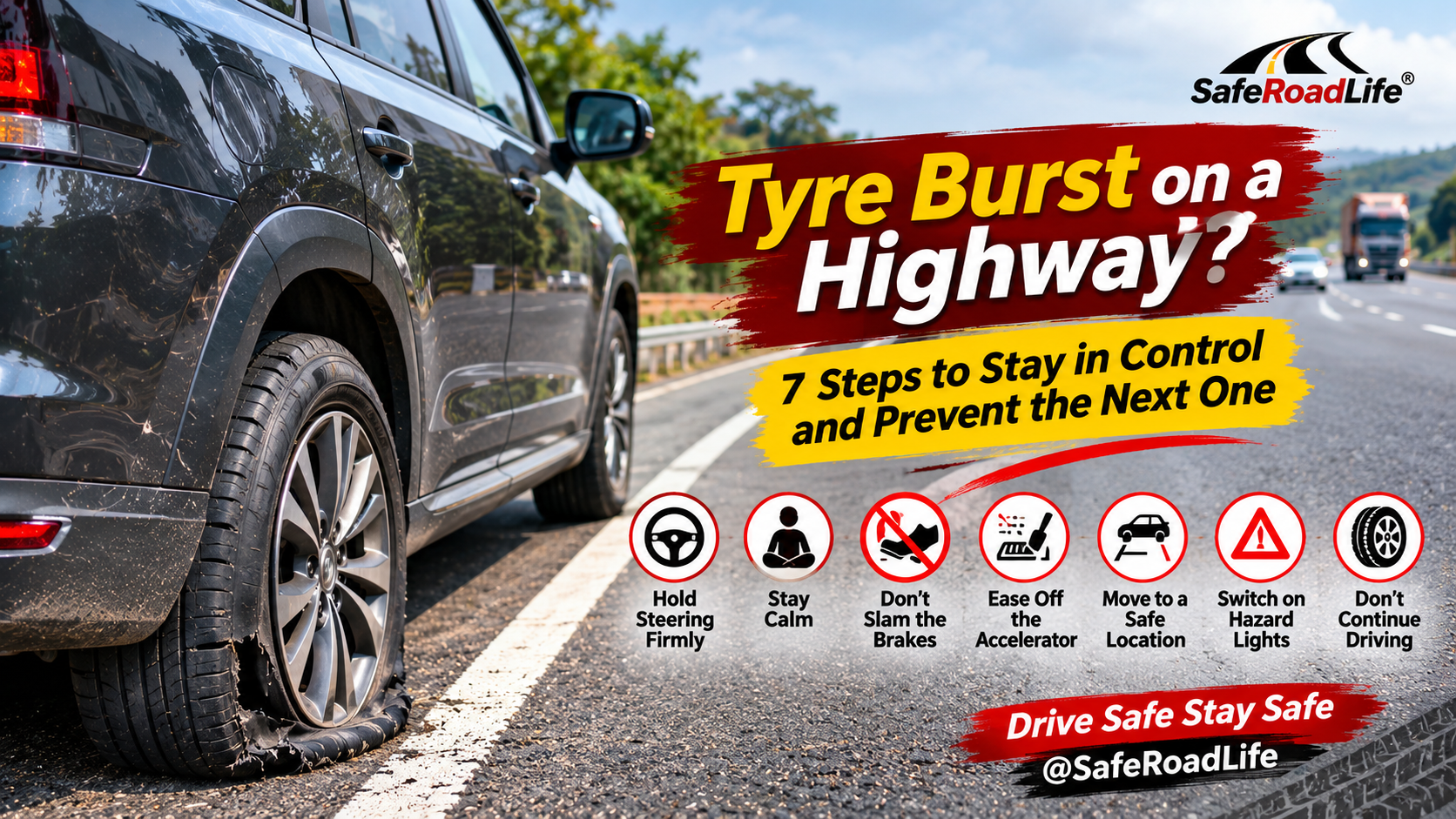
7 steps to follow during a tyre burst
1. Hold the steering wheel firmly
Keep both hands on the steering wheel. A sudden tyre failure can change the vehicle’s direction unexpectedly.
Stay focused and make smooth steering corrections.
2. Never panic or make sudden movements
Do not jerk the steering wheel or attempt a sharp lane change.
Keep the vehicle as straight and stable as possible.
3. Do not slam on the brakes
This is one of the most important lessons.
Sudden braking can make an unstable vehicle even harder to control.
Follow the gradual deceleration technique recommended by vehicle safety guidance.
4. Ease off the accelerator gradually
Avoid abruptly removing your foot from the accelerator.
Maintain speed briefly if necessary and safe while stabilising the vehicle, then gradually reduce acceleration.
5. Move towards a safe stopping location
Once the vehicle is stable and slowing, check traffic and use your indicators.
Move towards a safe shoulder, emergency bay or other suitable stopping location when it is safe to do so.
6. Stop safely and switch on hazard lights
Once safely stopped away from moving traffic, activate hazard lights.
Keep passengers away from the carriageway. Use roadside assistance rather than attempting a tyre change in an exposed or dangerous location.
7. Never continue driving on a damaged tyre
A damaged tyre can cause further vehicle damage and loss of control.
Arrange professional inspection and replacement before continuing your journey.
Do’s: Prevent tyre failure before your journey
- Check tyre pressure at least every two weeks.
- Follow the vehicle manufacturer’s recommended pressure.
- Check pressure when tyres are cold.
- Inspect the spare tyre as well.
- Look for cuts, cracks, bulges and uneven tread wear.
- Check tyre condition before long highway journeys.
- Maintain correct wheel alignment and balancing.
- Follow the vehicle’s permitted passenger and luggage load.
Don’ts: Dangerous tyre-related mistakes
- Don’t drive with visibly underinflated tyres.
- Don’t ignore repeated pressure loss.
- Don’t overload your vehicle.
- Don’t ignore cracks, bulges or damaged sidewalls.
- Don’t exceed the tyre’s specified load and speed ratings.
- Don’t use a damaged tyre simply because it still holds some air.
- Don’t check tyre pressure only by looking at the tyre.
- Don’t attempt a roadside tyre change beside moving traffic.
Why proper tyre maintenance matters
1. Better vehicle control: Correct pressure helps tyres perform as designed.
2. Improved braking: Proper tread and tyre condition support traction.
3. Lower fuel consumption: Correct inflation can reduce unnecessary rolling resistance.
4. Longer tyre life: Regular inspection helps identify uneven wear and damage early.
5. Safer highway journeys: Preventive checks reduce avoidable tyre-related risks.
The two-minute tyre inspection before a long journey
Before leaving home, check:
- ☐ Tyre pressure
- ☐ Visible cuts and cracks
- ☐ Sidewall bulges
- ☐ Tread wear indicators
- ☐ Spare tyre condition
- ☐ Vehicle load
- ☐ Wheel alignment concerns or unusual vibration
Remember: a tyre that looks normal may still be underinflated. Use a reliable pressure gauge.
A message every driver should remember
Your tyres are the only part of your vehicle designed to maintain contact with the road.
Never treat tyre maintenance as an optional activity.
A few minutes of inspection before a long journey can help prevent avoidable trouble on the highway.
Share this information with your family, friends, professional drivers and everyone who travels by road.
Drive Safe Stay Safe
@SafeRoadLife
Sources and further reading
- NHTSA – Tyre Safety and What to Do During a Blowout
- Automotive Tyre Manufacturers’ Association – Indian Tyre Safety Poster 2026
- New Zealand Transport Agency – Handling Driving Emergencies
- Mahindra Vehicle Owner’s Manual – Tyre Pressure and Inspection
About the Author