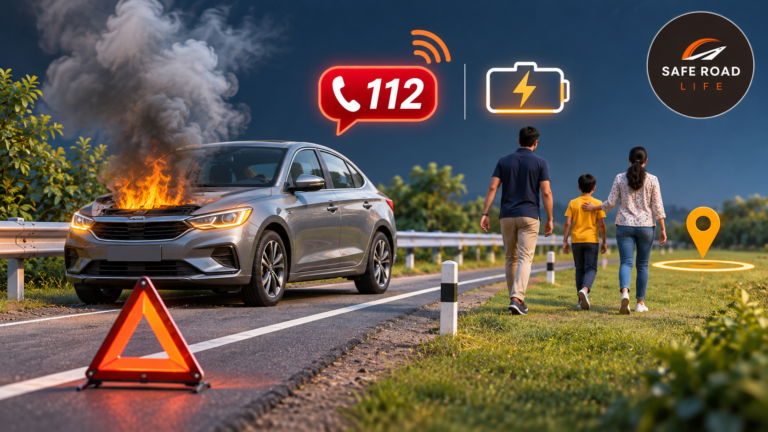
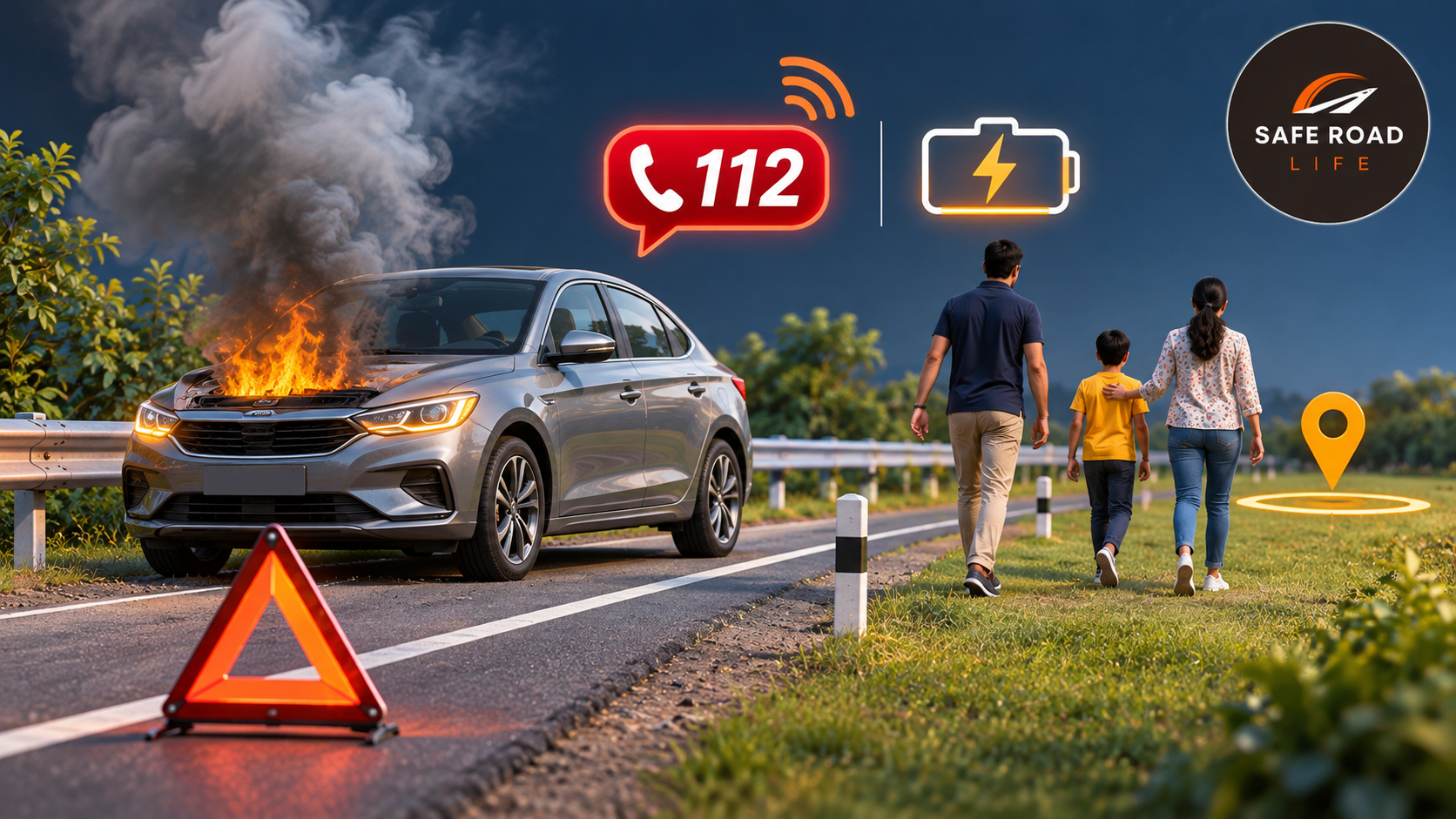
You notice smoke near the bonnet. There is a burning smell inside the cabin. A warning light appears—or a driver behind you starts flashing their headlights. What should you do first?
A vehicle fire can develop quickly. The most important priority is not to save the car, luggage or personal belongings. It is to get every person away from the vehicle and out of danger.
Whether you drive a petrol, diesel, CNG, hybrid or electric vehicle, the first response should be calm, fast and safety-focused. Here are eight steps every driver and passenger should know.
Warning signs that should never be ignored
Watch for smoke from the bonnet, dashboard, wheel area or underbody; a burning-plastic or fuel-like smell; visible sparks or flames; unusual heat; or sudden electrical warnings. These signs do not always mean a fire has started, but they should never be ignored. Do not open the bonnet to investigate smoke or try to locate the source while inside the vehicle.
8 steps to follow if your vehicle catches fire
1. Stay calm and stop at the nearest safe place
Signal and move out of the live traffic lane as soon as it is safe. Choose an open stopping area away from other vehicles, buildings, fuel pumps, dry grass or anything that could add to the danger. Do not make a sudden manoeuvre that creates another crash. If the vehicle is already surrounded by smoke or flames, prioritise getting out rather than trying to move it further.
2. Switch off the vehicle
Once stopped, switch off the engine or vehicle using the normal control if it is safe to do so. Apply the parking brake only if it does not delay evacuation. Do not restart the vehicle, even if the smoke appears to stop.
3. Get everyone out immediately
Tell every occupant to leave at once. Help children, older passengers and anyone who needs assistance, but do not delay to collect handbags, phones, documents or shopping. Move away from the vehicle and keep everyone together in a safer place.
4. Move well away from the vehicle and traffic
Move at least 30 metres away where possible, and farther if the fire is spreading, there is heavy smoke or emergency personnel instruct you to move. Stay well clear of traffic and move upwind of smoke or fumes when you can do so safely. Do not stand beside the vehicle to record a video or take photographs.
5. Do not open the bonnet or boot
If you suspect fire under the bonnet or in the boot, do not open it. Opening a compartment can allow more air into the fire and expose you to flames, heat and smoke. Do not crawl underneath the vehicle or touch burning, leaking or damaged components.
6. Do not try to fight a vehicle fire yourself
Leave firefighting to trained emergency personnel. A vehicle can contain fuel, pressurised systems, electrical wiring and other hazardous materials. Even a fire that appears small can spread or flare up. Do not risk getting close to use a portable extinguisher; your safe exit and distance from the vehicle come first.
7. Call emergency services and give clear information
In India, call 112 for integrated emergency response or 101 for the fire service. Tell the operator the exact location, direction of travel, vehicle type, number of people who were inside and whether anyone is injured. Clearly state whether the vehicle is an EV, hybrid or CNG vehicle so responders can prepare appropriately. Follow the operator’s instructions.
8. Keep everyone away until emergency crews declare it safe
Never return to the vehicle to retrieve property or move it yourself. Keep bystanders away and leave access clear for fire engines and ambulances. Do not restart, recharge, refuel or arrange an ordinary tow until emergency responders have assessed the vehicle and advised what recovery method is safe.
Special warning for electric and CNG vehicles
Electric and hybrid vehicles: A damaged high-voltage battery can present electric-shock, toxic-gas and fire hazards. Do not touch orange high-voltage cables, battery parts, exposed wiring or leaking fluids. A battery fire may re-ignite or continue developing after visible flames reduce. Tell the emergency operator and fire crew that the vehicle is electric or hybrid, then follow their directions.
CNG vehicles: Tell responders immediately that the vehicle uses CNG. Pressurised gas systems and cylinders require specialist handling. Do not attempt to operate valves, disconnect pipes or inspect a cylinder yourself. Move away and let trained responders manage the incident.
Do’s: Reduce the risk of a vehicle fire
- Follow the manufacturer’s servicing schedule and use trained technicians.
- Get fuel smells, leaks, overheating and electrical warning signs checked promptly.
- Use vehicle-approved electrical accessories and professionally installed wiring.
- Keep combustible materials away from hot engine and exhaust components.
- Know how to switch off your vehicle and open its doors in an emergency.
- Make sure passengers know the nearest safe exit and what to do if told to evacuate.
- Keep emergency numbers accessible and know your route or location markers on highways.
Don’ts: Dangerous mistakes during a vehicle fire
- Don’t continue driving in the hope that smoke or a burning smell will disappear.
- Don’t open the bonnet or boot when fire may be inside.
- Don’t try to fight the fire or get close for a video.
- Don’t return to collect valuables, documents or a phone.
- Don’t touch high-voltage EV components, damaged batteries or leaking fluids.
- Don’t handle CNG cylinders, valves or fuel lines yourself.
- Don’t restart or recharge the vehicle after a fire warning.
Why these actions matter
More time to escape: Early evacuation reduces the chance of occupants becoming trapped as a fire spreads.
Less exposure to smoke and heat: Moving away protects people from flames, fumes and possible flare-ups.
Better emergency response: Clear information about the vehicle’s fuel type and location helps responders plan their approach.
Safer recovery: Waiting for specialist assessment reduces the risk of re-ignition, electrical injury or unsafe towing.
The 30-second vehicle-fire memory check
- ☐ Stop safely away from live traffic if possible
- ☐ Switch off the vehicle if safe
- ☐ Get every occupant out
- ☐ Move well away from the vehicle and smoke
- ☐ Do not open the bonnet or try to fight the fire
- ☐ Call 112 or 101 in India
- ☐ Tell responders if the vehicle is EV, hybrid or CNG
Remember: A vehicle can be replaced. A life cannot. When smoke or fire appears, do not gamble with a few extra seconds to save property. Evacuate, move away and let trained emergency teams take control.
Share this safety guide with your family, friends, drivers and fleet teams. Everyone who travels by road should know what to do before an emergency happens.
Drive Safe Stay Safe
@SafeRoadLife
Sources and further reading
- U.S. Fire Administration – Vehicle Fire Safety
- Government of India – Emergency Response Support System (112)
- National Portal of India – Emergency Helpline Numbers
- NHTSA – Electric and Hybrid Vehicle Safety
- UK Government – Recovery Operators: Working with Electric Vehicles
About the Author