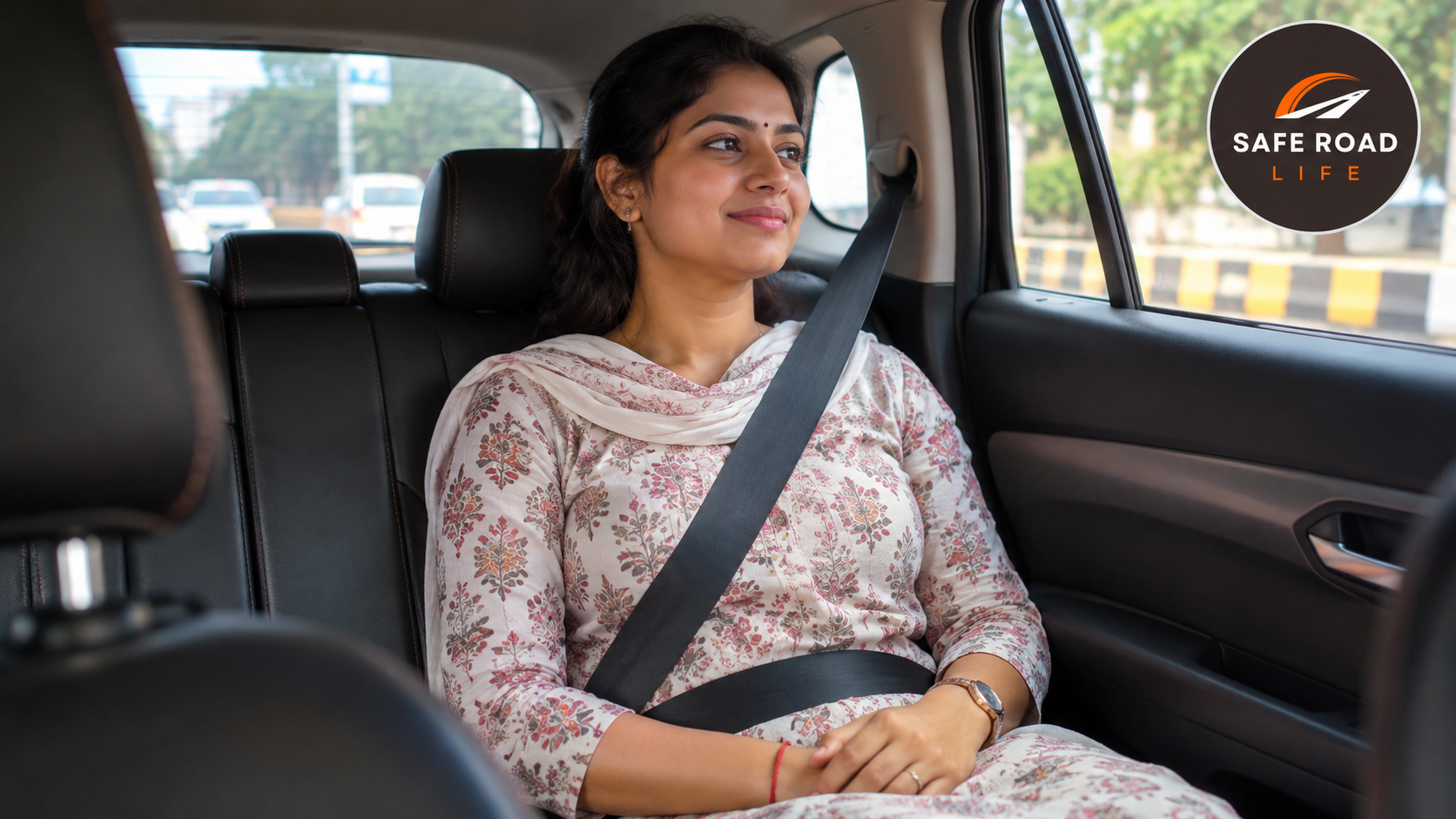
The front seat is not the only place where a seat belt matters. The back seat is not a safety zone—and an unrestrained passenger can become a danger to everyone inside the vehicle.
Many passengers buckle up in the front but treat the rear seat differently. They may believe a short city trip is harmless, that a low-speed collision cannot cause serious injury, or that sitting behind a seat protects them. Physics does not make those exceptions. When a vehicle stops suddenly, an unrestrained person keeps moving until something stops them.
Why the rear seat still needs a seat belt
A seat belt helps keep an occupant inside the vehicle, reduces the chance of being thrown against the interior, and allows the body to slow down with the vehicle as its structure absorbs crash energy. The Insurance Institute for Highway Safety (IIHS) explains that an unbelted rear passenger can also injure people in front during a crash. Its review cites research showing that an unbelted occupant can increase injury or death risk for other people in the vehicle.
In the United States, the National Highway Traffic Safety Administration (NHTSA) reports that nearly 60% of back-seat passengers killed in crashes in 2024 were not wearing seat belts, based on cases where belt-use status was known. The exact figures vary by country, but the safety principle is universal: every occupant needs an appropriate restraint on every journey.
9 rear-seat seat-belt rules every passenger should follow
1. Buckle up before the vehicle moves
Do not wait until the car reaches the main road. Fasten your belt before the driver starts moving. A crash can happen in a parking area, at a junction or just a few metres from home.
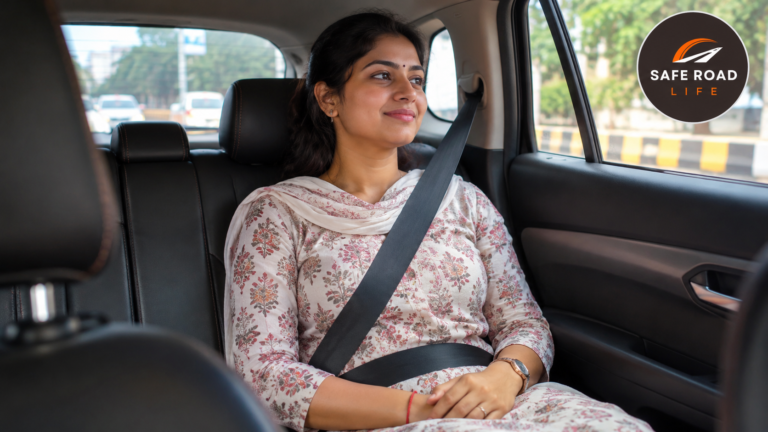
2. Wear the belt across your body—not under your arm
The lap portion should sit low and snug across the hips or upper thighs. The shoulder portion should cross the centre of the chest and shoulder. Never tuck the shoulder belt behind your back or under your arm; doing so can allow dangerous movement and concentrate crash forces on vulnerable areas.
3. Never share one seat belt
One belt is designed for one occupant. Two people sharing a belt—or an adult holding a child while belted—does not provide proper protection. Use the correct seating position and restraint for each person.
4. Do not let a child use an adult belt before it fits
Children who are too small for an adult belt need an age- and size-appropriate child restraint or booster. The belt must fit correctly, with the lap section low on the hips and the shoulder section across the chest. Follow the child-seat and vehicle manufacturers’ instructions and the laws where you are travelling.
5. Keep the belt flat and untwisted
A twisted, trapped or badly routed belt may not distribute crash forces as intended. Pull it out smoothly, check that it lies flat against your body, and make sure the buckle clicks securely into place.
6. Sit upright; do not lie across the seat
Reclining too far, lying down or putting your feet on the seat can move the belt away from the strong parts of your body. Sit back against the seat, keep your hips in position and use the belt as designed.
7. Do not place heavy luggage beside or on top of passengers
Loose bags, tools and other objects can become dangerous projectiles during sudden braking or a collision. Secure luggage in the boot or an appropriate cargo area. Never let an item obstruct a belt, buckle or passenger’s seating position.
8. Check the belt and buckle if they do not work properly
A belt that will not retract, a buckle that will not latch, frayed webbing or a damaged anchor needs professional inspection. Do not tie, clip or modify a seat belt to make it work. Have the restraint repaired or replaced according to the vehicle manufacturer’s guidance.
9. Make every passenger buckle up—including in taxis and ride-hailing cars
Do not assume a professional driver, a modern vehicle or a short journey makes the trip risk-free. Before the car moves, check that every passenger has a usable seat belt and is wearing it correctly. If a seating position has no suitable restraint, do not carry a passenger there.
Three common myths that put rear passengers at risk
- “I am sitting behind the driver, so I am protected.” The seat in front is not a substitute for a restraint. An unbelted passenger can strike the seat or another occupant.
- “It is only a five-minute drive.” Distance does not determine whether a crash can happen. Buckle up from the first metre.
- “The airbag will protect me.” Airbags are designed to work with seat belts, not replace them. Correct restraint use remains essential.
A simple family rule: the car does not move until everyone is buckled
Drivers and vehicle owners can make this a non-negotiable habit. Check the rear seats before departure, teach children to buckle up with adult supervision, and politely remind guests or colleagues. Fleet operators should include rear-seat belt checks in passenger briefings and vehicle-safety inspections.
For India, follow the applicable seat-belt requirements under the Motor Vehicles Act and current rules, along with any state or local directions. Requirements differ across countries, so check local law when travelling internationally. Regardless of the legal minimum, the safest practice is straightforward: every occupant, in every seating row, wears a correctly fitted seat belt.
Frequently asked questions
Do rear-seat passengers need to wear seat belts?
Yes. Rear-seat passengers should wear an available, correctly fitted seat belt on every trip. Legal requirements vary by location, but the safety benefit applies in every seating row.
Can an unbelted rear passenger injure someone in the front seat?
Yes. In a crash, an unrestrained rear passenger can move forward and strike a front-seat occupant. Seat belts help protect both the person wearing them and others in the vehicle.
Should I wear a seat belt in the back of a taxi?
Yes. Use the rear seat belt in taxis and ride-hailing vehicles just as you would in a private car. If the belt is missing or defective, request another vehicle or a safe alternative.
How should a rear seat belt fit?
The lap belt should lie low and snug across the hips or upper thighs. The shoulder belt should cross the centre of the chest and shoulder. It should not be tucked under the arm or placed behind the back.
Trusted safety references
- NHTSA – Seat Belt Safety and Back-Seat Guidance
- Insurance Institute for Highway Safety – Seat Belts
- World Health Organization – Road Traffic Injuries
One unbuckled passenger can put everyone at risk. Make the back seat a safe seat—every time.
DRIVE SAFE. STAY SAFE.
@SafeRoadLife
About the Author