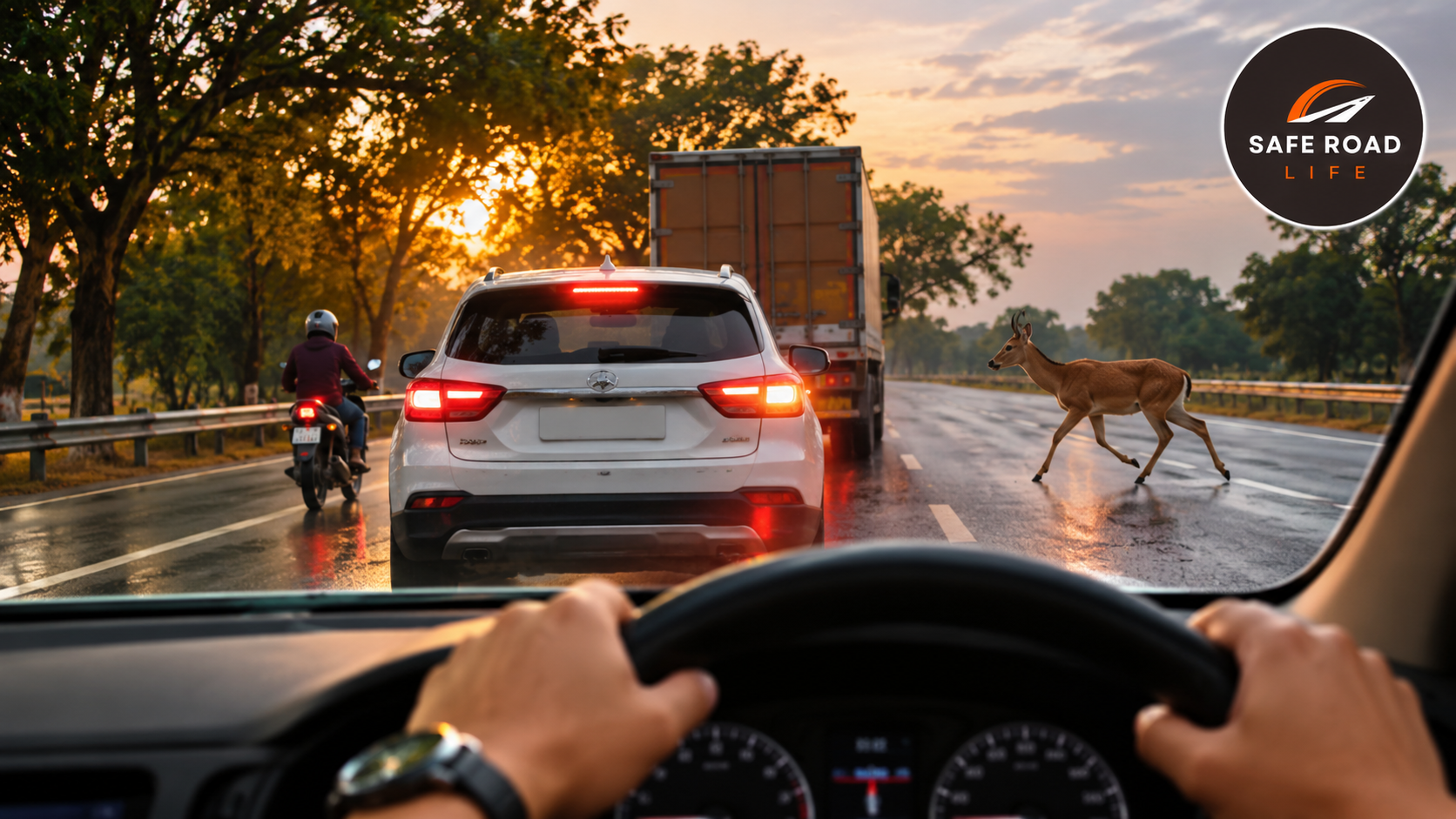
A crash rarely begins at the moment of impact. Often, the danger has been building for seconds: a driver approaches too fast, looks at a phone, follows too closely, misses a warning sign or assumes another road user will move. The final impact may be sudden. The decisions that could have prevented it usually came earlier.
That is the moment road safety must focus on: the moment before the crash. Across countries, road layouts and vehicle types, safer journeys depend on decisions that give people more time, more space and more protection.
The World Health Organization estimates that approximately 1.16 million people die in road traffic crashes every year, while millions more are injured. Road traffic injuries are the leading cause of death for people aged 5–29. These are not inevitable losses. Many of the risks are known, and many can be reduced.
9 decisions that can change what happens next
1. Choose a safe speed before the road forces you to
A posted speed limit is a maximum legal limit under stated conditions, not a promise that the speed is safe in every situation. Rain, poor visibility, roadworks, sharp bends, traffic queues and people crossing can all demand a lower speed. Slow down before entering a hazard, not while you are already struggling to respond.
Speed affects both crash likelihood and injury severity. WHO reports that every 1% increase in mean speed is associated with a 4% increase in fatal-crash risk. Leave yourself time to see, decide and stop.
2. Put the phone beyond reach
A notification can wait. A traffic signal, a braking vehicle or a child stepping into the road cannot. Set navigation and music before moving, activate do-not-disturb driving settings where available, and keep the phone out of your hand and line of sight. Hands-free does not remove the mental distraction of a conversation.
If something genuinely requires your attention, pull over in a safe, legal place and stop before responding. Never read or type while moving.
3. Create a space cushion
Following too closely removes your escape time. Keep a generous gap from the vehicle ahead and increase it in rain, darkness, poor road conditions or when following a large vehicle that blocks your view. Use a fixed roadside object to check your gap: when the vehicle ahead passes it, count the time until you reach the same point. If the gap is too short for the conditions, ease off and rebuild it.
Do not let a tailgater pressure you into speeding. Avoid sudden braking to “teach a lesson”; allow more space ahead and let the aggressive driver pass when it is safe.
4. Make every seat a protected seat
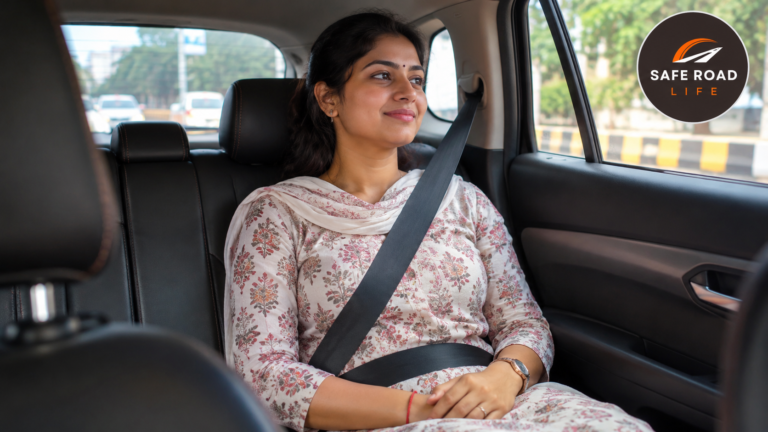
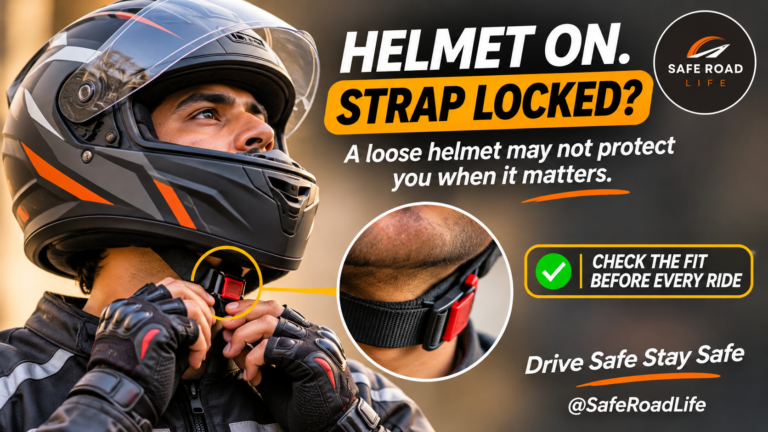
Before moving, check that every occupant is properly restrained. Seat-belts belong on every journey and in every seating position. Children need an age- and size-appropriate child restraint installed and used according to its instructions and local law. On motorcycles, riders and passengers need correctly fitted, securely fastened, standards-compliant helmets.
WHO reports that seat-belts can reduce the risk of death among vehicle occupants by up to 50%, and correct motorcycle helmet use can reduce the risk of death by more than six times. A short pre-trip check can make a life-saving difference.
5. Never negotiate with impairment or fatigue
Alcohol, recreational drugs and some medicines can impair judgement, coordination and reaction time. The safe decision is not to drive after drinking or using impairing substances. Arrange a sober driver, taxi, public transport or a place to stay.
Fatigue is also a serious warning. Repeated yawning, heavy eyelids, drifting within a lane, missed signs or difficulty remembering the last few kilometres mean you should stop driving. Find a safe place to rest. Loud music, open windows and caffeine are not reliable substitutes for sleep.
6. Treat junctions as high-attention zones
Intersections bring together turning vehicles, people walking, cyclists and traffic approaching from several directions. Reduce speed, obey signals and signs, scan for people who may be hidden by parked vehicles, and do not assume another driver has seen you. Before turning, check mirrors and blind spots and yield where required by local rules.
Never race an amber light or enter a junction that is blocked. A few seconds saved are not worth trapping your vehicle in the path of crossing traffic.
7. Check the vehicle before the journey
Tyres, brakes, lights, mirrors and windscreen wipers are part of your safety system. Check tyre pressure and visible damage, confirm that all lights work, keep windows and mirrors clear, and pay attention to warning indicators or unusual sounds. Secure luggage so it cannot move or obstruct the driver.
Do not begin a journey in a vehicle with a safety-critical defect. Arrange inspection and repair. For longer trips, plan checks and breaks rather than waiting for a problem to appear on the highway.
8. Expect people and hazards beyond your headlights
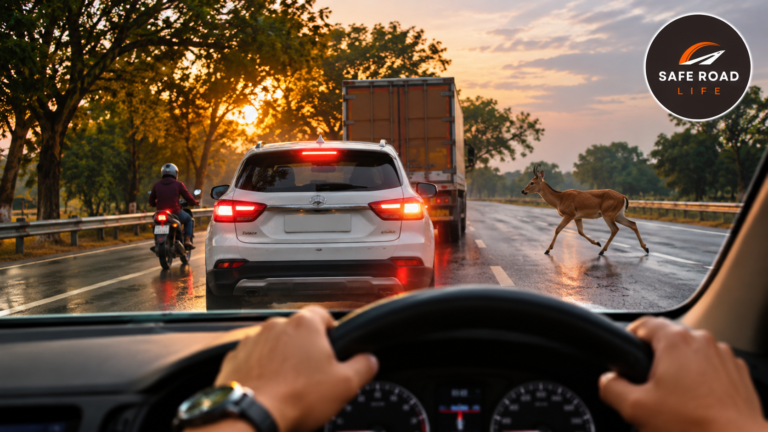
At night, in rain, fog or glare, visibility and stopping distance change. Reduce speed, use the correct lights for the conditions, keep the windscreen clean and avoid looking directly into oncoming high beams. Be especially alert near bus stops, markets, schools, parked vehicles and unlit road edges, where pedestrians or cyclists may be difficult to see.
Never drive into floodwater or a stretch of road you cannot assess. Turn around and choose a safer route. If visibility becomes too poor to continue safely, stop somewhere appropriate away from moving traffic.
9. Decide to protect others, not just your right of way
People walking, cycling or riding motorcycles have less physical protection than occupants of a car. Give them room, slow down near crossings and schools, check carefully before reversing, and never block footpaths or cycle facilities. Around buses and trucks, stay out of blind spots and do not cut across a turning vehicle.
Being legally entitled to proceed does not remove the responsibility to avoid a collision when danger is visible. Defensive driving means anticipating that someone else may make a mistake—and giving them space to survive it.
The 30-second “before you move” check
- Seat-belts fastened; child restraints and helmets correctly secured.
- Phone put away; route and controls set before departure.
- Driver alert, unimpaired and fit to drive.
- Tyres, lights, mirrors and windscreen checked.
- Speed and following distance suited to the road and weather.
- Passengers seated safely; luggage secured.
If a crash happens: make the scene safer
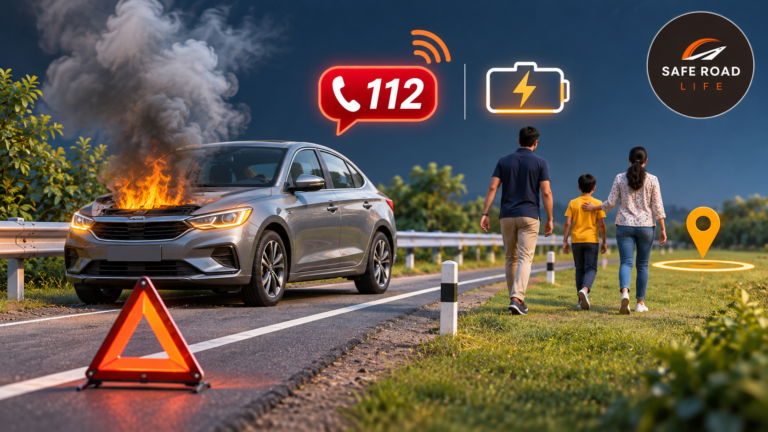
Move to a safe location if possible, switch on hazard warning lights where appropriate, and contact the local emergency number. Warn approaching traffic only if you can do so without putting yourself in danger. Do not move an injured person unless there is an immediate threat, such as fire or oncoming traffic, or you are directed by emergency professionals. Follow the emergency operator’s instructions and provide clear location information.
Frequently asked questions
What is the most important decision a driver can make to prevent a crash?
There is no single action that prevents every crash. Managing speed, staying attentive, keeping a safe gap, avoiding impairment and using protective equipment together reduce risk.
Is driving at the speed limit always safe?
No. The limit is not a guarantee of safety. Drivers must reduce speed when weather, visibility, traffic, road surface or vulnerable road users make the posted limit unsafe for the conditions.
Does a hands-free phone make driving safe?
No. Hands-free use may remove the need to hold a phone, but conversation can still divert attention from driving. The safest approach is to avoid phone conversations while driving.
How can passengers help prevent crashes?
Passengers can wear restraints, avoid distracting the driver, help with navigation only when safe, speak up about speeding or fatigue, and ensure children are correctly secured.
Road safety is decided before the impact
We cannot control every road condition or every other road user. But we can control many of the decisions that shape our own risk. Slow down. Look ahead. Leave space. Put the phone away. Protect every occupant. Stop when you are not fit to drive.
The safest crash is the one that never happens—because someone made a better decision a few seconds earlier.
DRIVE SAFE. STAY SAFE.
@SafeRoadLife
Sources and further reading
- World Health Organization: Road traffic injuries (20 July 2026)
- World Health Organization: Road safety
- Government of India, Press Information Bureau: Causes of Road Accidents
Road rules and emergency numbers vary by country. Always follow the traffic laws and official emergency guidance where you are driving.
About the Author