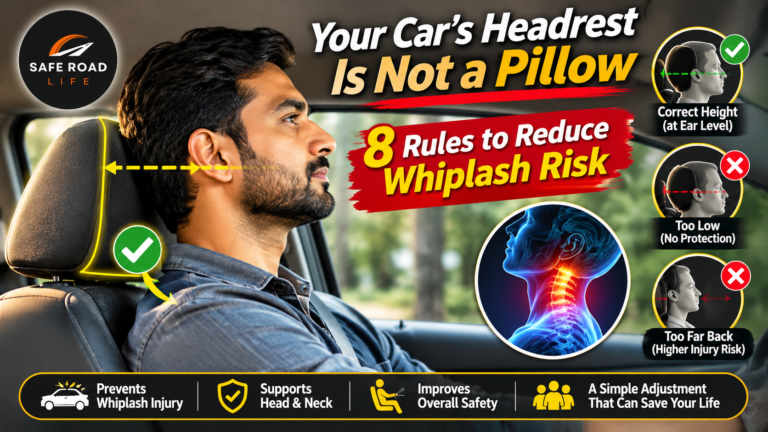
A head restraint is one of the most overlooked safety features inside a car. Many drivers lower it for comfort, lean it too far back, or use it as a cushion. But in a rear-end collision, the wrong position can leave your head and neck with less support when you need it most.
It is called a head restraint for a reason: its job is to help limit the backward movement of your head relative to your body during a rear impact. Correct adjustment can reduce the risk of whiplash injuries. It cannot prevent every injury, but a few seconds of adjustment can improve the protection your seat is designed to provide.
What happens in a rear-end collision?
When another vehicle strikes yours from behind, your seat and torso are pushed forward. If your head is unsupported or the restraint is too low or too far away, your head may lag behind your body. This rapid relative movement can strain the structures of the neck and contribute to whiplash-associated injuries.
A properly positioned restraint helps support the head earlier and reduce excessive movement. The seat belt remains essential: the restraint and seat belt work as part of the vehicle’s overall occupant-protection system.
8 head-restraint safety rules every driver should know
1. Set the height correctly
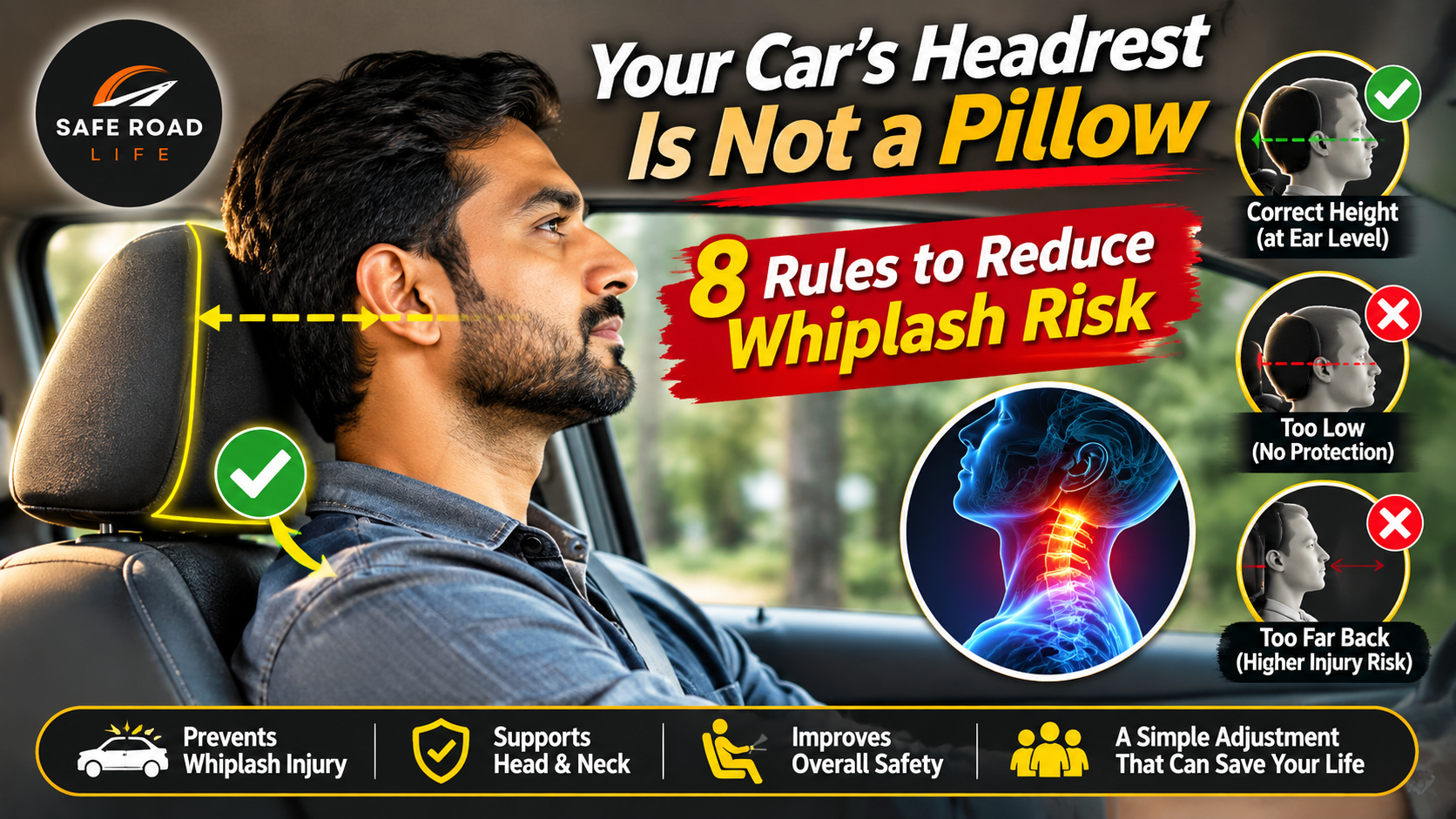
Raise the restraint so its top is at least level with the top of your ears; ideally, it should reach the top of your head where the vehicle’s design allows. A restraint sitting low behind the neck may not provide the intended support. Follow the vehicle owner’s manual if it gives a model-specific positioning instruction.
2. Keep it close to the back of your head
Adjust the restraint forward, if that feature is available, so the gap behind your head is as small as comfortably possible without pushing your head forward. A large gap allows more head movement before support is made. If the restraint does not move forward, check whether the seatback angle can be adjusted to improve the position.
3. Sit upright—do not recline excessively
A heavily reclined seat can increase the distance between your head and the restraint and change how the restraint lines up with your head. Set the seatback in a comfortable, reasonably upright driving position, with your shoulders supported and a clear view of the road.
4. Adjust it for your body, not the previous driver
Drivers and passengers have different heights and seating positions. Do not assume the setting left by another person is right for you. Recheck the height and gap whenever you change vehicles, swap seats, or alter the seat position.
5. Check every occupied seat
Passengers need properly positioned head restraints too. Before moving off, check the front passenger seat and each occupied rear seating position. Some centre rear seats have a different or smaller restraint, so consult the owner’s manual and make sure it is raised or deployed as instructed.
6. Never remove it or leave it incorrectly installed
If a restraint has been removed to carry luggage or fit a child seat, reinstall it in the correct seat position and make sure it locks securely before the vehicle is driven. Never swap restraints between seats unless the manufacturer specifically permits it.
7. Do not hang bags, clothes or accessories on it
A coat, bag, cushion or aftermarket attachment can interfere with the intended contact between your head and the restraint. Keep the restraint unobstructed and avoid placing objects between your back and the seatback.
8. Do not confuse comfort with protection
Using the restraint as a pillow, folding it down when someone is seated, or positioning it far behind the head may feel convenient—but can reduce its effectiveness. If the restraint feels uncomfortable, first adjust the seat and steering position according to the vehicle manual rather than defeating the safety feature.
Before every journey: the 10-second head-restraint check
- Height: Is the top of the restraint at least level with the top of my ears?
- Gap: Is it as close as comfortably possible to the back of my head?
- Seat: Am I sitting upright with my back supported?
- Passengers: Are the restraints correctly positioned for everyone travelling?
- Security: Is each restraint installed and locked as the manufacturer specifies?
Remember: a head restraint does not replace a seat belt
A correctly adjusted head restraint is one part of safer vehicle design—not a guarantee against injury. Always wear your seat belt, ensure passengers are properly restrained, maintain a safe following distance, and keep your vehicle’s seats and safety systems in good condition. If you are involved in a collision and develop neck pain, numbness, weakness, or other concerning symptoms, seek medical assessment promptly.
Make this a habit—not an afterthought
Before you start the engine, take a moment to adjust your seat, mirrors, seat belt and head restraint. Then check the people travelling with you. A small adjustment cannot control what happens on the road, but it can help your vehicle’s safety features do the job they were designed to do.
DRIVE SAFE. STAY SAFE.
@SafeRoadLife
Further reading and trusted guidance
For model-specific instructions, always consult your vehicle owner’s manual. You can also read guidance from the Insurance Corporation of British Columbia on adjusting head restraints and the National Highway Traffic Safety Administration.
About the Author