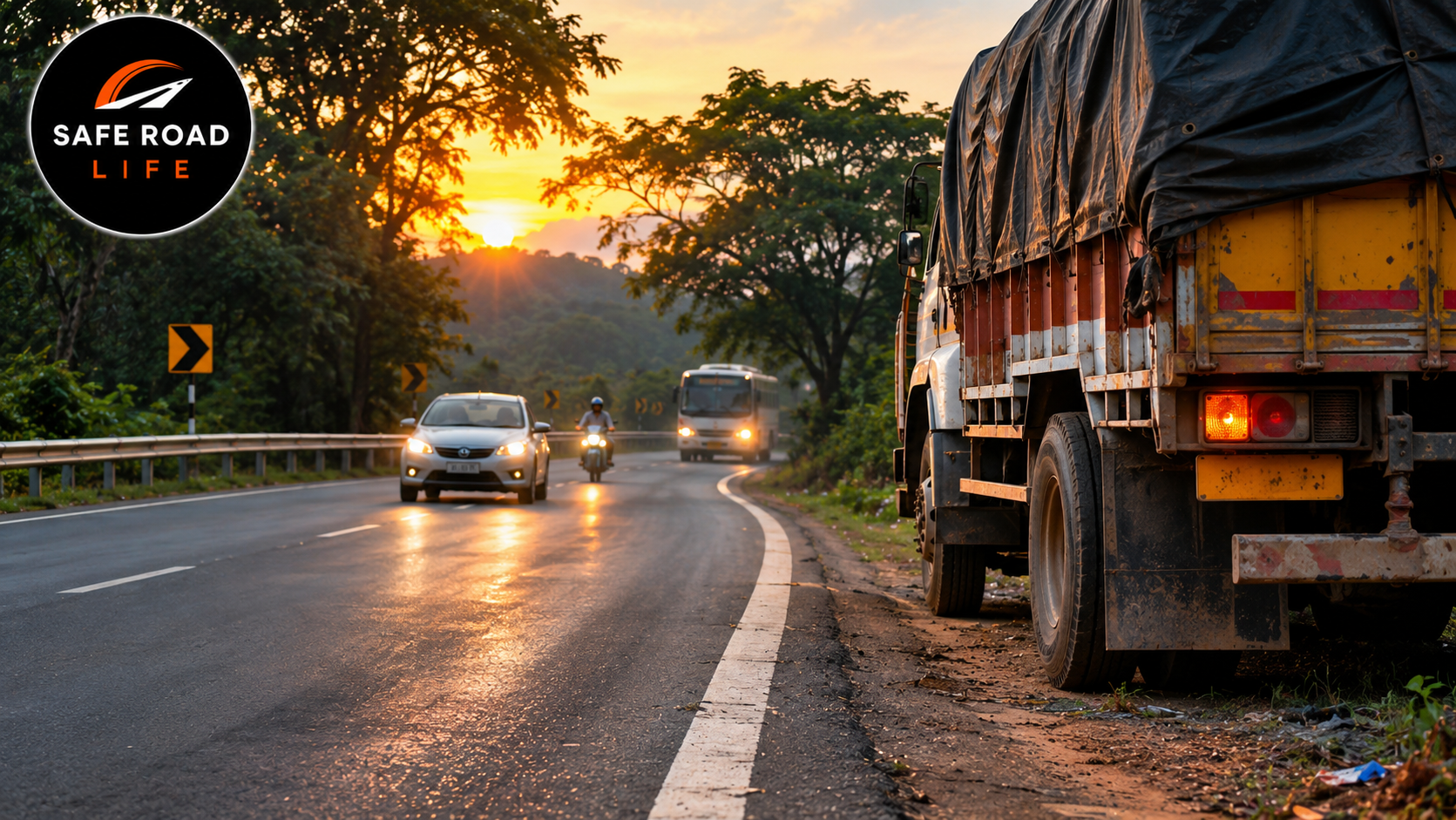
On a fast road, a parked vehicle can look harmless. It is not moving. Its engine may be off. The driver may be standing beside it, checking a phone or waiting for someone. But to approaching traffic, that stationary vehicle can become an unexpected obstacle—and to the person outside it, the danger can be immediate.
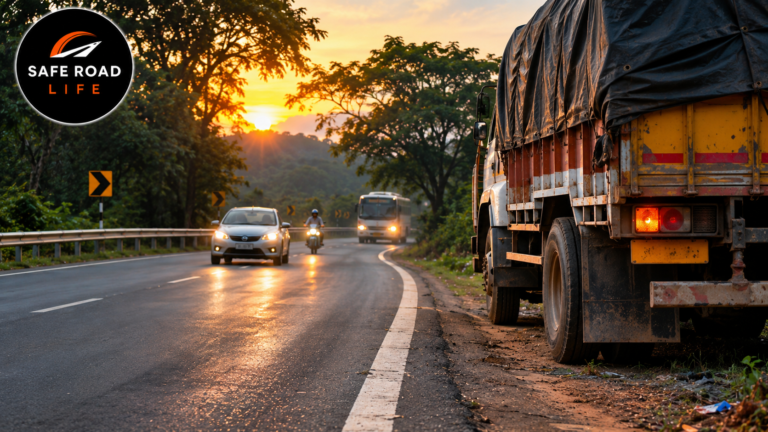
Roadside parking is often treated as a convenience issue. On high-speed roads, it is a safety issue. A vehicle stopped near a bend, junction, lane edge or poorly lit stretch can hide pedestrians, force sudden braking and create a chain reaction involving vehicles that never expected to meet an obstruction.
A stationary vehicle can still create a moving-road danger
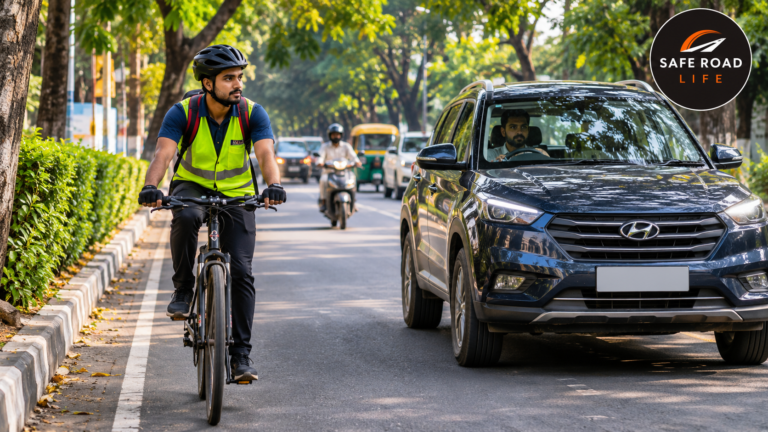
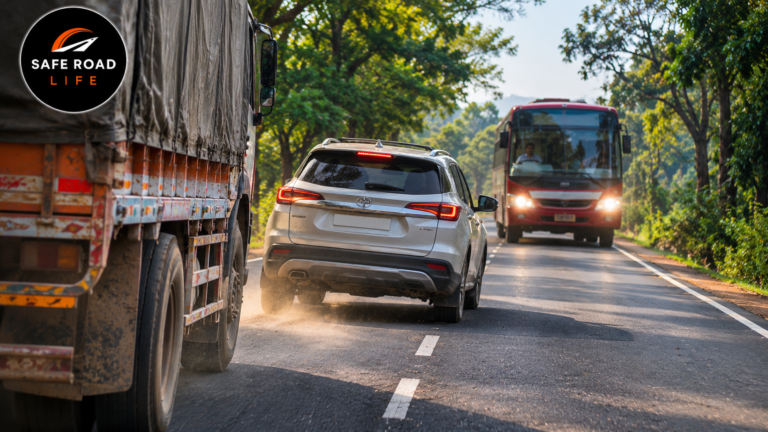
Drivers are trained to read the road ahead: lane markings, traffic flow, signs and the movement of other vehicles. An unexpected parked vehicle changes that picture. An approaching driver may need to move out of the lane, but another vehicle may be alongside. A motorcyclist may be hidden in the space beside the parked vehicle. A pedestrian may step into the carriageway from behind it.
The risk is greater where sight distance is short, traffic speeds are high, lighting is poor or the road has no safe shoulder. A vehicle parked just beyond a curve or near a junction may not be visible until the approaching driver has very little time to respond.
This is not just a theory on Indian highways
In June 2026, the Ministry of Road Transport and Highways reported that NHAI had identified 595 critical locations of unauthorised parking along National Highway corridors and was coordinating with state and district authorities to address them. The ministry described unauthorised parking and roadside encroachments as risks to road users and traffic flow.
That is an important signal: unsafe stopping is not limited to one careless driver or one stretch of road. It can become a repeated roadside pattern that requires enforcement, safer facilities and better planning.
Where stopping can become especially dangerous
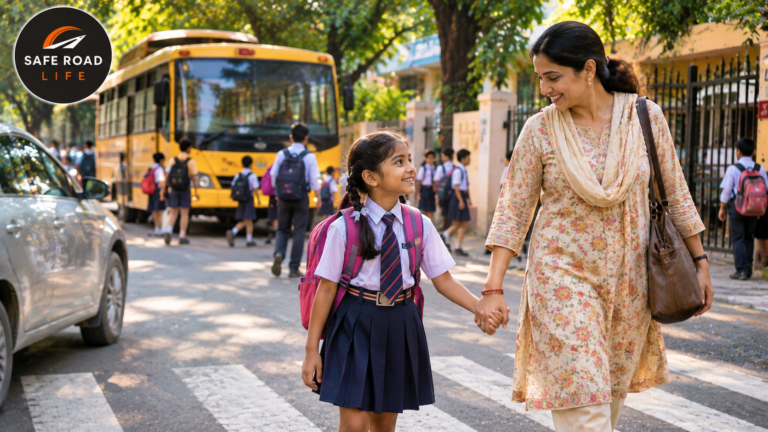
Curves and hill crests are dangerous because approaching drivers may not see a stationary vehicle in time. Junctions and roundabouts are conflict points where vehicles are already changing direction. Bus stops, pedestrian crossings and cycle tracks need to remain clear for people who depend on them. On high-speed roads, a shoulder is not automatically a safe parking bay; it may be narrow, exposed or intended only for emergencies.
India’s Motor Vehicles (Driving) Regulations, 2017 set out places where stopping and parking are prohibited, including obstructed views, sharp bends, pedestrian crossings, level crossings and specified junction areas. Drivers should follow the applicable rules, signs and local directions rather than treating the road edge as available parking space.
The danger does not end when the vehicle stops
People often underestimate the risk of stepping out beside moving traffic. A door opened into a live lane can strike a passing cyclist or motorcyclist. A person walking around the rear of a vehicle may enter the path of traffic. A child standing between parked vehicles can be difficult for approaching drivers to see.
Even a short stop to answer a call, check directions, buy something or wait for a passenger can expose people to danger if the location is unsuitable. Convenience should never override the need to keep traffic lanes, crossings and sightlines clear.
Choose a safe place—not merely the nearest edge
If you need to stop for a non-emergency reason, continue to a designated parking area, service station, rest area or other lawful place away from moving traffic. Do not stop on a curve, crest, junction, crossing, cycle track or bus stop. Do not assume that putting on hazard lights makes an otherwise unsafe parking location safe or legal.
If a genuine emergency forces you to stop, move as far from live traffic as safely possible and use the vehicle’s warning equipment in accordance with local rules and the owner’s manual. Keep occupants away from traffic where a safe protected place exists, and call for assistance. On high-speed roads, do not stand behind or beside the vehicle exposed to approaching traffic. Follow the road authority’s emergency guidance for that road.
What businesses and transport operators should change
Restaurants, shops, warehouses, event venues and fleet operators should not allow customer or commercial parking to spill onto highway lanes or access points. Loading, unloading, driver waiting and passenger pick-up need designated areas that do not obstruct through traffic or pedestrian movement.
Fleet managers should brief drivers that an informal roadside stop is not an acceptable substitute for a planned rest location. Route planning should identify authorised rest areas and safe stopping facilities. Repeated unauthorised parking locations should be reported to the relevant road authority or enforcement agency so that the underlying problem can be addressed.
Safer roads require space for stopping safely
Enforcement matters, but road design matters too. Highways need properly located rest areas, truck parking, lay-bys and safe access to roadside services. Towns and villages need organised parking, clear footpaths and bus bays that keep stopped vehicles out of moving lanes. Road safety audits should identify unofficial stopping points and the conflicts they create.
A road should not force drivers to choose between stopping dangerously and continuing when they are not fit to drive. Providing safe places to stop is part of preventing crashes, not an optional extra.
Before you leave your vehicle, think about the people still moving
The next time you consider stopping at the roadside, look beyond the space available for your car. Ask whether approaching drivers can see you, whether pedestrians and cyclists can pass safely, and whether your vehicle will block a crossing, junction or sightline. If the answer is uncertain, find a safer place.
A parked vehicle should never become an invisible wall in somebody else’s path. Leave the road clear. Keep people safe. Arrive without making another road user’s journey dangerous.
DRIVE SAFE. STAY SAFE.
@SafeRoadLife
Sources and further reading
- Ministry of Road Transport & Highways / PIB – NHAI action against unauthorised parking on National Highways (24 June 2026)
- India – Motor Vehicles (Driving) Regulations, 2017
- UK Department for Transport – Highway Code: Breakdowns and incidents
- NHAI – Road Safety Audit Manual
Related reading: A Breakdown on the Highway Can Turn Deadly and Hazard Lights Are Not for Every Situation.
About the Author