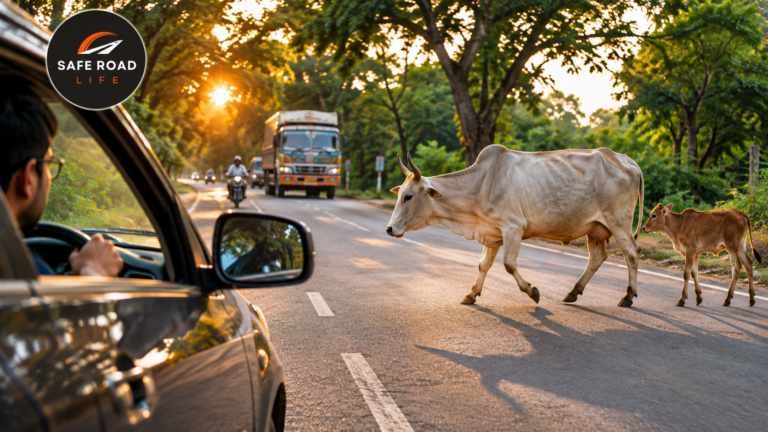
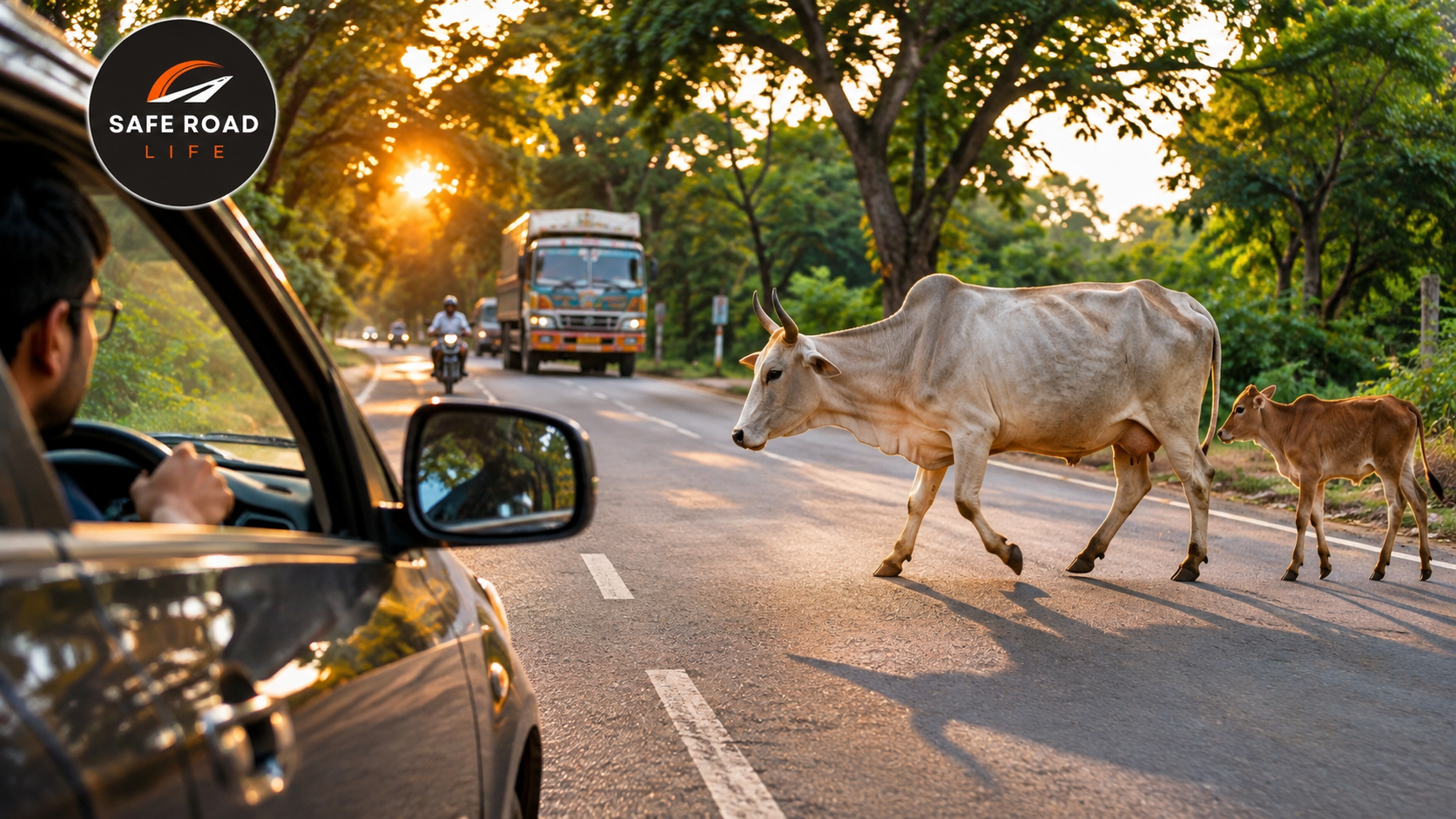
The road is quiet. A sign warns of wildlife ahead. Then, without warning, a cow steps out from the roadside—or a deer moves across the headlights. The driver has only seconds to respond.
Across rural highways, forest corridors and village roads, animals and vehicles often share the same space. A collision can injure or kill a person, destroy a family’s vehicle, harm livestock and threaten wildlife. It is not simply an animal problem. It is a road-design and road-user safety problem.
Why animal crossings are a serious road-safety issue
Animals do not understand lane markings, speed limits or the distance needed by a moving vehicle to stop. They may cross suddenly, freeze in the headlights, turn back or follow another animal. Livestock may wander onto unfenced roads, while wild animals use traditional routes between feeding, water and habitat areas.
Risk can increase around dawn, dusk and at night, when visibility is reduced and many animals are active. A driver who sees one animal should remain alert for others nearby. The Government of New South Wales and other road authorities advise drivers to reduce speed, scan the roadside and prepare to stop in areas where animals may cross.
The moment an animal appears on the road
The first response should be controlled, not panicked. Ease off the accelerator, brake smoothly and firmly as conditions require, and keep the vehicle stable. Avoid a violent steering movement that could send the vehicle into oncoming traffic, a tree, a ditch or another road user. If a collision cannot be avoided, prioritise maintaining control and protecting people in the vehicle.
Do not assume an animal will move away because you sound the horn or flash the headlights. Sudden noise or light can startle some animals and make their movement less predictable. Give the animal time and space to clear the road, and proceed only when the way is safe.
Livestock on village roads need a different kind of patience
Cattle, goats, sheep and other domestic animals may be driven along or graze near roads in rural areas. They can move as a group, stop unexpectedly or turn around. Slow down well before reaching them, leave generous space and pass only when there is a clear, safe path. Never accelerate aggressively, rev the engine or use the horn to force animals out of the way.
People guiding livestock are also vulnerable road users. Give them room, watch for children and handlers near the herd, and be prepared for an animal to move unpredictably. If a herd is crossing, wait patiently until the entire group has cleared the carriageway.
Forest highways require attention beyond the road markings
In forested and wildlife-rich areas, animals may approach from either side, sometimes from behind roadside vegetation. Warning signs should be treated as meaningful risk information, not decoration. Reduce speed, scan the verges and avoid driving so fast that a sudden hazard leaves no time to react.
In India, highway stretches near forests and protected habitats need careful planning. The National Highways Authority of India has described measures such as wildlife underpasses and overpasses, guide fencing, signage, speed-management measures and monitoring to reduce wildlife–vehicle conflict. These structures help guide animal movement and reduce the need for animals to cross traffic lanes at dangerous points.
What to do after a collision
Once the vehicle is under control, stop only at a place where it is safe to do so. Switch on hazard warning lights if the vehicle is stopped and could present a danger to approaching traffic. Check occupants for injuries and contact emergency services where anyone is hurt or the road is obstructed.
Do not approach an injured wild animal. A frightened or wounded animal can kick, bite or charge, even if it appears still. Keep people away and contact the relevant forest or wildlife authority, police or local animal-rescue service. For injured livestock, contact the owner or local authorities when it is safe. Follow local reporting requirements and do not put yourself in traffic to take photographs or move an animal.
Safer roads need action from more than drivers
Drivers can reduce risk, but they cannot solve every animal-crossing hazard alone. Road agencies should identify collision hotspots, maintain warning signs, manage vegetation without destroying habitat, provide suitable crossing structures and use fencing where it is appropriate and designed with ecological expertise. Poorly planned barriers can simply redirect animals towards another dangerous point.
Local communities and livestock owners also have a role. Keeping animals away from high-speed roads where possible, using safe crossing points and avoiding unattended grazing near traffic can protect both animals and people. Transport operators should brief drivers on known animal-crossing routes and include these hazards in journey planning.
Every life on the road matters
A road should connect communities without becoming a barrier that divides habitats or puts people and animals in danger. When you see an animal-warning sign, slow down before you see the animal. When livestock are crossing, be patient. And when an animal appears unexpectedly, choose control over panic.
Reaching your destination a little later is better than leaving behind a life-changing collision—for a person, a family or an animal.
DRIVE SAFE. STAY SAFE.
@SafeRoadLife
Sources and further reading
- Press Information Bureau / NHAI – Wildlife mitigation measures on National Highways
- NSW Government – Road hazards: wildlife and livestock
- UK Highway Code – Animals and other road users requiring extra care
- Government of Alberta – Animal-vehicle collision safety and wildlife crossings
Related reading: Every Step Matters: Pedestrian Safety and Sharing the Road on Mountain Routes.
About the Author