A sudden tyre burst on a highway can make a vehicle shake, pull to one side or feel as if the steering has disappeared. The noise is frightening. The next few seconds matter—but the wrong instinct can make the situation worse.
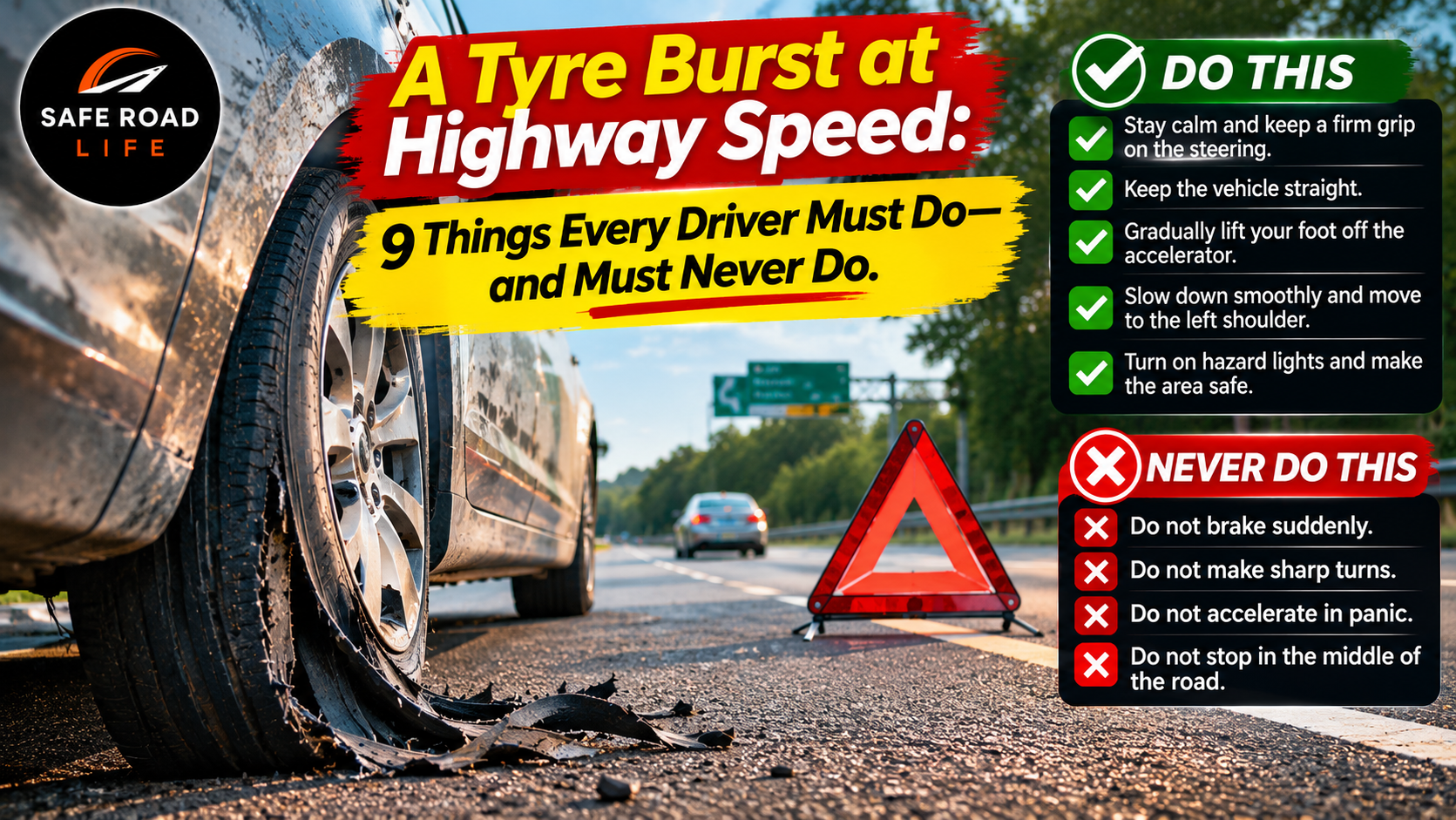
Your first job is not to stop immediately. It is to keep the vehicle under control. Official guidance from the US National Highway Traffic Safety Administration (NHTSA) and New Zealand Transport Agency (NZTA) agrees on the essentials: hold the steering wheel firmly, avoid sudden braking, ease off the accelerator gradually and move to a safe stopping place once the vehicle is stable.
What happens during a tyre blowout?
A blowout is a rapid loss of air pressure. You may hear a loud bang or thumping sound, feel strong vibration, or notice the vehicle pulling or swaying. A front tyre failure may be felt more strongly through the steering; a rear tyre failure may make the vehicle feel unstable at the back.
Tyre failure can be associated with under-inflation, overloading, impact damage, cuts, worn tread or other damage. A tyre can also fail without much warning, which is why regular inspection matters.
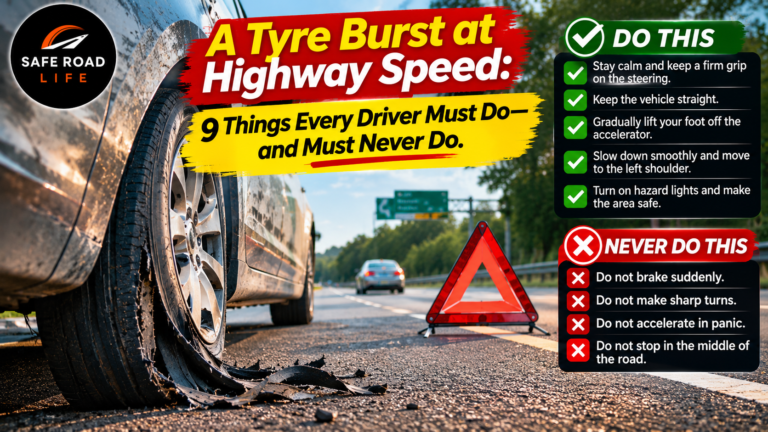
9 things to do if a tyre bursts while driving
1. Hold the steering wheel firmly with both hands
A sudden loss of pressure can pull the vehicle off its path. Keep both hands on the wheel and concentrate on maintaining a steady direction. Look towards the safe path you want the vehicle to follow.
2. Do not slam on the brakes
Hard braking can upset the vehicle’s balance and increase the risk of losing control. Resist the instinct to stamp on the brake pedal. Let the vehicle remain stable first.
3. Ease off the accelerator gradually
Do not make a sudden movement with your foot. Gradually reduce power and allow the vehicle to slow in a controlled way. Follow the vehicle manufacturer’s guidance and keep the vehicle balanced.
4. Keep the vehicle in its lane
Avoid sharp steering corrections, sudden lane changes or swerving towards the shoulder. Make smooth, measured steering inputs to keep the vehicle on a predictable path.
5. Warn other road users when you can do so safely
Once you have the vehicle stable and can operate the controls without compromising steering, activate the hazard warning lights. Do not take your attention away from controlling the vehicle during the first critical moments.
6. Move towards a safe stopping area gradually
After reducing speed and checking traffic, signal and steer towards a safe place off the carriageway where possible. Avoid stopping in a live lane or making a sudden move across traffic. If the shoulder is narrow or unsafe, prioritise reaching the safest available refuge.
7. Stop fully before inspecting the tyre
Once safely stopped, secure the vehicle as described in its owner’s manual. Do not inspect or attempt to change a tyre beside fast-moving traffic. If the location is unsafe, stay protected and call roadside assistance or emergency services as appropriate.
8. Keep passengers away from moving traffic
If you must leave the vehicle, assess the surroundings first and use the side away from traffic where possible. Move passengers behind a suitable safety barrier or well away from the carriageway if a safe place is available. Never stand behind or in front of the vehicle on a live shoulder.
9. Replace or professionally inspect the damaged tyre
Do not continue a normal journey on a damaged tyre. Use the spare only if it is suitable, correctly fitted and safe to use under the vehicle manufacturer’s instructions. Otherwise arrange professional assistance. Have the failed tyre and wheel checked before returning to the road.
Never do these things during a blowout
- Do not slam on the brakes.
- Do not jerk the steering wheel or make a sudden lane change.
- Do not accelerate hard to “fight” the pull.
- Do not stop in a live traffic lane if you can safely reach a refuge.
- Do not attempt a tyre change next to fast-moving traffic.
- Do not drive on a visibly damaged tyre just to reach your destination.
Prevention: check your tyres before the journey
A few minutes of inspection can help reduce the risk of tyre failure. Make these checks part of your regular vehicle routine:
- Check pressure when tyres are cold: Use the pressure specified by the vehicle manufacturer, usually shown on the driver’s door placard or in the owner’s manual—not simply the maximum pressure printed on the tyre sidewall.
- Inspect tread and sidewalls: Look for cuts, cracks, bulges, exposed cords, embedded objects and uneven wear.
- Respect load limits: Do not overload the vehicle or exceed tyre load ratings.
- Check the spare: Confirm it is serviceable and that the jack and wheel tools are available.
- Respond to warning signs: Unusual vibration, repeated pressure loss or a visible bulge needs prompt professional attention.
- Follow the service schedule: Rotate and replace tyres as recommended for your vehicle and tyre type.
A tyre burst is an emergency—not a reason to panic
When a tyre fails, calm and controlled actions give you the best chance of keeping the vehicle stable. Hold the wheel, avoid sudden braking, ease off smoothly and move to safety when you can. Most importantly, never treat tyre checks as optional maintenance.
Share this guidance with every driver in your family and workplace. The right response is worth remembering before an emergency happens.
DRIVE SAFE. STAY SAFE.
@SafeRoadLife
Sources and further reading
- US National Highway Traffic Safety Administration (NHTSA) – Tire Safety and Blowout Response
- New Zealand Transport Agency Waka Kotahi – Tips for Handling Driving Emergencies
- Kolkata Traffic Police – Driving Tips and Blowout Guidance
- Bridgestone – Tyre Maintenance and Safety Information
Explore more practical advice in our SafeRoadLife Safety Guides.
About the Author