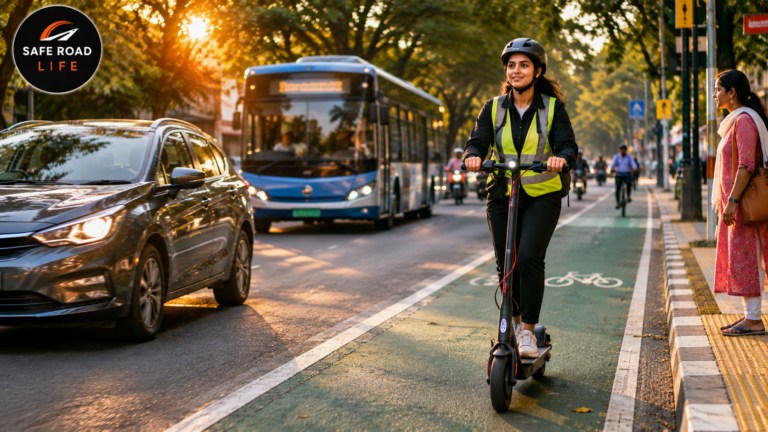
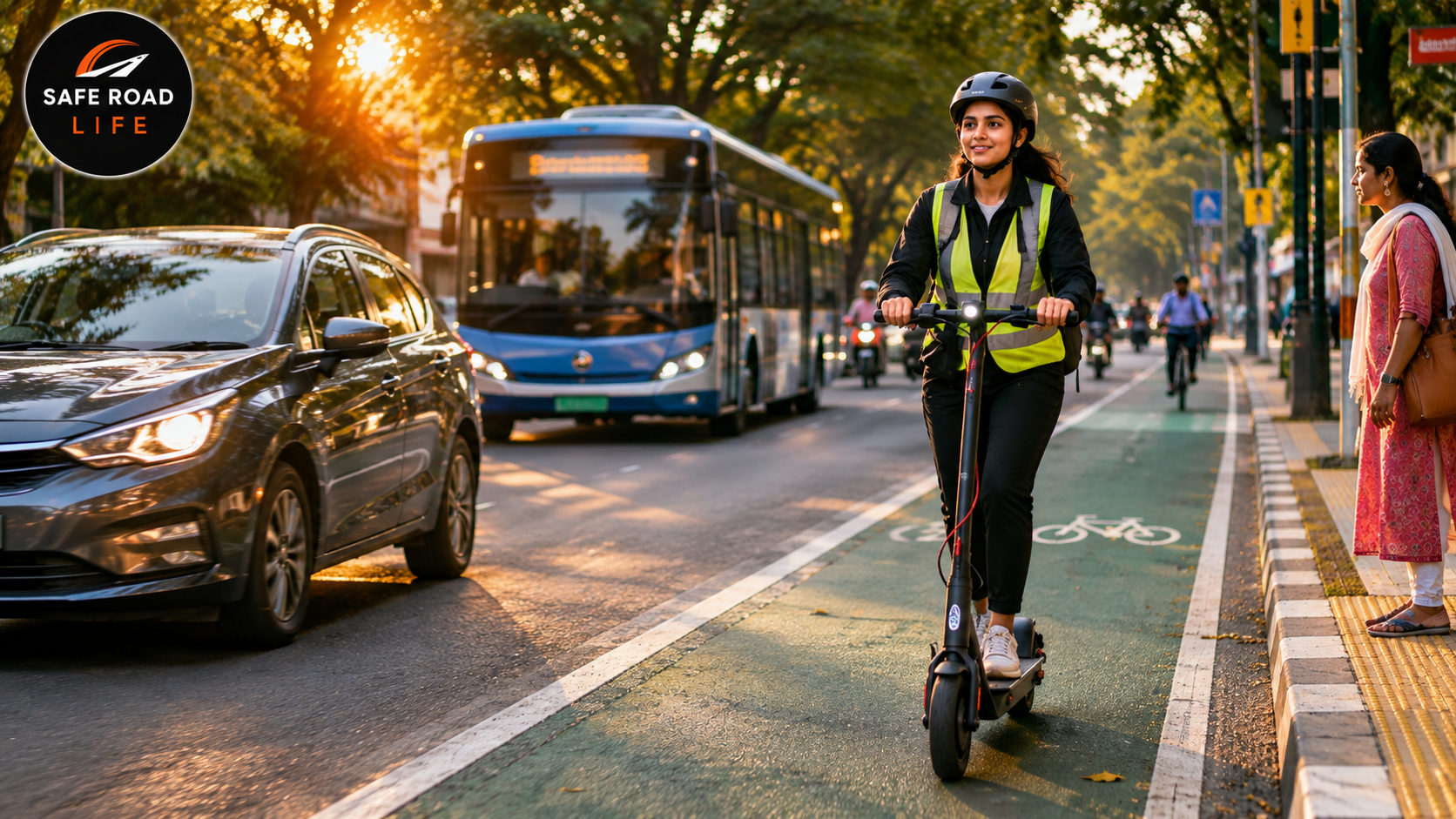
You hear the bus. You hear the car. But the small electric scooter approaching behind you may make almost no sound at all.
That quietness is part of the appeal of electric bicycles and e-scooters. They are convenient, space-efficient and useful for short urban journeys. But they also create a difficult question for modern streets: where should a small, fast-moving vehicle travel when pedestrians, bicycles, motorcycles, cars and buses are all competing for space?
The answer is not to blame one group. A safer street needs predictable behaviour from every road user, suitable speeds, visible riders and infrastructure that does not force people into conflict.
A new kind of traffic, an old road-safety problem
E-bikes and e-scooters can be difficult for others to judge. Some are quiet, narrow and visually easy to miss. Their small wheels can also react sharply to potholes, broken edges, loose gravel, drainage grates and sudden changes in road surface. At the same time, pedestrians may not expect a moving vehicle on a footpath, while drivers may underestimate how quickly a small electric vehicle can approach.
The International Transport Forum at the OECD says safer micromobility depends on more than rider behaviour. Protected and connected routes, safer vehicle design, sensible speed management and safer interactions with motor vehicles all matter. Its 2024 evidence review also highlights the importance of infrastructure quality and the risks created when e-scooters mix with pedestrians or faster traffic.
The danger often appears at the point where paths meet
A rider leaves a cycle track and reaches a junction. A car turns across the rider’s path. A pedestrian steps out from behind a parked vehicle. A delivery rider moves onto a footpath to avoid congestion. None of these moments needs high speed to become serious.
Intersections, driveways, bus stops, parking entrances and the ends of cycle lanes deserve special attention because different road users meet there with different expectations. Slow down before these conflict points, make eye contact where possible, and never assume another person has seen you.
What riders need to understand
An electric motor does not make a bicycle or scooter immune to the physics of a crash. Speed increases the distance needed to react and stop. A helmet that fits correctly can reduce the risk of serious head injury, but it cannot prevent every injury. Lights and reflective details help others detect a rider, especially in low light, but visibility equipment does not give anyone priority over pedestrians.
Choose a route that is permitted for your device and follow local rules. Legal classifications differ between countries and even between types of electric two-wheelers. Do not assume that every e-scooter, e-bike or high-powered electric moped has the same road access, speed limit, helmet requirement or licensing status.
What drivers and pedestrians need to understand
Drivers should check mirrors and blind spots before turning, opening a door or changing lanes. Look for smaller vehicles near the kerb, beside parked cars and in the space between moving traffic. Give riders room; do not squeeze past them and then turn across their path.
Pedestrians should be able to use footpaths without being forced to dodge fast-moving devices. Riders should not treat a footpath as a shortcut through congestion. Where a shared path is legally provided, reduce speed to a pace appropriate for people walking, pass with care and give a clear warning without startling anyone.
The responsibility is shared—but the protection is not equal
A person walking has almost no protection in a collision. A person on an e-scooter or bicycle has little protection compared with someone inside a car or bus. That difference should shape how streets are designed and how people behave. Larger and faster vehicles carry a greater responsibility to avoid imposing danger on more vulnerable road users.
The World Health Organization’s road-safety guidance places vulnerable road users at the centre of safer transport planning. The goal is not simply to tell people to be careful; it is to build a system in which ordinary mistakes are less likely to result in death or serious injury.
India’s streets need clear rules and connected space
In Indian cities, electric two-wheelers share roads with buses, cars, auto-rickshaws, motorcycles, cycles, street vendors and pedestrians. A painted line that disappears at a junction is not a complete safe route. Nor is a footpath that becomes an informal parking lane. Safe micromobility requires continuous, well-maintained space, visible crossings, appropriate speed control and clear enforcement.
Authorities and operators should consider where these devices are permitted, how fast they can travel in different environments, where they can be parked and how riders are trained. Employers using e-bikes or electric scooters for deliveries should not set targets that encourage dangerous speeds or illegal footpath riding.
One street, many journeys
Electric mobility can help cities move people with less noise and less local pollution. But a cleaner journey is not automatically a safer journey. The test of progress is whether a child can walk to school, an older person can cross the street, a cyclist can travel without being squeezed and a rider can reach work without taking unnecessary risks.
The next time you hear—or do not hear—an electric scooter approaching, remember that road safety is not about who owns the space. It is about noticing one another, choosing a safe speed and leaving enough room for everyone to get home.
DRIVE SAFE. STAY SAFE.
@SafeRoadLife
Sources and further reading
- International Transport Forum (OECD) – Safer Micromobility (2024)
- US Consumer Product Safety Commission – Micromobility Safety
- World Health Organization – Powered Two- and Three-Wheeler Safety Manual
- Transport for NSW – E-micromobility Action Plan
Continue reading: Every Step Matters: Pedestrian Safety and Your Helmet Is On. But Will It Stay On?.
About the Author