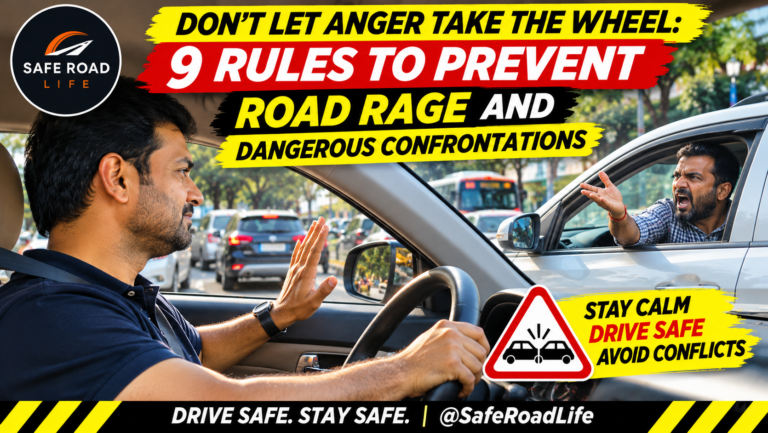
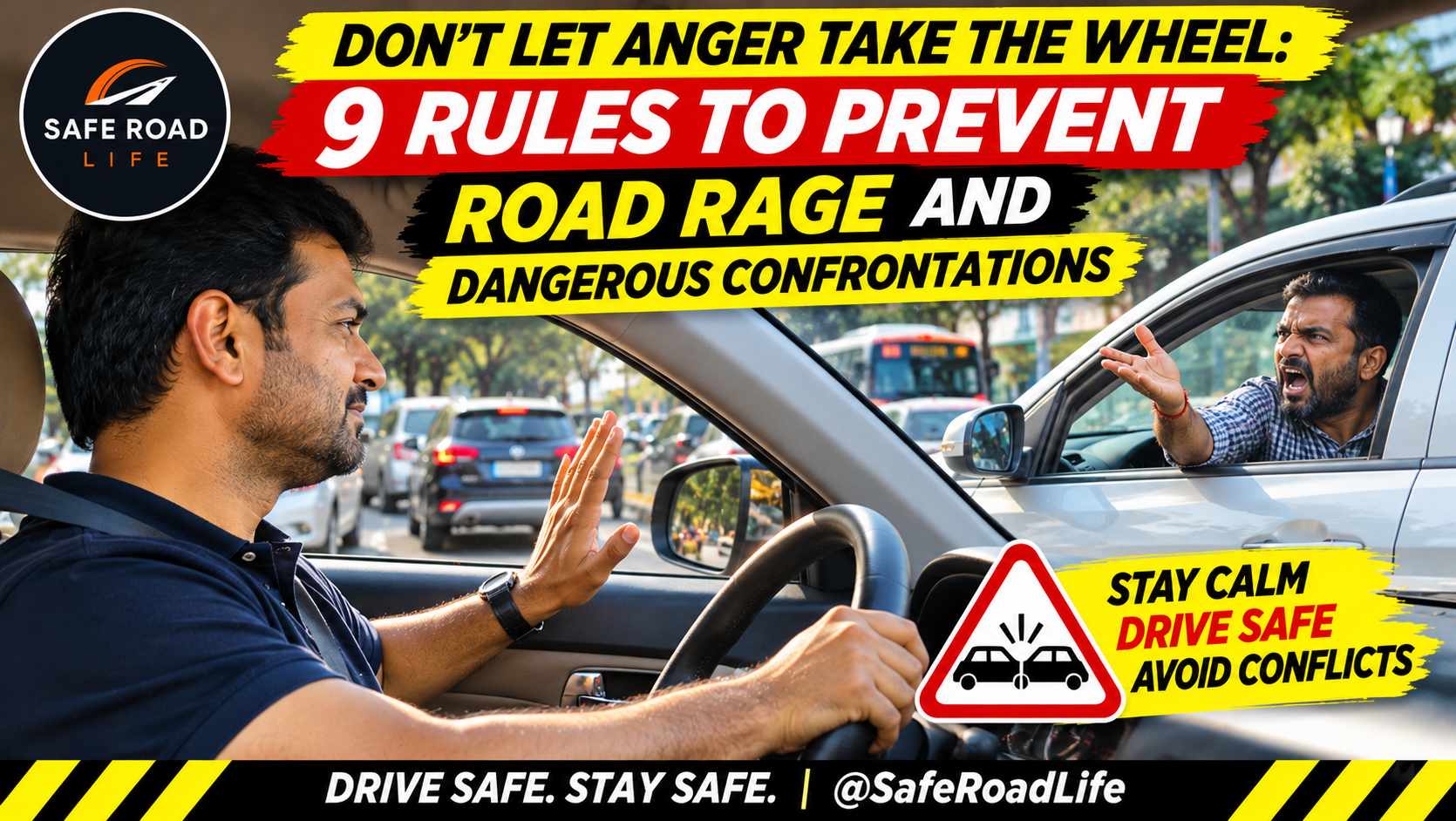
A delayed journey, a sudden lane change, an unnecessary horn or a vehicle cutting across your path can trigger anger in seconds.
On a crowded road, frustration can quickly turn into shouting, dangerous overtaking, deliberate braking or even physical confrontation. What begins as a disagreement between strangers can become a serious road-safety incident.
Road rage is not simply a traffic problem. It is a failure to control behaviour in an environment where one impulsive action can injure innocent people.
You may not control another driver’s behaviour, but you can always control your response.
1. Do not take every traffic mistake personally
A driver may change lanes without warning, stop suddenly or fail to notice you. It is frustrating, but reacting aggressively will not correct the mistake. Create distance, stay alert and continue safely.
2. Never compete for road space
Do not accelerate to prevent another vehicle from entering your lane. Avoid racing, blocking, deliberately cutting off another driver or refusing to give reasonable space. The road is not a competition.
3. Keep the horn for genuine warnings
Repeated honking, shouting and unnecessary gestures can escalate tension. Use the horn only as an appropriate warning. Avoid using it to express anger or punish another road user.
4. Never retaliate with dangerous driving
Do not tailgate, brake-check, swerve towards another vehicle or deliberately obstruct someone’s path. Retaliation can turn a minor traffic disagreement into a collision.
5. Do not engage with an aggressive driver
Avoid eye contact intended to challenge, abusive gestures or arguments through open windows. Keep your doors locked and windows sufficiently closed if someone behaves threateningly. Focus on creating a safe distance.
6. Give yourself time and manage stress
Leaving late, fatigue, hunger and personal stress can reduce patience. Plan your journey realistically. Take a break if you feel overwhelmed. A few minutes saved are not worth risking your life.
7. Never follow an aggressive driver
If someone is shouting, threatening or trying to provoke you, do not follow them to settle the argument. Avoid stopping in an isolated location. If you feel threatened, move towards a safe, populated place and seek assistance.
8. Protect passengers and vulnerable road users
Children, elderly passengers and other road users should never become witnesses or victims of an avoidable confrontation. Keep passengers calm. Do not allow anyone in your vehicle to encourage retaliation.
9. Seek help instead of escalating a threat
If a confrontation becomes threatening, prioritise safety. Avoid physical contact and do not attempt to punish the other person. Where necessary, contact local police or emergency services. If safe and lawful, note relevant vehicle details and preserve evidence without putting yourself at risk.
Road rage prevention checklist
- Leave with enough time.
- Avoid competing for lane space.
- Do not use the horn to express anger.
- Never tailgate or brake-check.
- Avoid arguments and threatening gestures.
- Do not follow an aggressive driver.
- Keep passengers calm and secure.
- Move towards a safe place if threatened.
- Report serious threats rather than retaliating.
A message for professional and fleet drivers
For bus, truck, taxi and commercial vehicle operators, emotional control is a professional safety skill. A driver represents not only themselves but also their passengers, employer and organisation. Fleet managers should include anger management, conflict de-escalation and defensive driving behaviour in driver training.
No passenger, vehicle, delivery or schedule is worth a road confrontation.
“A skilled driver controls the vehicle. A responsible driver also controls the anger behind the wheel.”
Reach your destination with dignity. Never allow a moment of anger to decide the future of a life.
DRIVE SAFE. STAY SAFE.
@SafeRoadLife
About the Author