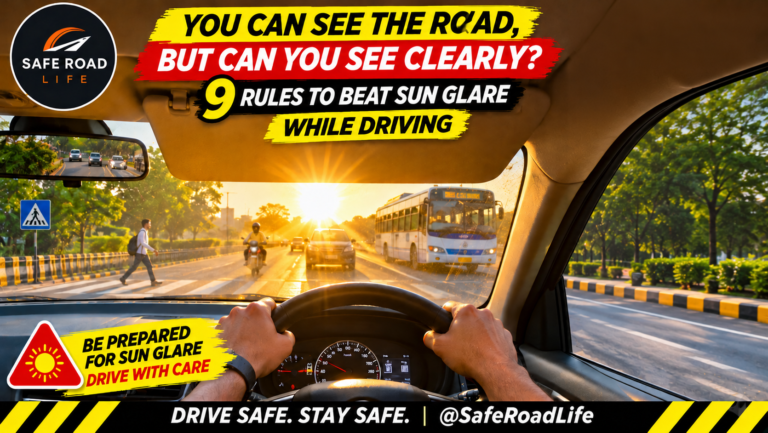
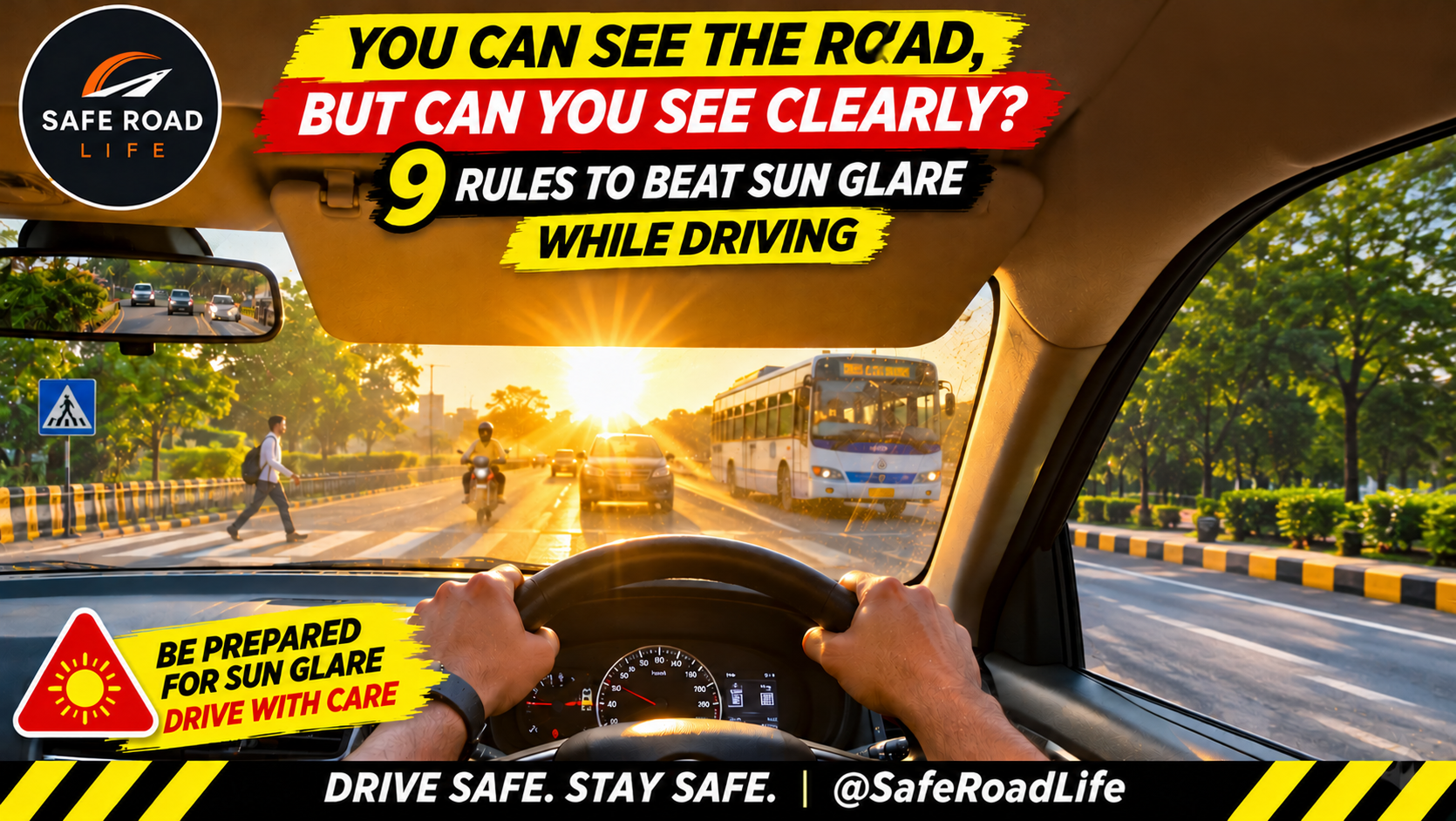
Sunlight is essential for visibility, but at certain times of the day it can become a serious driving hazard. During sunrise and sunset, low-angle sunlight can shine directly into a driver’s eyes. The road ahead may suddenly become difficult to see. A pedestrian crossing, a motorcyclist, a stopped vehicle or a traffic signal can disappear into the glare for a few critical seconds.
The danger is not limited to highways. City roads, school zones, intersections and busy market areas can also become hazardous when sunlight strikes the windscreen at the wrong angle.
A driver who cannot see clearly must never continue driving as if visibility were normal.
1. Reduce speed when sunlight enters your eyes
Do not maintain your usual speed when direct sunlight affects your vision. Slow down smoothly and increase the distance from the vehicle ahead. You must be able to stop safely within the distance you can see.
2. Keep your windscreen clean
Dust, fingerprints, oily films and scratches can scatter sunlight and create additional glare. Clean the inside and outside of your windscreen regularly. Keep the washer fluid and wipers in good condition.
3. Use your sun visor correctly
Adjust the vehicle’s sun visor to block direct sunlight without obstructing your view of traffic signals, pedestrians or the road. Do not position it in a way that creates a dangerous blind area.
4. Wear suitable sunglasses
Good-quality sunglasses can reduce discomfort from bright sunlight. Choose lenses that allow you to identify traffic signals and road users accurately. Never use excessively dark lenses in tunnels, shaded areas or low-light conditions.
5. Increase your following distance
Sun glare can delay your ability to recognise brake lights and sudden changes in traffic. Leave additional space between your vehicle and the one ahead. Avoid tailgating, especially during sunrise and sunset.
6. Watch carefully for pedestrians and two-wheelers
Pedestrians, cyclists and motorcyclists may become difficult to distinguish against bright sunlight. Pay extra attention near bus stops, schools, intersections and pedestrian crossings. Scan both sides of the road and check mirrors frequently.
7. Avoid sudden lane changes and overtaking
Do not overtake when direct sunlight prevents you from clearly seeing the road ahead. Wait until visibility improves and you can confirm that the road is clear. Never rely on assumptions when another vehicle may be hidden by glare.
8. Keep your headlights and mirrors in good condition
Clean headlights, properly adjusted mirrors and functioning lights help maintain visibility and communication with other road users. Use lights according to road conditions and applicable regulations. Do not use high beam unnecessarily.
9. Stop safely if visibility becomes dangerously poor
If you cannot see the road adequately, do not force yourself to continue. Reduce speed, identify a safe stopping location away from moving traffic and wait until visibility improves. Never stop suddenly in a live traffic lane.
Driver’s pre-journey checklist
- Windscreen clean inside and outside.
- Wipers and washer fluid working.
- Sun visor adjusted correctly.
- Sunglasses suitable for driving.
- Headlights and mirrors clean.
- Following distance increased.
- Speed adjusted to actual visibility.
- Extra caution near pedestrians and crossings.
- No overtaking when visibility is restricted.
A message for professional drivers
For bus, truck, taxi and commercial vehicle drivers, sun glare should be included in route-risk assessment and daily safety briefings. Drivers should be trained to recognise low-sun conditions, adjust speed, maintain safe distance and stop when visibility becomes unsafe.
No passenger, delivery or schedule target is more important than the driver’s ability to see the road.
“When sunlight hides the road, patience becomes your strongest safety equipment.”
The sun may be beyond your control. Your speed, distance and decisions are not.
DRIVE SAFE. STAY SAFE.
@SafeRoadLife
About the Author