An electric vehicle can be silent, clean and convenient. But when it comes to charging, convenience must never replace caution. Charging is not simply a matter of connecting a cable and walking away. The charger, electrical supply, connector, battery management system and surrounding environment all play a role in safe operation.
A damaged cable, unsuitable power outlet, unauthorised electrical modification or ignored warning sign can create serious risks. These risks deserve attention from private EV owners, apartment residents, fleet operators and depot management teams.
An electric vehicle should make transportation safer and cleaner—not introduce preventable charging hazards.
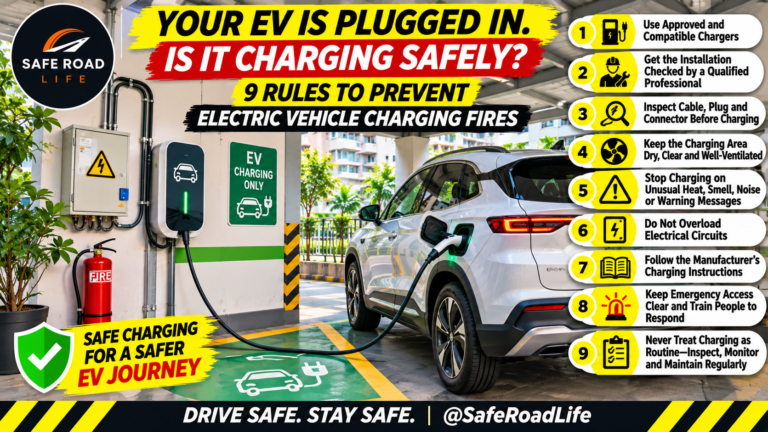
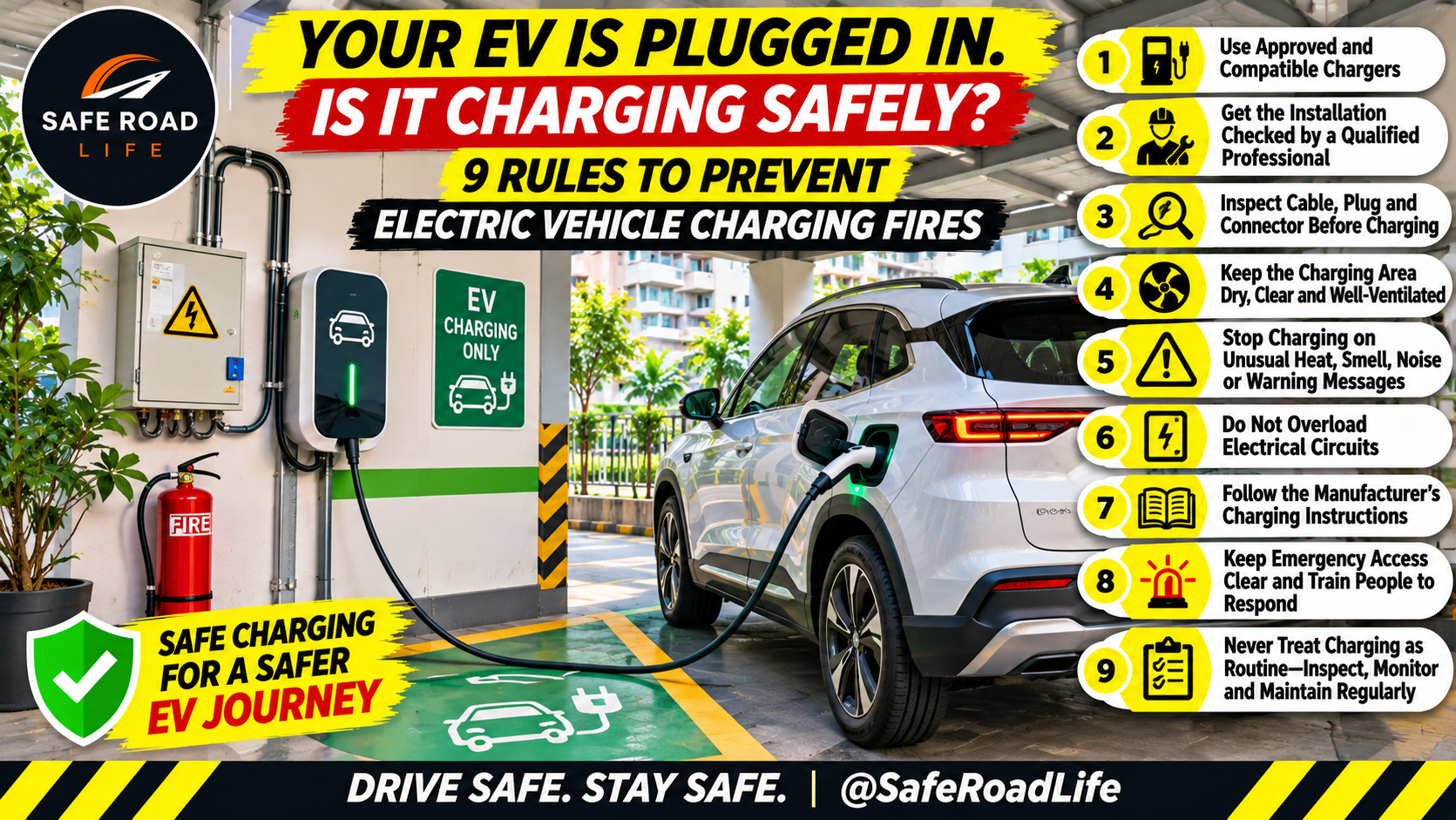
1. Use only approved and compatible charging equipment
Always use charging equipment recommended or approved by the vehicle manufacturer. Check that the charger and connector are compatible with the vehicle. Avoid makeshift adapters, damaged extension boards and unauthorised modifications. A connector that physically fits is not automatically safe or suitable.
2. Get the electrical installation checked by a qualified professional
Home and workplace charging points should be installed by qualified electrical professionals in accordance with applicable electrical requirements and manufacturer instructions. The installation should have appropriate protection, earthing and circuit capacity. Never assume an ordinary household socket is suitable for every EV charging requirement.
3. Inspect the cable, plug and connector before charging
Look for cuts, exposed wires, cracks, bent pins, burn marks, unusual discolouration or loose connections. Never use a damaged charging cable. Do not attempt temporary repairs using insulation tape or improvised connectors. If damage is found, stop using the equipment and arrange an authorised inspection.
4. Keep the charging area dry, clear and appropriately ventilated
Protect charging equipment from water exposure beyond its specified protection rating. Do not allow water to collect around electrical connections. Keep combustible materials, paper, fuel containers and unnecessary storage away from charging equipment. Follow the manufacturer’s ventilation and installation requirements.
5. Never ignore unusual heat, smell, noise or warning messages
Stop charging if you notice unusual heat, a burning smell, smoke, sparks, repeated electrical tripping or abnormal vehicle warnings. Do not touch a hot or damaged connector. Do not repeatedly reset a tripping circuit or continue charging in the hope that the warning will disappear. Contact the manufacturer, charging operator or qualified electrician.
6. Do not overload electrical circuits
Avoid connecting EV charging equipment to overloaded circuits or sharing an unsuitable electrical supply with high-power appliances. Fleet depots and residential buildings should assess their electrical load before adding charging points. Charging infrastructure must be planned around actual demand and the capacity of the electrical installation.
7. Follow the manufacturer’s charging instructions
Use the recommended charging method, connector and settings. Follow the vehicle manufacturer’s guidance on charging limits, battery temperature and storage. Do not bypass safety systems or attempt unauthorised battery or charger modifications.
8. Keep emergency access clear and train people to respond
Charging locations should have clear access and an emergency response plan appropriate to the site. Drivers, security personnel and depot teams should know how to isolate power using the designated emergency procedure, raise an alarm and contact emergency services. If smoke, fire or signs of battery failure appear, keep people away and do not attempt to handle the battery yourself. Never touch exposed electrical components.
9. Never treat charging as a routine task without inspection
A charging routine should include checking the equipment, observing charging behaviour and reporting abnormalities. Fleet operators should maintain inspection records, train drivers and charging staff, and ensure that only authorised personnel handle electrical equipment. A charger that worked yesterday must still be checked today.
EV charging safety checklist
- Use compatible, approved charging equipment.
- Get the electrical installation professionally assessed.
- Inspect cables and connectors before use.
- Keep the charging area clear and appropriately protected.
- Stop charging when abnormal signs appear.
- Never overload circuits or bypass protection.
- Follow vehicle and charger instructions.
- Keep emergency access clear.
- Report defects and maintain inspection records.
A message for EV fleet operators
For electric bus and commercial vehicle operations, charging safety must be part of daily depot discipline. Drivers, technicians, charging operators and supervisors should understand their responsibilities. A charging station is not merely an infrastructure asset. It is a safety-critical operating area.
Regular inspections, competent personnel, documented procedures and emergency preparedness must work together. Safety briefings should explain what warning signs require charging to stop, who must be informed and how the area is to be secured.
“A safe electric journey begins long before the wheels start moving. It begins with a safe connection.”
Every charging session deserves attention. Every electrical warning deserves respect. Every life around the charging area matters.
DRIVE SAFE. STAY SAFE.
@SafeRoadLife
About the Author