Every school day, thousands of children travel between home and school by bus, van, car, bicycle or on foot. For many families, the most worrying moments are not always during the journey. They are the few minutes when a child approaches a bus, boards it, gets down or crosses the road after leaving it.
A child may run towards a friend, step out from behind a parked bus or cross without noticing an approaching motorcycle. Drivers passing a stopped school bus may also fail to anticipate children moving around it.
School transport safety is therefore a shared responsibility involving drivers, attendants, schools, parents and every road user.
A child’s journey is not safe until the child has reached a safe place after getting off the vehicle.
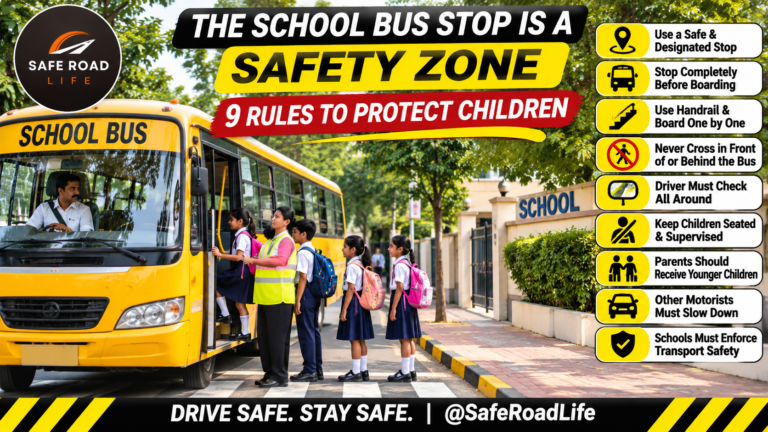
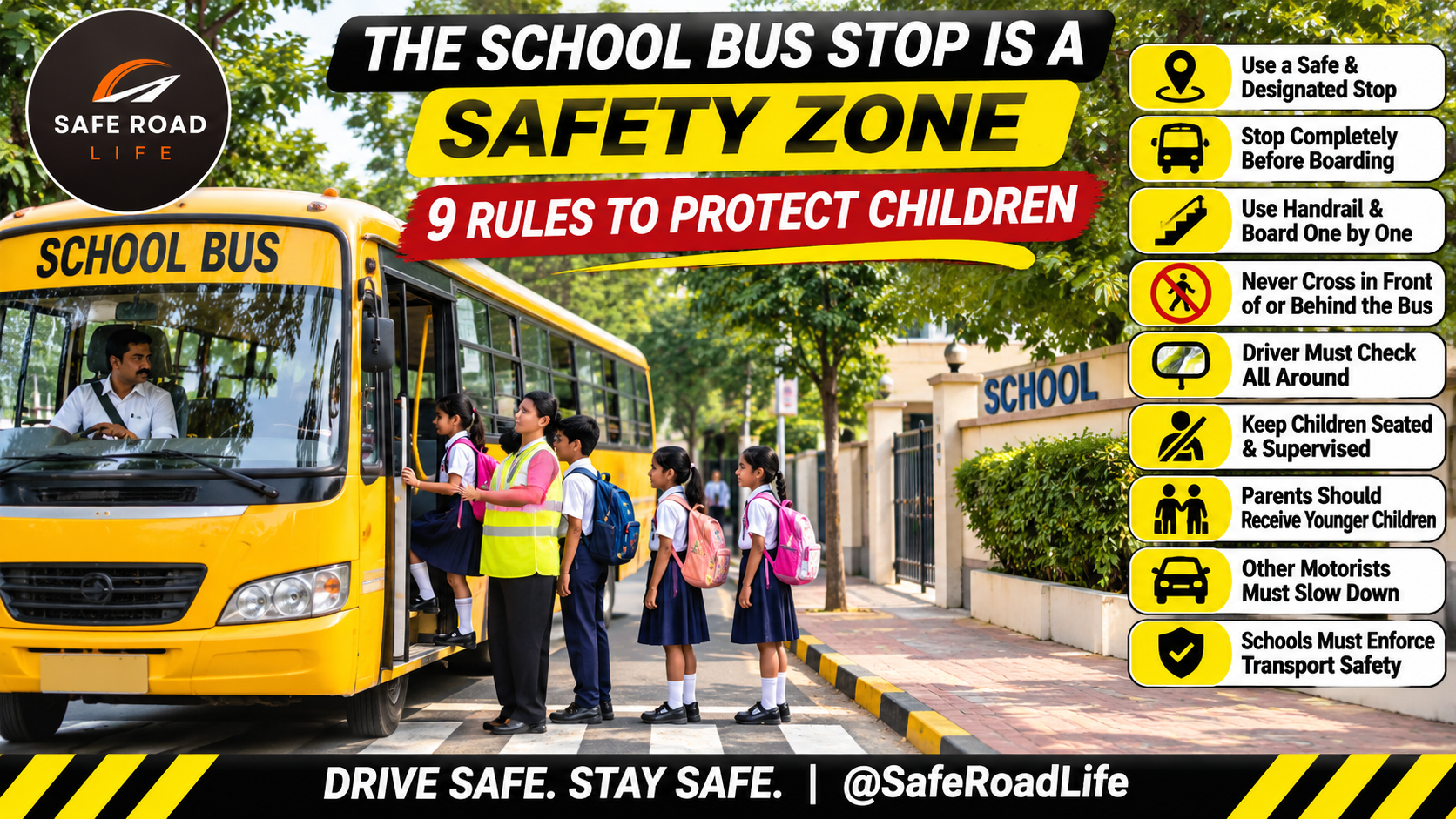
1. Choose a safe and designated pick-up point
Children should wait at a safe location away from moving traffic. Avoid stopping buses at blind curves, junctions, narrow road sections or places where children must walk through traffic. Schools and transport operators should identify suitable pick-up and drop-off points and communicate them clearly to parents.
2. Never rush towards a moving or approaching bus
Children should wait until the bus has stopped completely and the attendant or driver confirms it is safe to board. Running towards a moving vehicle, pushing other children or approaching from the road side can lead to a serious accident.
3. Use the handrail and board one child at a time
Children should board calmly, use the handrail and avoid jumping onto the steps. The attendant should supervise boarding, check that the entrance is clear and ensure no child is left near the vehicle’s wheels or door.
4. Never cross immediately in front of or behind a bus
A school bus can block the child’s view of approaching traffic. Drivers approaching from the opposite direction may also be unable to see a child crossing from behind the bus. Where possible, children should cross at a designated crossing after moving to a place where they can see approaching traffic and be seen by drivers. They must never cross directly behind a bus.
5. Drivers must check before moving the bus
Before pulling away, the driver should check mirrors, blind spots and the area around the vehicle. The attendant should confirm that children are safely inside, clear of the doors and away from the vehicle’s path. Never move the bus while a child is boarding, getting down or standing close to it.
6. Keep children seated and supervised during travel
Children should remain seated while the bus is moving and use the available seat belts where fitted and required. Standing in the aisle, distracting the driver, leaning out of windows or putting hands outside the vehicle can create serious risks.
7. Parents should supervise the final part of the journey
Do not assume that a child is safe simply because the bus has reached the stop. Parents or authorised guardians should receive younger children at the designated point. Teach children to wait safely and never cross the road alone if they are not old enough to judge traffic safely.
8. Other motorists must slow down near school buses
When approaching a school bus stop, reduce speed and watch for children who may emerge from between parked vehicles. Do not overtake a bus while children are boarding or getting down. Never use the horn aggressively or pressure the bus driver to move before children are safe.
9. Schools must enforce transport safety—not just issue instructions
Schools should inspect vehicles, verify driver and attendant training, maintain emergency contact information, define safe routes and stops, and regularly communicate safety procedures to parents. A written policy is not enough. Schools must monitor actual pick-up and drop-off practices and act on unsafe behaviour.
A school transport safety checklist
- Safe, designated bus stop.
- Trained driver and responsible attendant.
- Children wait away from moving traffic.
- Bus comes to a complete stop before boarding.
- Children use handrails and remain seated.
- Attendant supervises boarding and alighting.
- Driver checks surroundings before moving.
- Parents or authorised guardians receive young children.
- Other motorists slow down near school transport activity.
The responsibility belongs to all of us
A school bus is not just another vehicle on the road. It carries children whose safety depends on the decisions of adults around them. Drivers must be patient. Attendants must remain alert. Schools must enforce safe procedures. Parents must teach children safe habits. Other motorists must respect school transport zones.
The final message
A school bell may signal the end of classes, but the responsibility for a child’s safety continues until the child reaches home.
“A safe school journey is not measured by how quickly the bus arrives, but by every child who reaches home safely.”
DRIVE SAFE. STAY SAFE.
@SafeRoadLife
Further reading
Ministry of Road Transport and Highways, India
NHTSA — School Bus Safety
World Health Organization — Road Safety
About the Author