Rain changes the relationship between a two-wheeler and the road. A surface that offered reliable grip in dry conditions may become slippery when wet. Painted road markings, metal covers, loose gravel, potholes and accumulated dirt can become particularly hazardous.
The first rain after a prolonged dry spell deserves extra caution. Water can mix with accumulated dust and oily residues, making some road surfaces unexpectedly slippery. For a motorcycle or scooter rider, even a small loss of traction can lead to a fall.
The safest response is not to ride faster and hope for the best. It is to slow down, increase observation and make every control input smoother.
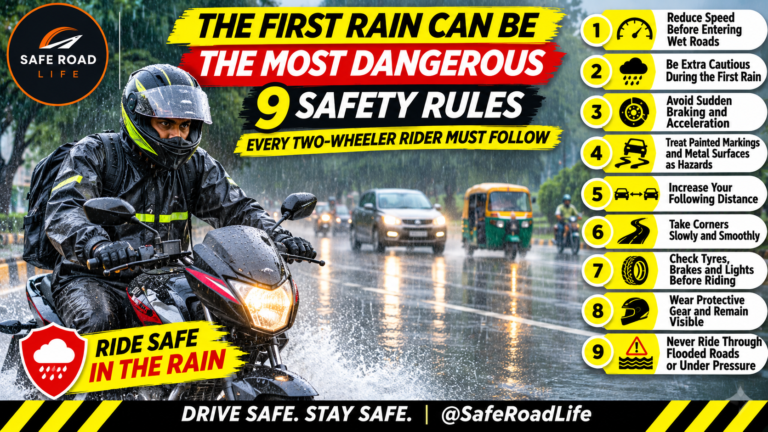
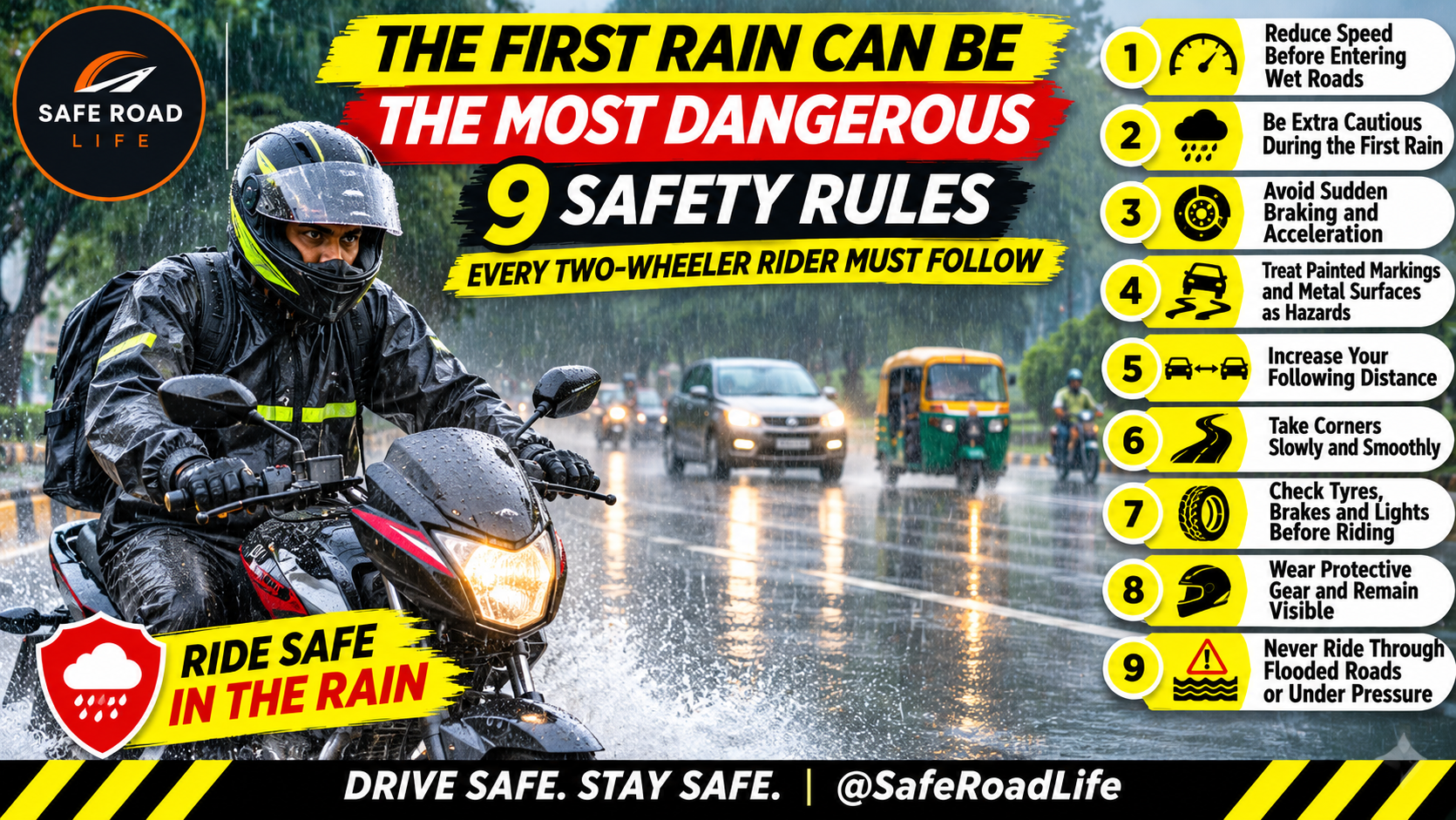
1. Reduce speed before entering wet roads
Do not wait until the tyres begin slipping to reduce speed. Slow down before reaching a wet stretch, junction, sharp bend or congested area. Lower speed gives you more time to identify hazards and respond without sudden braking or steering. Remember that your stopping distance can increase when the road is wet.
2. Be extra cautious during the first rain
After a long dry period, accumulated dust, dirt and oily residues can mix with rainwater and make certain surfaces slippery. Be especially careful around junctions, bus stops, fuel stations, toll plazas and areas where vehicles frequently stop or turn. Never assume that light rain means low risk.
3. Avoid sudden braking and acceleration
On wet roads, abrupt braking or aggressive acceleration can disturb tyre grip. Apply both brakes progressively and smoothly, using the braking technique recommended for your motorcycle or scooter. Avoid grabbing the front brake suddenly or relying only on the rear brake. Practise emergency braking in a controlled, safe environment rather than learning during an actual emergency.
4. Treat painted markings and metal surfaces as hazards
Road markings, manhole covers, steel plates, bridge joints and polished surfaces can offer reduced grip when wet. Avoid leaning sharply while crossing them. Whenever possible, cross such surfaces with the motorcycle upright, at a controlled speed and without sudden acceleration or braking.
5. Increase your following distance
Wet conditions can make stopping more difficult. Maintain a larger gap from the vehicle ahead so you have enough time to respond. Do not follow buses, trucks or cars too closely. Their spray can also reduce your visibility and hide road hazards. If the vehicle ahead brakes suddenly, you need space—not panic.
6. Take corners slowly and smoothly
Reduce speed before entering a bend. Avoid heavy braking, sudden acceleration or sharp steering while leaning. Keep your movements controlled and maintain a line that gives you adequate visibility and room to respond. Never try to match the cornering speed of another rider. Your safety depends on your own grip, tyres, speed and road conditions.
7. Check tyres, brakes and lights before riding
Tyre condition matters even more in wet weather. Check tread condition, tyre pressure as recommended by the manufacturer, and look for cuts, cracks or other damage. Also inspect front and rear brakes, headlamp and tail lamp, brake light and indicators, mirrors and horn, and visor condition where applicable. Do not begin a journey with visibly damaged tyres or defective braking equipment.
8. Wear protective gear and remain visible
Wear a properly fitting, certified helmet with the chin strap securely fastened. Use a clear, clean visor suitable for the conditions. A rain jacket, gloves and suitable footwear help protect you from the weather. Reflective or high-visibility elements can help other road users notice you in poor visibility. Avoid clothing that flaps excessively or interferes with steering and control.
9. Never ride through flooded roads or under pressure
A water-covered road can hide potholes, open drains, damaged surfaces and strong currents. You may not know the depth or condition of the road underneath. Do not attempt to cross deep or fast-moving water. Turn back or choose a safer route. If visibility becomes extremely poor or conditions become unsafe, stop at a safe location away from moving traffic and wait for conditions to improve.
Before every rainy-day ride: checklist
- Tyres have adequate tread and correct pressure.
- Brakes, lights and indicators are working.
- Helmet visor is clean and visibility is clear.
- Rain protection and suitable footwear are ready.
- Speed is reduced for road and weather conditions.
- Following distance is increased.
- Painted markings and metal surfaces are approached carefully.
- Flooded roads are avoided.
- No journey is worth taking an unnecessary risk.
A message for delivery and professional riders
For delivery executives, fleet riders and daily commuters, rain is not an excuse to compromise safety. Delivery deadlines, passenger expectations and traffic pressure must never encourage excessive speed or risky manoeuvres.
Employers and fleet supervisors should reinforce wet-weather riding procedures, inspect vehicles, provide appropriate protective equipment and allow realistic travel times. A safe rider must always have the freedom to slow down or stop when conditions become dangerous.
“The road may become slippery in seconds, but one careful decision can prevent a lifetime of regret.”
Rain will pass. A serious injury may not.
DRIVE SAFE. STAY SAFE.
@SafeRoadLife
About the Author