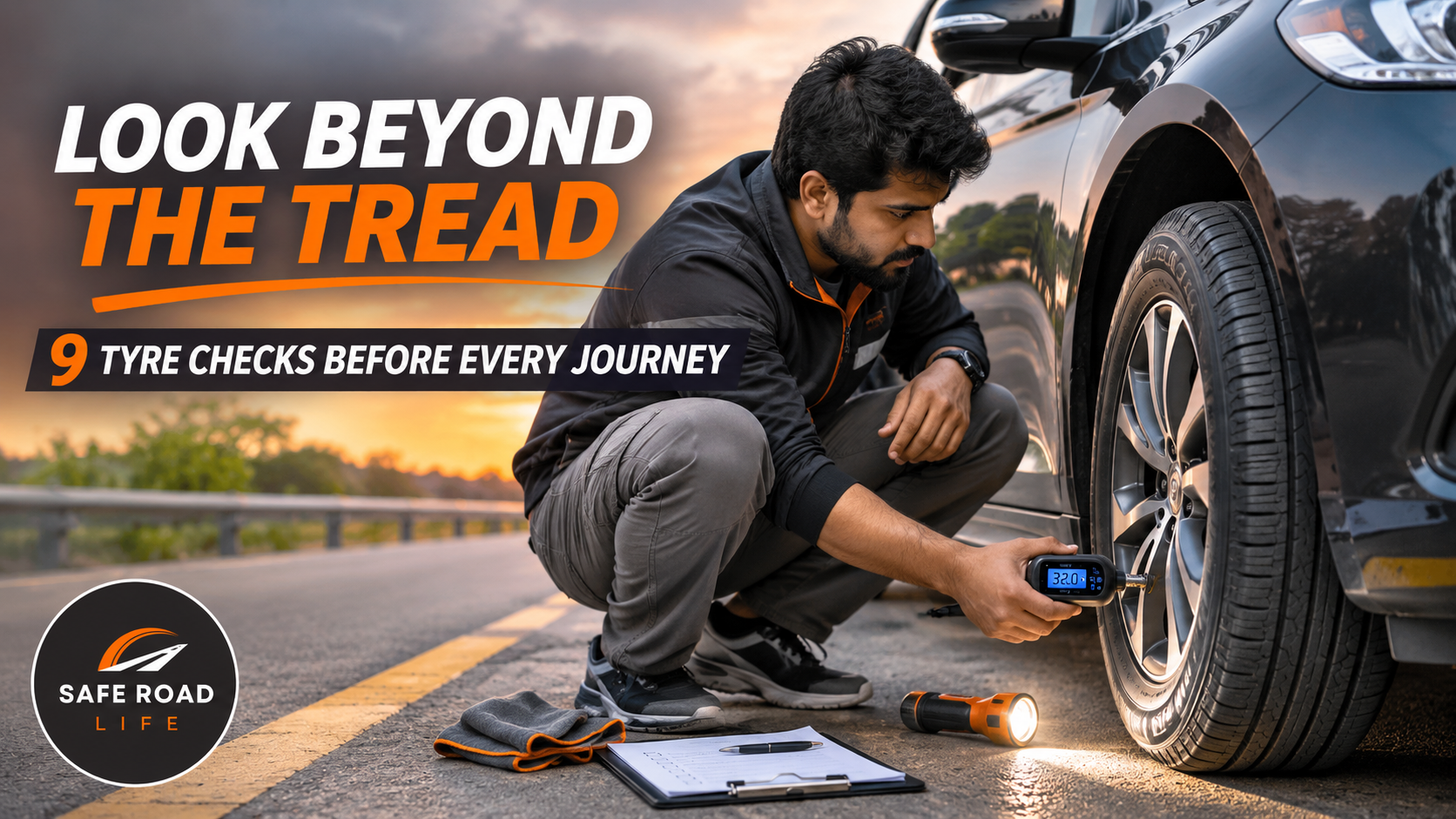
A tyre can look perfectly normal from a distance and still be unsafe. Low pressure, hidden sidewall damage, worn tread or an ageing spare can turn an ordinary journey into a roadside emergency. Tyres are the only parts of your vehicle designed to make direct contact with the road—so their condition matters every time you accelerate, turn or brake.
Do not judge a tyre only by its appearance. Make these nine checks part of your routine, especially before a highway trip, in wet weather or when carrying a full load.
9 tyre safety checks every driver should know
1. Check pressure when the tyres are cold
Use a reliable pressure gauge at least once a month and before long journeys. Check when the vehicle has been parked for around three hours. Find the correct pressure on the vehicle’s tyre-information label or in the owner’s manual—not the maximum pressure printed on the tyre sidewall. Check all four tyres and the spare, and follow the manufacturer’s guidance if front and rear pressures differ.
2. Never rely only on a visual pressure check
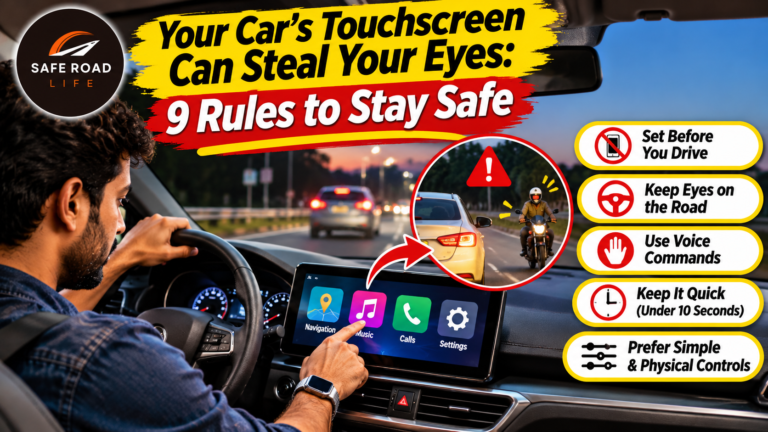
A tyre can be underinflated without looking obviously flat. A tyre-pressure monitoring system is helpful, but it does not replace regular checks with a gauge. If a warning appears, inspect the tyres and check the pressure promptly; do not ignore a warning simply because it later disappears.
3. Inspect the tread across the full width
Look for uneven wear, bald patches and tread that has reached the wear indicators. Tread grooves help channel water away from the contact area. Worn tread reduces wet-road grip and increases the risk of losing control. Replace tyres when they reach the legal or manufacturer-recommended limit for your location and vehicle.
4. Look closely at both sidewalls
Check for cuts, cracks, bulges, blisters, exposed cords or impact damage. A bulge can indicate internal structural damage and should never be treated as a cosmetic issue. If you notice a bulge, exposed cord or serious sidewall damage, do not continue driving on that tyre—arrange professional assistance and replacement.
5. Check for nails, stones and slow leaks
Scan the tread for embedded objects and look for signs of repeated pressure loss. Do not pull out a nail or screw while the tyre is still fitted; removing it may cause rapid air loss. Have a tyre professional assess the puncture and decide whether a safe repair is possible. Sidewall damage is generally not suitable for ordinary puncture repair.
6. Notice vibration, pulling or unusual noise
New vibration, steering pull, thumping or humming can point to tyre damage, imbalance, alignment problems or another mechanical fault. Slow down safely, stop in a suitable place and inspect the vehicle. If the symptom continues or you suspect damage, have the tyres and wheels checked by a qualified technician.
7. Check tyre age—not just tread depth
Tyres age even when a vehicle is driven very little. Find the date code on the sidewall; on tyres using the standard four-digit date code, the first two digits indicate the manufacturing week and the last two indicate the year. Follow the vehicle and tyre maker’s age guidance, and ask a professional to inspect older tyres for deterioration. There is no single age limit that applies to every tyre and vehicle.
8. Make sure the tyre matches the vehicle’s requirements
Use the tyre size, load rating and speed rating specified by the vehicle manufacturer. Incorrect or mismatched tyres can affect handling, braking and stability. If replacing tyres, consult the owner’s manual and a qualified tyre professional; do not choose a tyre based only on price or appearance.
9. Do not forget the spare tyre and tools
A spare that has lost pressure or deteriorated with age may be useless when you need it most. Check its condition and pressure according to the manufacturer’s instructions. Also confirm that the jack, wheel wrench and any locking-wheel-nut key are present and serviceable. Some vehicles have temporary-use spares or tyre repair kits, so know their limits before travelling.
Before a long drive: the 60-second tyre walk-around
- Walk around the vehicle and look for a tyre that appears low or damaged.
- Check cold pressure with a gauge, including the spare.
- Inspect tread and sidewalls for wear, cuts, cracks, bulges or embedded objects.
- Confirm that the tyre size and load rating are suitable for the vehicle and load.
- Pay attention to any pressure warning, vibration, noise or steering change.
- If anything looks unsafe, get professional help before starting the journey.
Three tyre myths that drivers should stop believing
“If it looks inflated, the pressure is correct.” Not necessarily. Use a gauge.
“Good tread means the tyre is safe.” Not if the sidewall is damaged, the tyre is ageing or the pressure is wrong.
“The number on the tyre is the pressure I should use.” That marking is generally a maximum specification, not the vehicle’s recommended operating pressure. Use the vehicle label or owner’s manual.
Tyre safety is a habit, not a last-minute check
A few minutes of inspection can reveal problems before they become emergencies. Make a monthly tyre check routine, repeat it before long journeys and never ignore a warning sign. If you are unsure about a tyre’s condition, ask a qualified tyre professional rather than taking a chance on the road.
Share this checklist with every driver in your family. Safe journeys begin before the engine starts.
DRIVE SAFE. STAY SAFE.
@SafeRoadLife
Trusted tyre-safety guidance
Read the NHTSA tyre safety guide for advice on pressure, tread, damage and tyre age. The Transport Canada tyre-inflation guide also explains why correct cold pressure matters. Always follow the requirements and manufacturer’s instructions applicable to your vehicle and location.
Related SafeRoadLife reading: Tyre Burst on the Highway: Safety Steps for Drivers and Aquaplaning Warning Signs on Wet Roads.
About the Author