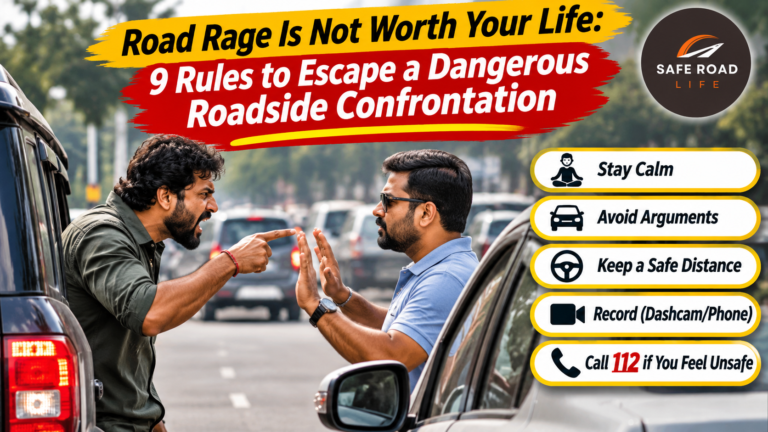
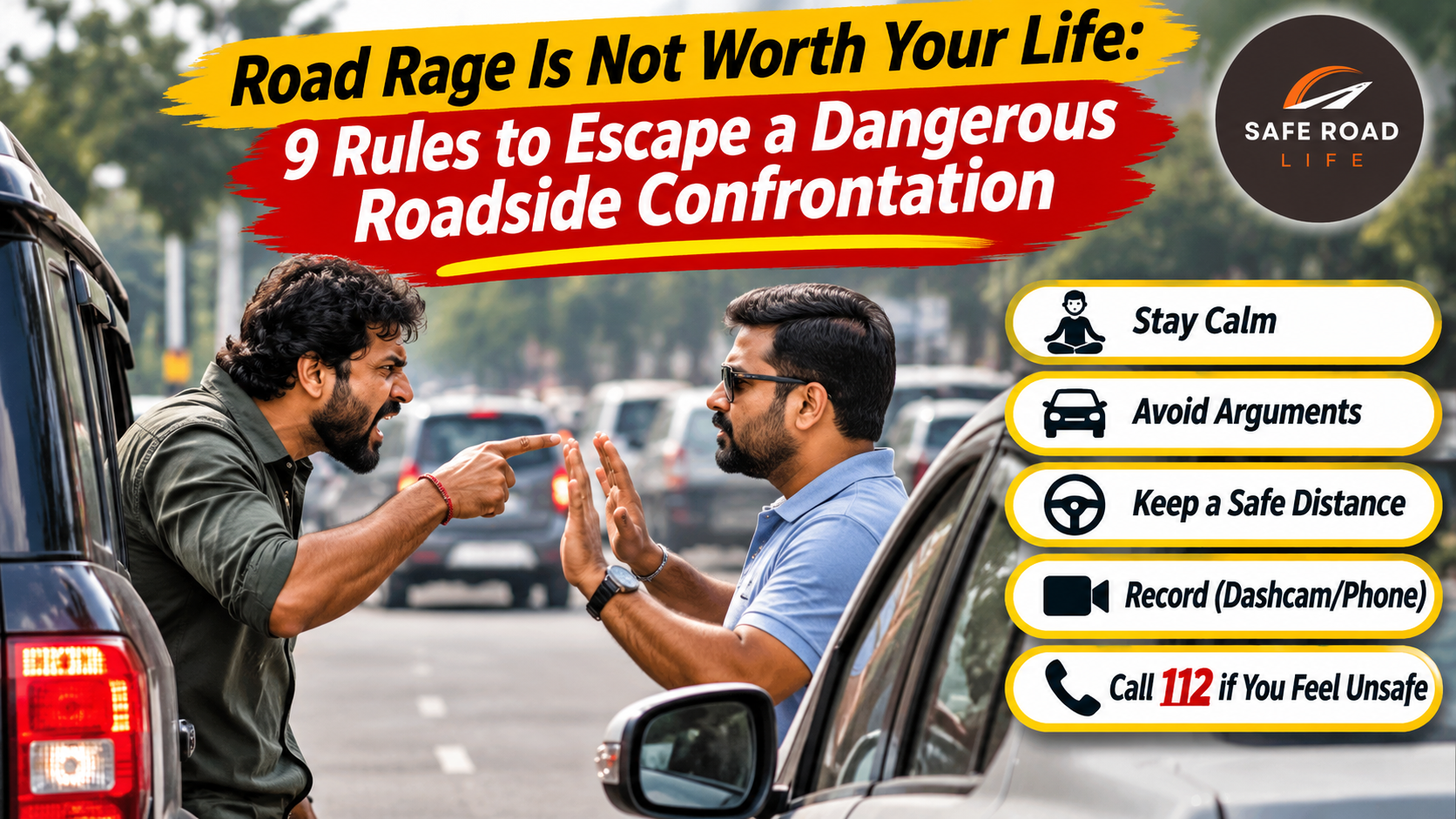
A horn, a lane change or a minor bump should never decide whether someone gets home safely. When anger takes over behind the wheel, a small traffic disagreement can become a dangerous confrontation. The safest driver is not the one who wins an argument. It is the one who prevents the argument from becoming a second emergency.
Road rage has again drawn public attention after a road confrontation in Bhopal following a reported minor collision became the subject of a viral video. News9 reported on 31 October 2026 that police registered a suo motu case after the footage circulated. An earlier Noida dashcam report in October described an alleged chase and brake-checking incident. These are reported allegations and investigations, not findings of guilt. The wider lesson is clear: never allow anger on the road to control your next move.
Why road rage becomes so dangerous
A heated exchange can distract drivers, block moving traffic and trigger sudden braking, chasing, dangerous overtaking or physical intimidation. Other road users—pedestrians, passengers, children, delivery riders and bus commuters—can be pulled into a dispute they did not cause. A driver who stops in an isolated place or gets out to argue may also lose the protection of the vehicle and become more vulnerable.
Anger narrows attention. Instead of reading the road, a driver starts watching the other person, trying to prove a point or retaliate. That is when judgement, space and control disappear.
9 rules to stay safe during a road-rage situation
1. Do not answer aggression with aggression
If another driver shouts, gestures, flashes headlights or uses the horn aggressively, do not respond with insults, abusive gestures or repeated honking. Keep your attention on driving and create space. You do not need to teach a stranger a lesson.
2. Avoid eye-contact challenges and arguments
Do not stare, point fingers or exchange words through open windows. Keep windows raised and doors locked if you feel threatened. A calm, non-engaging response can prevent a verbal dispute from escalating.
3. Never brake-check, chase or block another vehicle
Do not deliberately slow down in front of someone, follow them to demand an explanation, cut across their path or stop sideways to block the road. These actions can cause a collision and place uninvolved people at risk. If you made a mistake, acknowledge it safely and move on.
4. Do not get out of the vehicle to confront someone
If a person approaches angrily, remain inside when it is safe to do so. Keep the doors locked and windows closed. Avoid opening the door to argue or inspect damage while the threat is active. If remaining where you are is unsafe, move away carefully towards a busy, well-lit public place.
5. If you are being followed, do not lead the person home
Do not drive to your home, workplace or a quiet road if you suspect someone is following you. Head towards a populated, well-lit place or a police facility. Do not stop in an isolated stretch to settle the dispute. Call for help when it is safe to do so.
6. Use your horn only for a safety warning
Repeated honking to express anger can increase tension. Use the horn to warn of an immediate road hazard, not to insult or pressure another road user. Give way where it is safe and avoid turning a traffic delay into a personal contest.
7. Record evidence only without increasing the danger
A dashcam may help preserve an objective record. Do not hold or operate a phone while driving, step into traffic to film, or provoke someone to capture a reaction. If safe, note the vehicle registration, location, time and direction of travel. Share relevant evidence with the police rather than encouraging online harassment or publishing unverified accusations.
8. If a collision has occurred, handle it responsibly
Do not flee your legal responsibilities after a crash. Stop at a safe location as circumstances allow, check whether anyone is injured and seek emergency assistance. Exchange necessary details calmly and contact the police where required. If the other person becomes threatening, keep a safe distance and request police assistance instead of arguing.
9. Call 112 when there is an immediate threat
If someone threatens violence, tries to force entry, uses a weapon, deliberately attacks a vehicle or creates an immediate danger, contact India’s emergency response number 112 as soon as it is safe. Give your location, direction of travel, vehicle details and a clear description of the threat. Do not attempt to physically restrain or challenge the aggressor.
Do’s and Don’ts
Do’s
- Stay calm and leave a safe gap from an aggressive vehicle.
- Keep doors locked and windows closed if you feel threatened.
- Move towards a populated, well-lit place when it is safe.
- Use a dashcam recording or factual notes as evidence, if available.
- Call 112 for an immediate threat and seek medical help for injured people.
Don’ts
- Do not chase, race, brake-check or deliberately block another vehicle.
- Do not get out to fight or argue with an aggressive stranger.
- Do not follow someone to their home or invite them to follow you.
- Do not use a phone while driving or put yourself in danger to record video.
- Do not circulate names, faces or allegations online as if guilt is established.
Benefits of choosing calm over confrontation
De-escalation protects passengers and other road users, reduces the chance of a secondary crash and gives police a better opportunity to respond. It also prevents a moment of anger from becoming a lasting injury, criminal complaint, damaged vehicle or family tragedy. Professional drivers especially set an example: patience is part of safe driving, not a sign of weakness.
Your road-rage safety checklist
- Can I create distance without speeding or making a risky manoeuvre?
- Are my doors locked and windows closed if I feel threatened?
- Am I avoiding an argument and keeping my attention on the road?
- Do I know a safe public place or police facility nearby?
- Can I contact 112 safely if the threat becomes immediate?
Reach your destination. Leave the argument behind.
You may forget a rude gesture in a few minutes. A dangerous confrontation can change several lives forever. No lane, horn, scratch or traffic delay is worth risking your life. Stay calm, create distance and let the authorities handle threats. The road is for reaching home—not proving who is right.
Sources and further reading
- News9 — Bhopal road-rage video and police response, 31 October 2026
- The Times of India — Noida road-rage incident reported on dashcam, October 2026
- Ministry of Home Affairs — Emergency Response Support System (112)
- Delhi Traffic Police — General road-safety guidelines
- Maharashtra Highway Traffic Police — Road Safety Guidelines
Drive Safe Stay Safe
@SafeRoadLife
About the Author