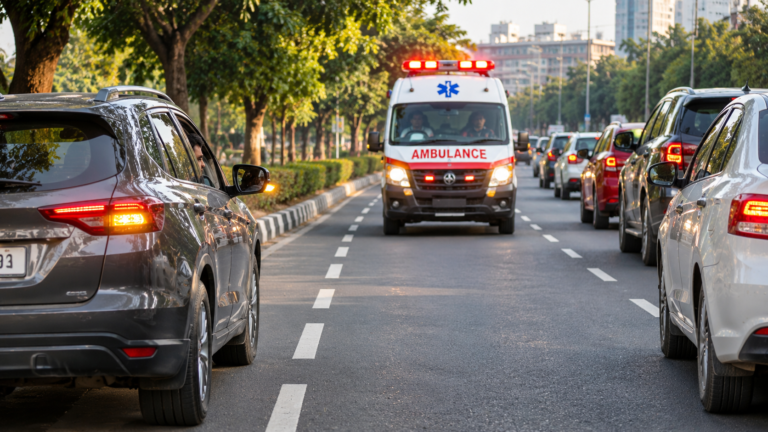
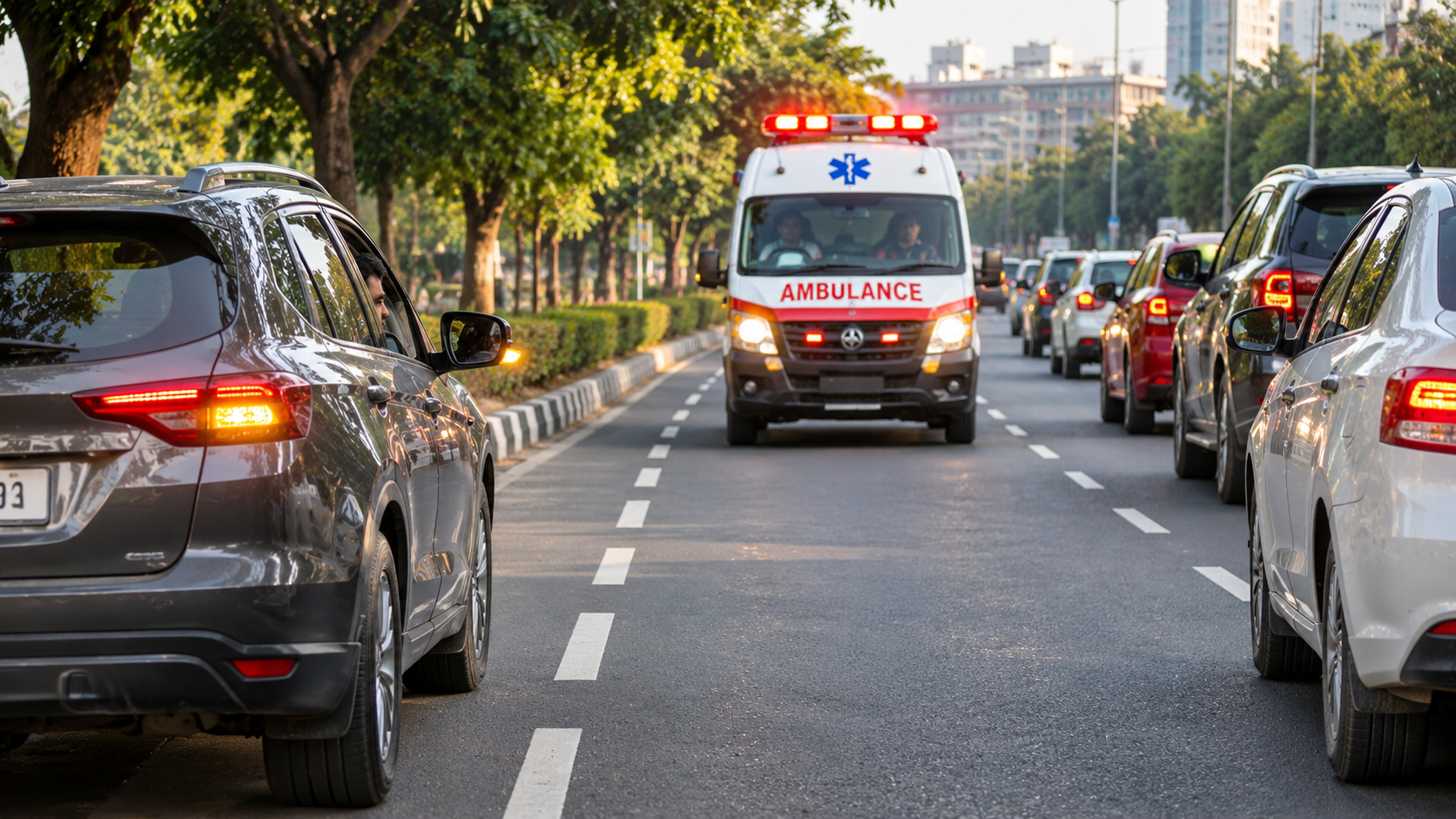
An ambulance is behind you. Do you brake, speed up, move left—or stop? The wrong reaction can block the ambulance or trigger another crash. The safest response is to stay calm, make your intention clear and give way without putting other road users at risk.
This guide explains what to do when an ambulance approaches, including the key rule for drivers in India and practical precautions that apply on roads around the world. The exact legal procedure can differ by country, so always follow local traffic law and police directions.
What should you do when an ambulance approaches?
In India: When an emergency vehicle is approaching, overtaking or entering your path with its multi-toned siren and flasher operating, Regulation 27(5) of the Motor Vehicles (Driving) Regulations, 2017 requires other drivers or riders—unless directed otherwise by a police officer—to give way by moving left as close as practicable to the kerb or road edge in the shortest possible time. Stop and remain stationary if required, until it has passed.
Remember: Give way smoothly. Do not swerve blindly, mount a footpath, enter oncoming traffic or break a signal just because you hear a siren. Safety and the directions of traffic police remain essential.
10 safe ways to give way to an ambulance
1. Stay calm and locate the ambulance
Listen for the siren and check your mirrors. Identify whether the ambulance is behind you, approaching from a side road or coming through another lane. Keep looking ahead too; do not focus only on the emergency vehicle.
2. Check mirrors and blind spots before moving
A two-wheeler or cyclist may be beside your vehicle. Check your mirrors and blind spots before changing position. A rushed move can put a vulnerable road user directly in danger.
3. Signal early and move progressively
Use your indicator and move toward the appropriate side only when the path is clear. Avoid sudden steering or harsh braking. Predictable movements help surrounding drivers understand your intention.
4. In India, give way to the left
Regulation 27(5) specifies that road users must yield by driving to the left as close as practicable to the kerb or edge of the roadway in the shortest possible time, unless a police officer directs otherwise. Stop if required and remain there until the emergency vehicle passes.
5. Never use the footpath as an escape route
Footpaths belong to pedestrians, including children, older people and people with disabilities. Do not drive onto a footpath or pedestrian space to make room. Find a safe position within the roadway.
6. Keep junctions and turning paths clear
Do not stop in a way that blocks an intersection, side road or the ambulance’s turning path. If you are already inside a junction, avoid an abrupt manoeuvre; clear it only when it is safe and lawful, then yield.
7. Do not cross a red light on your own initiative
Do not assume that a siren gives your vehicle permission to cross a red signal. Follow the signal and any lawful instruction from a traffic officer. Do not create a collision risk in an attempt to help.
8. Keep emergency access and the shoulder clear
Do not use the highway shoulder to overtake, queue or follow the ambulance. Leave emergency access routes clear and move aside only where it is safe and permitted.
9. Wait until the emergency vehicle has fully passed
Stay alert for another ambulance, fire engine or police vehicle travelling behind the first one. Do not merge back into traffic until the route is clear.
10. Rejoin traffic carefully—never follow closely behind
Check your mirrors and blind spots, signal and merge smoothly. Do not tailgate an ambulance or use the space it creates to move ahead of other traffic. In India, Regulation 27(6) also requires drivers to maintain at least 50 metres from an emergency vehicle operating its multi-toned horn or flasher, unless directed otherwise by its crew.
What if there is no safe space to move aside?
Do not force your vehicle into a narrow gap, onto a footpath or into oncoming traffic. Keep control, avoid sudden movements and make room at the first safe opportunity. If a traffic officer is managing the road, follow their directions.
What should two-wheeler riders and pedestrians do?
Riders should avoid weaving between vehicles, check mirrors and stay predictable. Pedestrians should remain on the footpath or a safe refuge and never step into the ambulance’s path. Everyone should give the emergency vehicle room without creating a new hazard.
What does Indian law say about giving way to an ambulance?
The Motor Vehicles (Driving) Regulations, 2017 address emergency vehicles in Regulation 27. When the emergency vehicle’s multi-toned horn and flasher are operating, it has right of way. Regulation 27(5) sets out the duty of other drivers and riders to yield to the left as close as practicable to the kerb or road edge, and to stop if required. Regulation 27(6) says drivers must maintain at least 50 metres from the emergency vehicle unless its crew directs otherwise.
For the official text, read the Ministry of Road Transport and Highways’ Motor Vehicles (Driving) Regulations, 2017. The Government of India’s Ministry of Road Transport and Highways clarification on emergency-vehicle access also explains the legal framework.
Frequently asked questions
Should I stop immediately when I hear an ambulance siren?
No. First check your surroundings, signal and move safely to give way. Stop when required or when you have reached a safe position. Sudden braking in a live traffic lane can cause a crash.
Can I cross a red light to let an ambulance pass?
Do not cross a red light on your own initiative. Follow traffic signals and police instructions. The emergency vehicle’s legal exemptions do not automatically give other road users the same exemptions.
How far should I stay behind an ambulance in India?
Regulation 27(6) of the Motor Vehicles (Driving) Regulations, 2017 says drivers must maintain at least 50 metres from an emergency vehicle operating its multi-toned horn or flasher, unless directed otherwise by the emergency vehicle’s crew.
Do the same rules apply in every country?
No. Emergency-vehicle procedures differ between jurisdictions. Check the official driver handbook and traffic laws where you drive, and follow directions from authorised officers.
Make way without making another emergency
An ambulance is carrying someone who may have no time to lose. But panic, sudden swerving and blocked junctions can put more lives at risk. The best response is calm, visible and predictable: check, signal, give way and wait until the road is clear.
Share this guide with a driver who needs to know what to do when an ambulance approaches.
DRIVE SAFE. STAY SAFE.
@SafeRoadLife
Related SafeRoadLife guides
- Blind Spot Safety: Stay Safe Around Trucks and Buses
- Pedestrian Safety: Rules Every Road User Should Know
- Driver Fatigue: Warning Signs Highway Drivers Must Never Ignore
About the Author