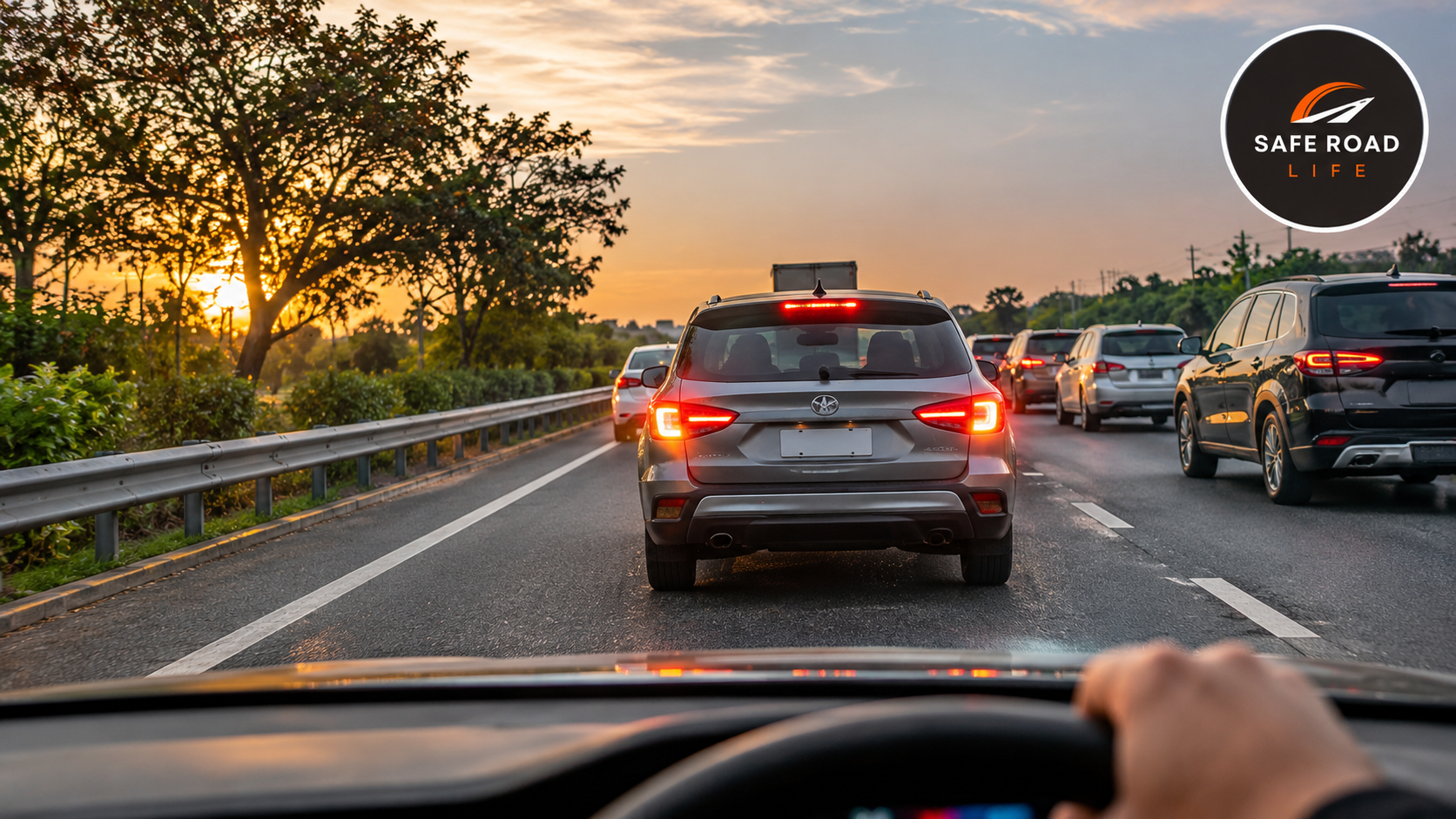
The car ahead brakes. Its red lights flash. Traffic compresses in front of you. You press the brake—but the gap is too small, your attention was somewhere else, and the vehicle keeps moving forward.
That is how an ordinary journey can become a rear-end collision in a moment. No dramatic racing. No extraordinary weather. Sometimes, the difference between a near miss and a life-changing crash is simply the space a driver chose to leave.
Here is the truth every driver, rider and professional vehicle operator needs to remember: the vehicle in front is not responsible for giving you enough room to stop. You are.
Why rear-end crashes deserve global attention
Rear-end collisions happen when a moving vehicle strikes the back of the vehicle ahead. They can occur in city traffic, at traffic lights, on motorways, in tunnels, near toll plazas and in queues that form unexpectedly. They can involve cars, motorcycles, buses, trucks and delivery vehicles.
The World Health Organization estimates that about 1.16 million people die in road crashes every year worldwide, with another 20–50 million suffering non-fatal injuries. These figures cover all road-crash types, not rear-end collisions alone—but they show why every preventable crash pattern deserves attention. WHO: Road traffic injuries.
In the United States, the National Highway Traffic Safety Administration reported that rear-end crashes represented 32.5% of all crashes in 2019, making them the most common crash type in that dataset. This is US-specific historical data, not a global rate; it demonstrates how frequently this crash pattern can occur. NHTSA rear-end crash analysis.
The five seconds that can change everything
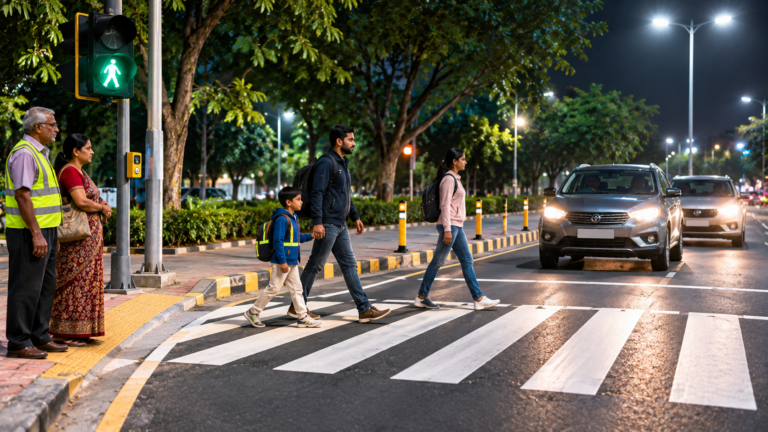
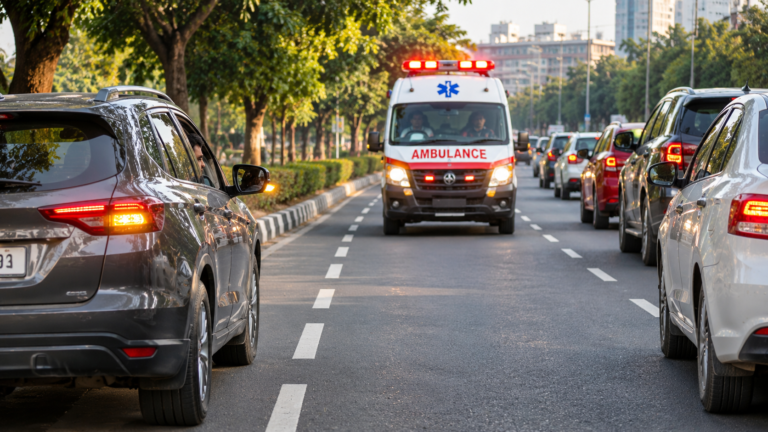
Drivers often focus only on the vehicle immediately ahead. Safer drivers look further down the road. They notice brake lights several vehicles ahead, a pedestrian approaching a crossing, a traffic signal changing, a bus pulling toward a stop, or vehicles slowing near a junction.
Rear-end crashes are often linked to a combination of behaviours and conditions:
- Tailgating: following so closely that there is no useful time or space to react.
- Distraction: looking at a phone, navigation screen, passenger or roadside activity instead of the road.
- Excessive speed: travelling too fast for traffic, visibility, weather or road conditions.
- Late reactions: failing to anticipate slowing traffic, junctions, queues or changing signals.
- Fatigue: reduced alertness and slower responses, especially on long or monotonous journeys.
- Poor vehicle condition: worn tyres, defective brake lights or poorly maintained brakes.
How to prevent a rear-end collision: 9 habits that save lives
1. Create a real following gap
Use a time gap rather than guessing metres. Choose a fixed roadside marker. When the vehicle ahead passes it, count steadily. If your vehicle reaches the marker before your count is complete, ease off and create more space. Official guidance differs by jurisdiction and conditions: two seconds is a commonly stated minimum in ideal conditions, while some authorities recommend three seconds. In rain, poor visibility, darkness, heavy traffic, when following a motorcycle, or when driving a heavy vehicle, allow substantially more space. Follow local rules and your vehicle’s operating guidance. Ontario Driver’s Handbook and NZ Transport Agency guidance.
2. Look beyond the vehicle directly ahead
Scan the road several vehicles ahead. If traffic is slowing in the distance, release the accelerator early and prepare for a smooth reduction in speed. Anticipation is safer than last-second braking.
3. Put the phone away before moving
Do not read messages, scroll, record videos or handle a phone while driving. Set navigation and music before departure. Even a brief glance can make you miss the first warning that traffic is stopping.
4. Match speed to the conditions
A posted speed limit is not a promise that the road ahead is clear. Reduce speed when approaching congestion, roadworks, intersections, toll plazas, school zones, sharp curves or stopped traffic. Never drive faster than the distance you can see to be clear.
5. Make braking predictable
When conditions allow, slow progressively and avoid sudden, unnecessary braking. Check mirrors before slowing sharply, signal early when changing lanes, and never use hazard lights as a substitute for safe driving or proper signalling. If an emergency stop is necessary, brake firmly and maintain control.
6. Give extra space to motorcycles and heavy vehicles
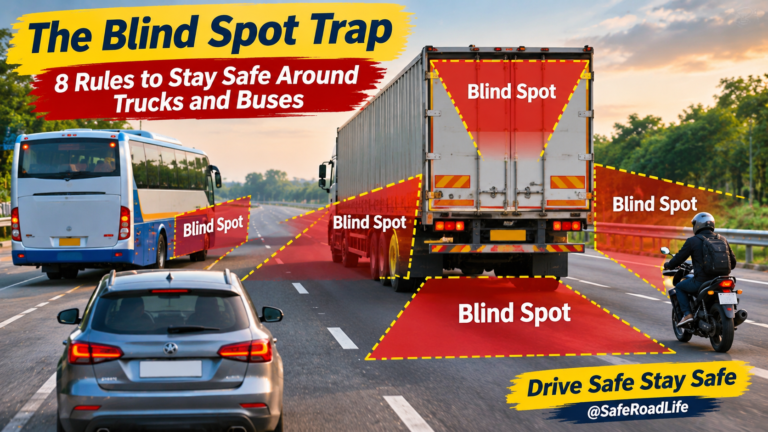
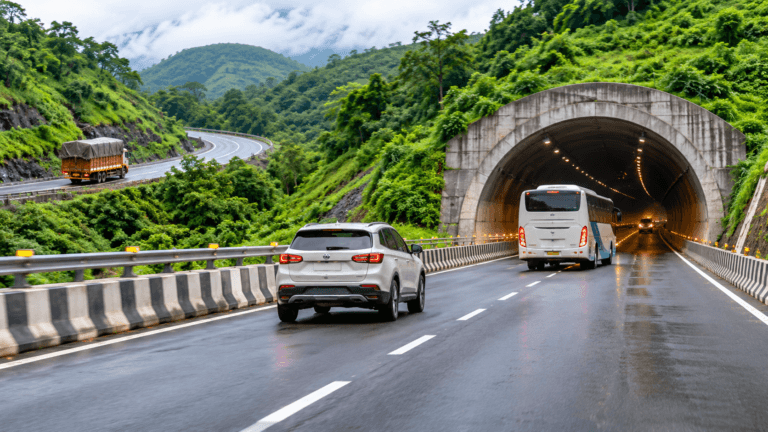
Motorcycles can slow quickly and may be harder to see. Heavy vehicles need more room and may have air-brake response characteristics, heavy loads and larger blind areas. Do not cut into the safety gap in front of a bus or truck. If you drive a heavy vehicle, plan well ahead and maintain a gap suitable for your vehicle, load and operating procedure.
7. Increase the gap in rain, fog and at night
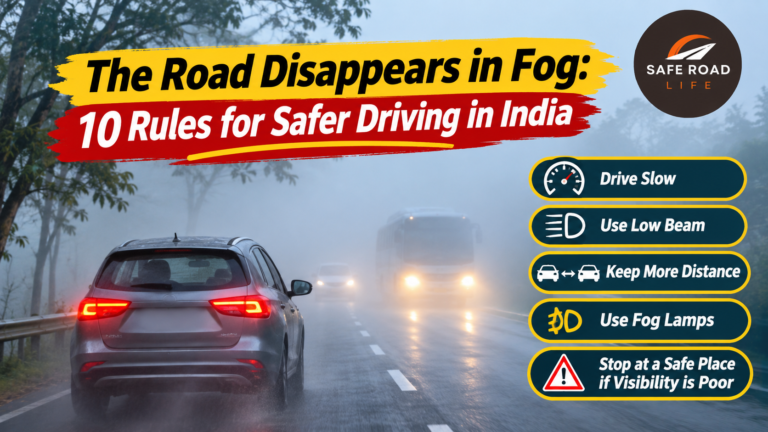
Wet roads can reduce tyre grip and increase stopping distance. Fog and darkness reduce the distance over which hazards can be recognised. Slow down, use appropriate lights, avoid high-beam glare in fog, and increase your following distance. If visibility becomes too poor to proceed safely, stop at a safe place away from moving traffic.
8. Keep tyres, brakes and lights roadworthy
Check tyre pressure and tread, brake performance, brake lights, indicators, mirrors and windscreen visibility. A driver cannot control every action of another road user, but can reduce the risk created by a poorly maintained vehicle.
9. Never drive tired or under the influence
Fatigue, alcohol and impairing substances reduce judgement and reaction ability. Take breaks on long journeys. If you feel sleepy, stop somewhere safe and rest; opening a window or turning up music is not a reliable solution.
What if the vehicle behind is tailgating you?
Do not brake-check, accelerate to challenge the driver or make sudden movements. Keep a larger gap in front of your own vehicle so you have more room to slow gradually. When it is safe and legal, allow the tailgater to pass. Avoid confrontation and keep your attention on the road ahead.
If a rear-end collision happens
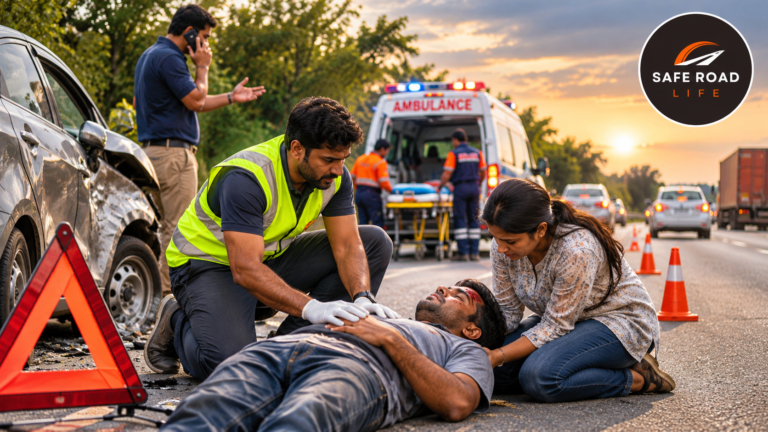
- Stop in a safe place if the vehicle can be moved without creating further danger; switch on hazard warning lights where appropriate.
- Check for injuries and call the local emergency number. Do not move seriously injured people unless there is an immediate danger.
- Warn approaching traffic from a safe position. Do not stand in a live lane.
- Share your location and follow instructions from emergency responders.
- Exchange required details and document the scene only when it is safe and lawful to do so.
Do’s and Don’ts every driver should remember
DO: keep a safe time gap, scan ahead, reduce speed early, stay focused, maintain your vehicle and adapt to weather and traffic.
DON’T: tailgate, use a phone while moving, cut in front of heavy vehicles, brake-check another driver, drive when exhausted or assume the vehicle ahead will never stop suddenly.
The 10-second pre-drive reminder
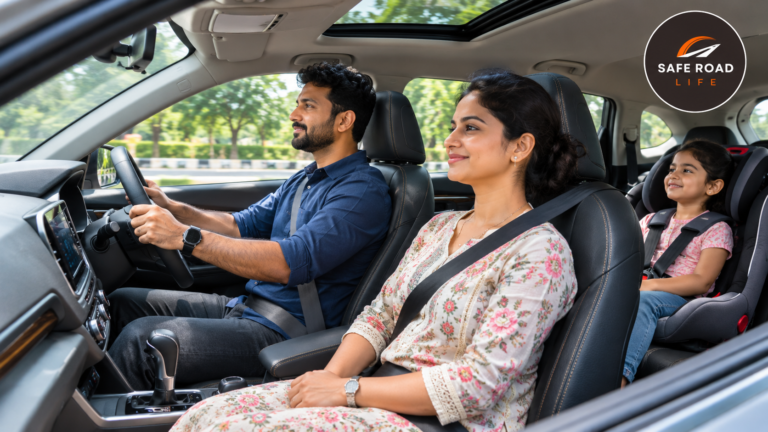
- Seat belt fastened; passengers secured.
- Phone put away and navigation set.
- Mirrors, tyres, brakes and lights checked.
- Following gap planned before speed builds.
- Mind alert, journey planned and no impairment.
One message worth sharing with every driver
You cannot control when the driver ahead brakes. You can control how close you follow, how fast you travel and where your attention goes.
A few extra seconds of space may feel like a delay. In an emergency, they can become the difference between stopping safely and striking another person.
Before your next journey, ask yourself: if the vehicle ahead stopped right now, would I have enough room to stop too?
Frequently asked questions
What is a safe following distance?
A time gap is more useful than a fixed distance. Two seconds is a common minimum in ideal conditions in some jurisdictions; other guidance recommends three seconds. Increase the gap in rain, fog, darkness, heavy traffic, when tired, or when following a motorcycle or heavy vehicle. Always follow local regulations and professional vehicle procedures.
Why do rear-end collisions happen?
Common contributing factors include tailgating, distraction, inappropriate speed, fatigue, poor visibility, late braking and vehicle defects. The exact causes must be established from evidence in each crash.
Does a rear-end crash always mean the following driver is at fault?
Not automatically. Responsibility depends on the facts, local law and evidence. Drivers should leave enough room to stop safely and avoid assumptions before an investigation is complete.
Further reading and trusted guidance
- World Health Organization – Road traffic injuries
- NHTSA – Rear-end crash analysis and automatic emergency braking
- Ontario Ministry of Transportation – Maintaining space
- NZ Transport Agency – Following distance
- UK Highway Code – Safe stopping distances and tailgating
Drive Safe Stay Safe
@saferoadlife
About the Author