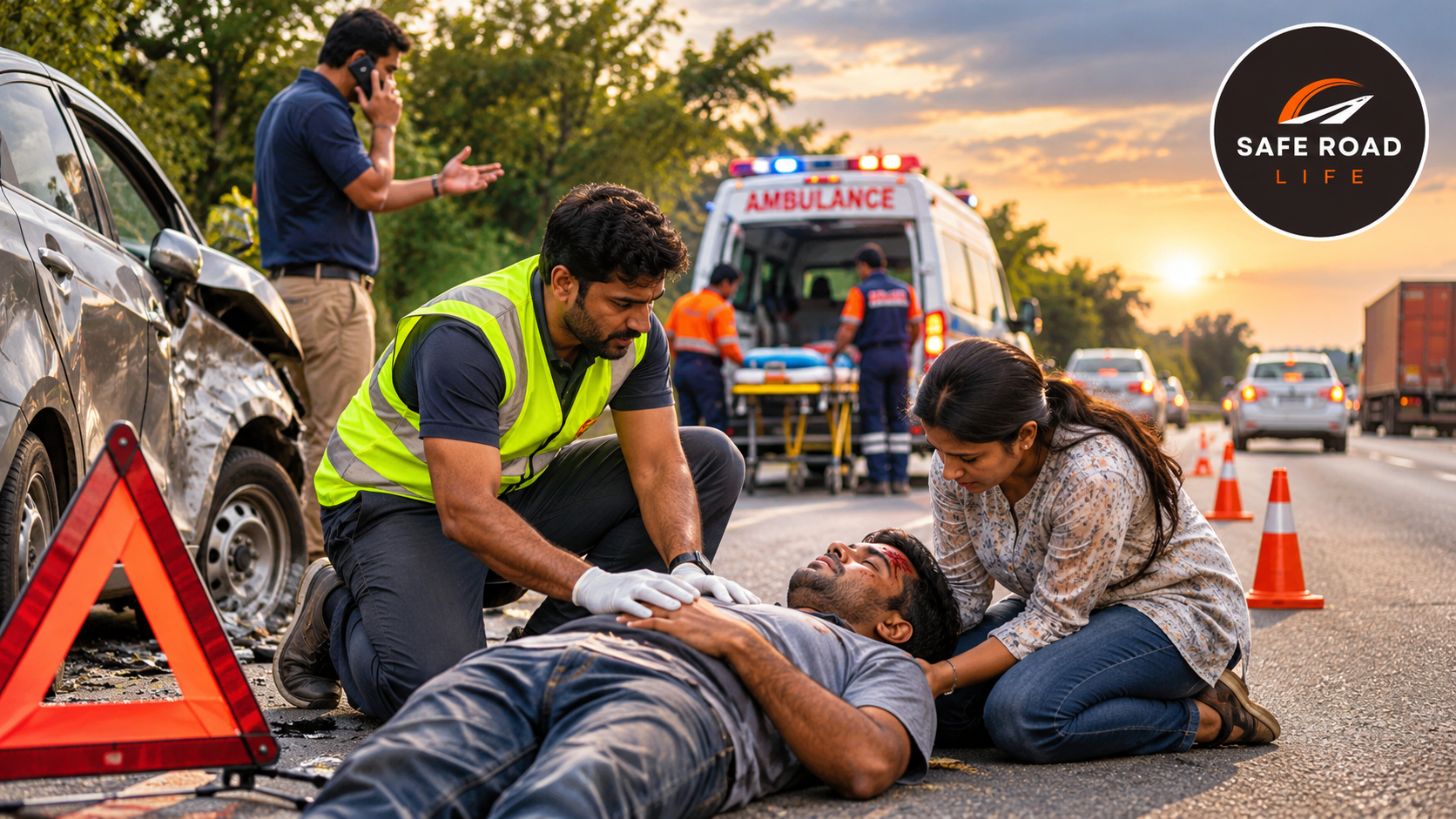
A crash can turn an ordinary journey into an emergency in seconds. In the moments that follow, the people who stop to help can make a real difference—but a rushed or unsafe rescue can create another victim. The first rule is simple: protect yourself, make the scene safer, and get professional help moving.
You do not need to perform complicated medical procedures to be useful. Calm communication, an accurate emergency call, protection from passing traffic and sensible first aid within your ability can all matter.
1. Stop only where it is safe
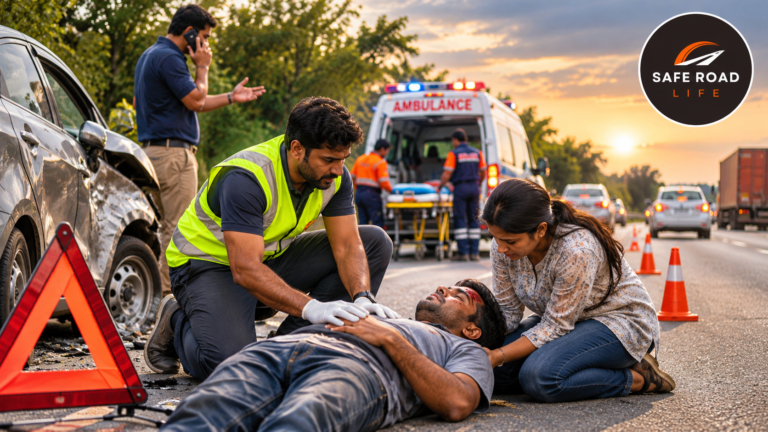
Do not brake suddenly or stop in a live lane. If you can do so safely, park well away from the crash, switch on your hazard warning lights and keep yourself out of the path of approaching vehicles. Watch for blind bends, poor visibility, fast traffic, fire, smoke, leaking fuel, damaged power lines and unstable vehicles.
If the location is dangerous and you cannot make it safer, stay back and tell emergency services exactly what the hazard is. Never walk into moving traffic to reach a casualty.
2. Warn approaching traffic without creating another hazard
Ask another bystander to alert approaching road users from a safe position. Use hazard lights and warning devices only where they can be placed without exposing anyone to traffic. Do not stand behind a vehicle in a live lane, wave people into danger or attempt to direct high-speed traffic yourself.
On a motorway or highway, follow the road authority’s local procedures. A safe refuge, barrier or emergency phone may be available. Keep bystanders away from the carriageway.
3. Call emergency services early—and give a precise location
Call the local emergency number as soon as it is safe. If other people are present, point to one person and ask them to call while you coordinate the scene. Give the operator:
- The road name, direction of travel, nearest junction, exit, kilometre marker or visible landmark
- The number and type of vehicles involved
- Your best estimate of how many people are injured or trapped
- Any fire, smoke, fuel leak, electrical danger or traffic obstruction
- A callback number if requested
Do not end the call until the operator tells you to. Follow their instructions and send someone to meet the ambulance only if that can be done safely.
4. Approach carefully and check whether the person responds
Only approach when the scene is safe. Introduce yourself, speak calmly and ask whether the person can hear you. Avoid sudden movements. Do not assume that someone who is quiet is uninjured; serious injuries may not be obvious.
Look for normal breathing and obvious life-threatening bleeding. If the person is unresponsive or not breathing normally, tell the emergency operator immediately and follow their CPR or resuscitation instructions. Start CPR or use an automated external defibrillator (AED) if indicated and you can do so, following the operator’s guidance and your level of training.
5. Do not move an injured person unless there is immediate danger
A road-crash casualty may have a neck, back or other serious injury even when there is no visible wound. If the person is breathing and the location is safe, encourage them to remain still and in the position found. Do not pull them upright, ask them to walk, remove a helmet or drag them from a vehicle without a compelling immediate danger.
Movement may be necessary if there is an immediate threat such as fire, rising water or a vehicle about to be struck again. If so, follow the emergency operator’s instructions and move the person only as far as needed to reach safety.
6. Help control severe bleeding—within your ability
Severe external bleeding needs urgent attention. If it is safe, use disposable gloves or another suitable barrier if available. Apply firm, direct pressure to the wound with a clean dressing or cloth and keep pressure on it while waiting for help. If blood soaks through, add more material without lifting the first dressing.
Do not remove an object embedded in a wound or press directly on it. Do not attempt procedures you have not been trained to perform. Tell the emergency operator where the bleeding is and whether it is controlled.
7. Keep the person calm, warm and reassured
Stay with the injured person if it is safe. Speak slowly, explain that help is on the way and listen to what they tell you. Protect them from cold, rain or excessive heat using available coverings, while avoiding unnecessary movement. Monitor their breathing and responsiveness and report any change to the emergency operator.
Do not give food, drink, alcohol or medication. Do not promise that the injuries are minor or that everything will be fine. Reassurance should be honest and calm.
8. Share clear information when responders arrive
When ambulance, fire or police teams arrive, give a short factual handover: what you saw, the approximate time of the crash, the number of people involved, any changes in breathing or alertness, bleeding you noticed and the first aid provided. Point out hazards and identify any person who may still be trapped.
Do not obstruct responders, crowd around casualties or share identifiable images of injured people online. Protect their dignity and privacy.
What not to do at a road-crash scene
- Do not put yourself or other bystanders in the path of traffic.
- Do not smoke, light a flame or use anything that could create an ignition source near a suspected fuel leak.
- Do not move a casualty unnecessarily or remove a motorcyclist’s helmet.
- Do not give an injured person food, drink or unprescribed medicine.
- Do not crowd the scene, argue, speculate about blame or film victims for social media.
- Do not leave a serious emergency unreported; call for professional help even if you cannot provide first aid.
Good Samaritan protection in India
People may hesitate to help because they fear police or hospital formalities. India has legal protections intended to encourage Good Samaritans—people who voluntarily help road-crash victims in good faith. The Ministry of Road Transport and Highways’ Good Samaritan rules provide protections concerning unnecessary detention, compelled disclosure of personal details and being forced to become a witness. The precise procedure and circumstances matter, so consult the official rules for details.
Official information: Ministry of Road Transport and Highways – Good Samaritan Rights and Duties and Press Information Bureau – Rah-Veer and Good Samaritan protections.
A simple road-crash response checklist
- Protect: Park safely; assess traffic, fire and other hazards.
- Warn: Alert approaching traffic only from a safe position.
- Call: Contact the local emergency service and give an exact location.
- Assess: Check response, normal breathing and severe bleeding if safe.
- Assist: Follow dispatcher instructions; give only first aid you can safely provide.
- Handover: Tell responders what happened and what you observed or did.
Frequently asked questions
Should I pull an injured person out of a crashed car?
Not routinely. They may have a spinal or other serious injury. Do not move them unless an immediate danger makes remaining there more dangerous, and follow emergency-service instructions.
What if I do not know first aid?
You can still help by keeping yourself safe, calling emergency services, giving an accurate location, warning others from a safe place and following the call handler’s instructions. Consider taking an accredited first-aid course.
Can I help a crash victim in India without becoming involved in a police case?
India’s Good Samaritan rules are designed to protect people who voluntarily help in good faith. They address unnecessary detention and compulsory disclosure of personal details, among other protections. Read the official Ministry guidance for the exact provisions.
Which emergency number should I call?
Use the official emergency number for the country or region where the crash occurred. Numbers and ambulance arrangements differ between locations; do not assume a number used in one country works everywhere.
Important: This article provides general public-safety information, not professional medical training or a substitute for emergency-dispatch instructions. First-aid procedures and emergency numbers vary by country. When in doubt, call local emergency services and follow their directions.
DRIVE SAFE. STAY SAFE.
@SafeRoadLife
Sources and further reading
- Indian Red Cross Society – Indian First Aid Manual
- UK Department for Transport – The Highway Code, Annex 7: First aid on the road
- American Heart Association and American Red Cross – 2024 First Aid Guidelines
- India Ministry of Road Transport and Highways – Good Samaritan Rights and Duties
About the Author