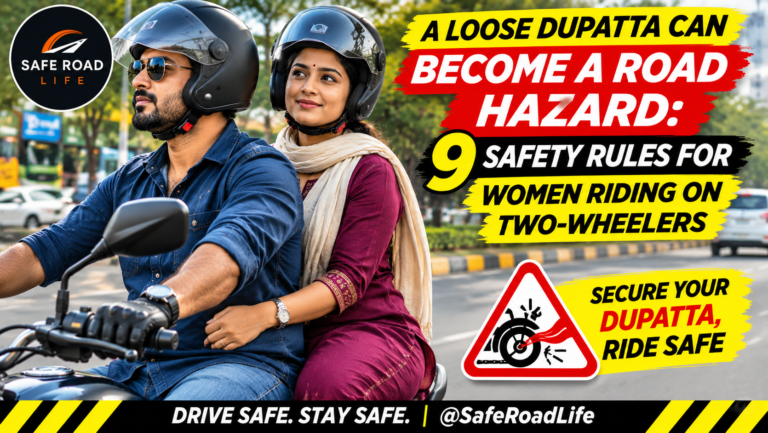
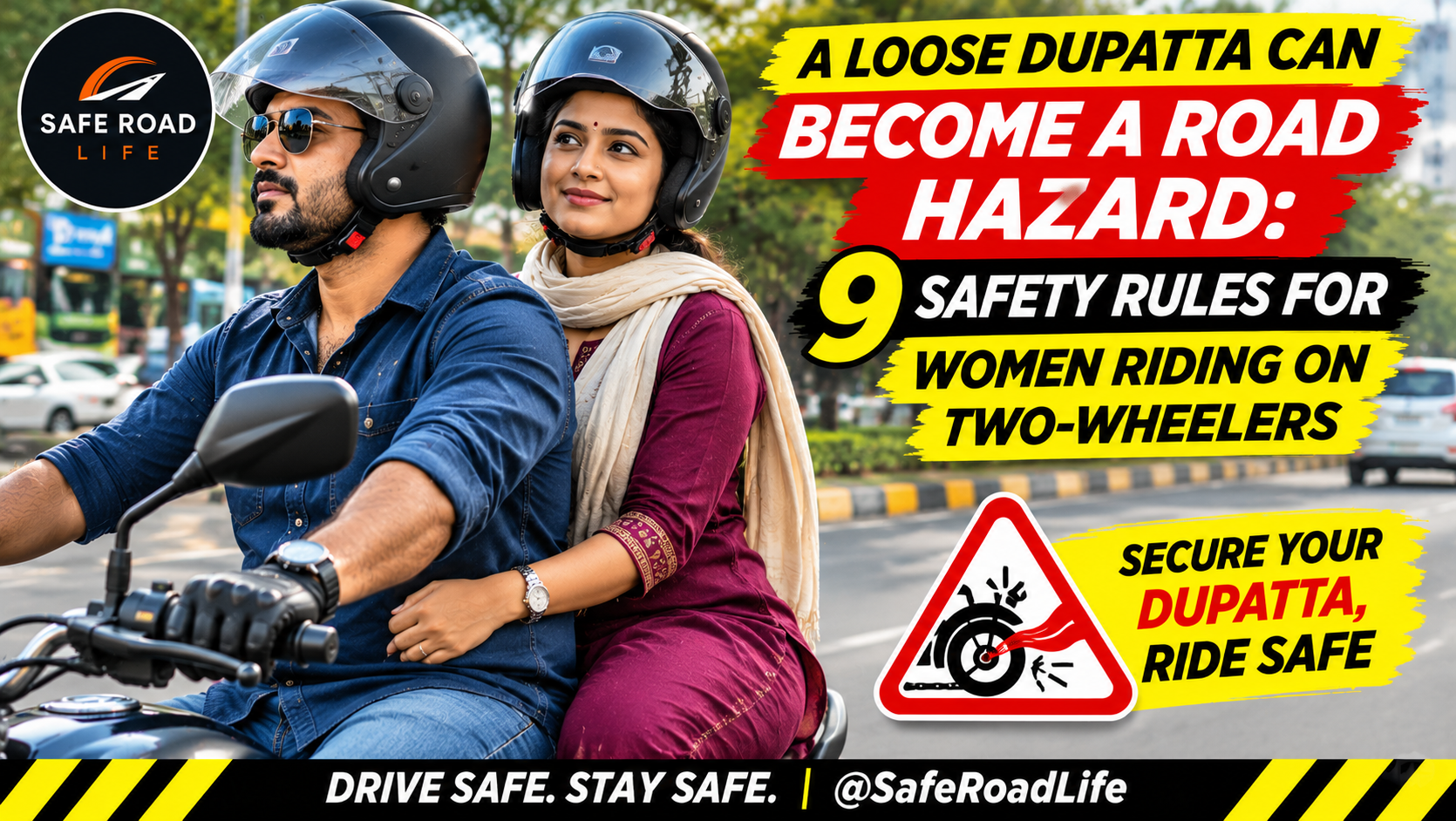
A two-wheeler journey may look routine, but loose clothing can create a serious and often overlooked risk. A flowing dupatta, sari pallu, long scarf or loose garment can become entangled with a moving wheel, chain or other mechanical component. It can also distract the rider, obstruct movement or affect balance.
This is particularly important for women travelling as pillion passengers, although the same precautions apply to every two-wheeler user wearing loose clothing. A safe journey begins before the motorcycle moves.
Tradition and personal style deserve respect, but loose fabric must never be allowed to compromise road safety.
1. Secure every loose end before mounting
Check your dupatta, sari pallu, scarf and other loose garments before sitting on the motorcycle. Keep loose fabric away from the wheels, chain, sprocket and moving mechanical parts. Do not leave long ends hanging near the rear wheel.
2. Never allow clothing to trail near the wheel
A moving wheel can catch loose fabric in an instant. Once entangled, the material may pull the wearer towards the wheel or disturb the motorcycle’s balance. Keep garments properly secured throughout the journey.
3. Sit properly and maintain a stable position
A pillion passenger should sit facing forward in the intended seating position, with both feet on the designated footrests. Avoid sitting sideways unless the vehicle is specifically designed and legally permitted for that arrangement. Follow the motorcycle manufacturer’s passenger guidance.
4. Wear a properly fitted helmet
Both rider and pillion passenger should wear appropriate, correctly fastened helmets that meet applicable standards. A helmet protects the head during a collision or fall. Do not compromise helmet fit because of hairstyles, scarves or convenience.
5. Keep footwear secure
Avoid loose slippers or footwear that can slip off or interfere with foot placement. Wear properly fitted footwear that stays securely on your feet and allows stable use of the footrests.
6. Hold the rider or passenger grab rail securely
Maintain a stable posture and use the designated grab rail or appropriate handhold. Avoid sudden movements, leaning unexpectedly or shifting your weight while the motorcycle is moving.
7. Keep clothing away from the exhaust
The exhaust system can become extremely hot. Ensure that sari fabric, dupattas and other garments do not touch the exhaust or hot engine components. A garment caught against a hot surface can cause burns or damage.
8. Do not adjust clothing while the motorcycle is moving
Never try to pull, rearrange or release loose fabric while travelling. If clothing becomes uncomfortable or unsafe, ask the rider to stop at a safe location away from moving traffic before making adjustments.
9. Make a final safety check before starting
The rider should check that the pillion passenger is seated securely, clothing is safely arranged, helmets are fastened and footwear is properly positioned. Never begin the journey until both people are ready.
Two-wheeler clothing safety checklist
- Dupatta, sari pallu and scarf securely arranged.
- No loose fabric near wheels or chain.
- Clothing clear of the exhaust.
- Both rider and pillion wearing helmets.
- Footwear properly fitted.
- Pillion seated securely.
- Feet placed on designated footrests.
- No clothing adjustment while moving.
- Final check completed before starting.
A message for families and professional riders
Road safety awareness should include passengers, not just riders. Parents, spouses and family members should encourage safe clothing arrangements and proper protective equipment before every journey.
Employers and fleet operators should also include pillion safety and clothing-related hazards in two-wheeler safety briefings. A few seconds of preparation can prevent a serious injury.
“What flows beautifully in the wind should never be allowed to become trapped in a moving wheel.”
Respect your clothing. Protect your journey. Return home safely.
DRIVE SAFE. STAY SAFE.
@SafeRoadLife
About the Author