Pregnancy does not mean you must automatically stop travelling by car. But it does mean you should pay closer attention to how you sit, how your seat belt fits and how your vehicle is adjusted. In a crash, a correctly worn three-point seat belt is one of the most important protections for both the pregnant occupant and the developing baby.
One dangerous myth still circulates: that a pregnant woman should avoid wearing a seat belt because it may press against the baby. The guidance from the US National Highway Traffic Safety Administration (NHTSA), the American College of Obstetricians and Gynecologists (ACOG) and the UK National Health Service (NHS) is clear: wear the seat belt on every journey, with the lap portion low across the hips and below the bump, and the shoulder portion across the chest.
Here are nine practical rules for pregnant drivers and passengers. Individual medical concerns should always be discussed with your obstetrician or healthcare professional.
1. Wear a seat belt on every trip, at every stage
Whether you are in the first trimester or close to your due date, buckle up before the vehicle moves. A short city journey is not risk-free, and a sudden stop can happen close to home. Use the vehicle’s properly fitted three-point lap-and-shoulder belt whenever available.
Never travel unrestrained because the journey is short, the road looks quiet or you are sitting in the rear. If you have a medical condition that makes normal belt use difficult, seek individual advice from your doctor rather than simply leaving the belt off.
2. Keep the lap belt below the baby bump
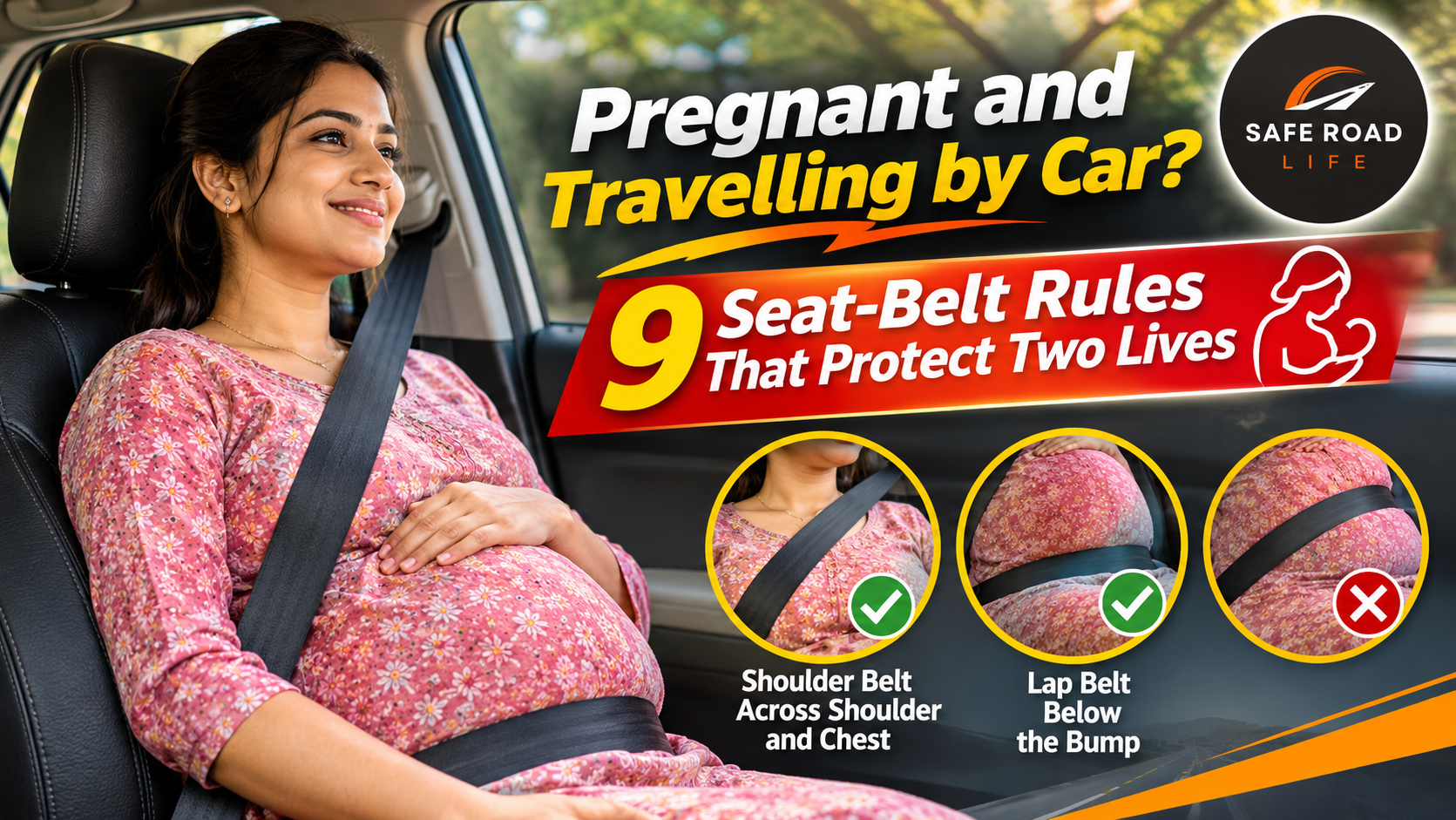
This is the most important positioning rule. Place the lap portion of the belt low across your hips and pelvic bone, beneath your abdomen—not across the bump. It should fit snugly and lie flat against your body.
A belt positioned over the abdomen can load the wrong area during a crash. If the belt keeps riding up, stop safely and reposition it before continuing.
3. Position the shoulder belt across your chest
The shoulder strap should run diagonally across the centre of your chest, between your breasts, and over your shoulder. It should sit away from your neck but must not slip off the shoulder.
Never put the shoulder belt under your arm or behind your back. Those shortcuts change how crash forces are distributed and can leave your upper body inadequately restrained.
4. Remove slack—do not add padding or clips
After buckling up, remove slack so the belt lies flat and snug. Do not twist the webbing, sit on the belt or place cushions, pillows or other objects between your body and the belt to make it feel more comfortable.
Avoid unapproved belt-positioning clips, extensions or pregnancy belt accessories unless the vehicle manufacturer and a qualified safety professional confirm that a specific product is suitable for your vehicle and seat-belt system. A device that changes the belt path may interfere with its designed performance.
5. Adjust your seat and keep distance from the steering wheel
If you are driving, sit upright and adjust the seat so you can comfortably reach the steering wheel and pedals without leaning forward. Move the seat back to create as much space as practical between your abdomen and the steering wheel, while retaining full control of the vehicle.
Adjust the steering wheel, if the vehicle allows it, so it is directed towards your chest rather than your abdomen or face. Do not recline the seat excessively: the shoulder belt must remain correctly positioned and close to your body.
6. Keep the airbag switched on
Do not switch off a functioning front airbag simply because you are pregnant. Airbags are designed to work with seat belts as part of the vehicle’s restraint system. The seat belt must still be worn correctly, and the driver’s seating position should be adjusted to maximise safe distance from the steering wheel.
If you are a front-seat passenger, move the seat back as far as practical while maintaining a comfortable, safe seating position. Always follow the vehicle owner’s manual for airbag and seat-adjustment instructions.
7. Plan long journeys and take regular breaks
Long periods of sitting can be uncomfortable during pregnancy. If a long car journey cannot be avoided, plan regular safe stops to get out, stretch and move around. Drink water, keep the cabin ventilated and avoid travelling when you are exhausted, dizzy or unwell.
Discuss long-distance travel with your healthcare professional if you have pregnancy complications, a history of blood clots or any medical concern. Do not let a tight schedule force you to continue when you need a break.
8. Choose the safest available seat and avoid unnecessary risks
When travelling as a passenger, use a seating position with a properly functioning three-point seat belt and follow the vehicle manufacturer’s instructions. Sit upright, keep the lap belt below the bump and the shoulder belt across the chest. Do not share a seat belt or hold another passenger on your lap.
As a driver, avoid distractions, speeding, harsh manoeuvres and driving when you feel unwell. If you are uncomfortable behind the wheel or cannot maintain a safe driving position, ask someone else to drive.
9. After any crash, seek medical advice promptly
If you are involved in a collision during pregnancy, contact your healthcare professional or seek urgent medical assessment—even if the impact seems minor and you feel fine. Some complications may not be immediately obvious. Do not rely only on the absence of pain or visible injury.
Seek emergency help immediately if you experience abdominal pain, bleeding, fluid leakage, contractions, dizziness, fainting or reduced foetal movement. Follow the medical team’s advice and do not drive yourself if you may need urgent care.
The 10-second pregnancy seat-belt check
- Lap belt low and snug across the hips, below the bump.
- Shoulder belt across the chest and between the breasts.
- No belt under the arm, behind the back or over the abdomen.
- Belt flat, untwisted and without slack.
- Seat upright; steering wheel kept as far from the abdomen as practical.
- Airbag left on, unless the vehicle manufacturer or a qualified professional advises otherwise for a specific vehicle-related reason.
- Regular breaks planned for long journeys.
Frequently asked questions
Should pregnant women wear seat belts?
Yes. Major road-safety and obstetric guidance recommends wearing a seat belt throughout pregnancy. The lap belt should sit low across the hips below the bump, while the shoulder belt crosses the chest.
Can the lap belt go across the baby bump?
No. Position the lap belt below the abdomen, snugly across the hips and pelvic bone. Never place it over or on top of the bump.
Should a pregnant driver turn off the airbag?
Do not switch off a functioning airbag just because of pregnancy. Airbags are designed to work with seat belts. Adjust the seat and steering wheel to maintain as much safe distance from the abdomen as practical, and follow the vehicle manual.
What if a pregnant woman is involved in a minor road accident?
Contact a healthcare professional or seek medical assessment promptly after any collision, even if there are no obvious injuries. Get emergency help for pain, bleeding, fluid leakage, contractions, dizziness or reduced foetal movement.
A safer journey protects more than one life
Pregnancy is not a reason to travel without protection. The right belt position, a carefully adjusted seat and a calm driving plan can make a meaningful difference. Make the seat-belt check a habit before every journey—and remind family members that correct restraint matters for every passenger.
DRIVE SAFE. STAY SAFE.
@SafeRoadLife
References and further reading
- US National Highway Traffic Safety Administration (NHTSA) — Seat Belt Safety, including recommendations for pregnant drivers and passengers.
- American College of Obstetricians and Gynecologists (ACOG) — Car Safety for Pregnant Women, Babies, and Children.
- UK National Health Service (NHS) — Travelling in pregnancy.
- Road Safety Authority, Ireland — Safe use of seat belts during pregnancy.
About the Author