Your child may be sitting quietly, wearing a seat belt—and still not be properly protected. Adult seat belts are designed around an adult body. On a small child, the lap belt can ride up over the stomach and the shoulder belt can cross the neck or face. In a crash, that poor fit can cause serious injury.
A child car seat or booster seat is not an accessory. It is a safety system that must match the child, fit the vehicle and be installed correctly. Choosing the right seat is only half the job. Using it correctly on every journey is what matters.
Why the right child restraint matters
The US Centers for Disease Control and Prevention (CDC) reports that car-seat use reduces injury risk by 71–82% for children compared with seat-belt use alone. Booster seats also reduce serious injury risk for children who have outgrown a forward-facing seat but are not yet large enough for an adult seat belt to fit properly.
The World Health Organization identifies child restraints as an important road-safety measure. Children have different body proportions and physical development from adults, so they need a restraint designed for their size and stage of growth.
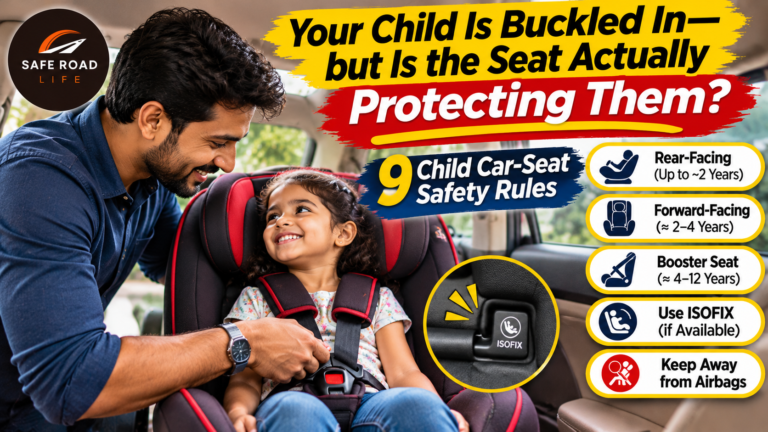
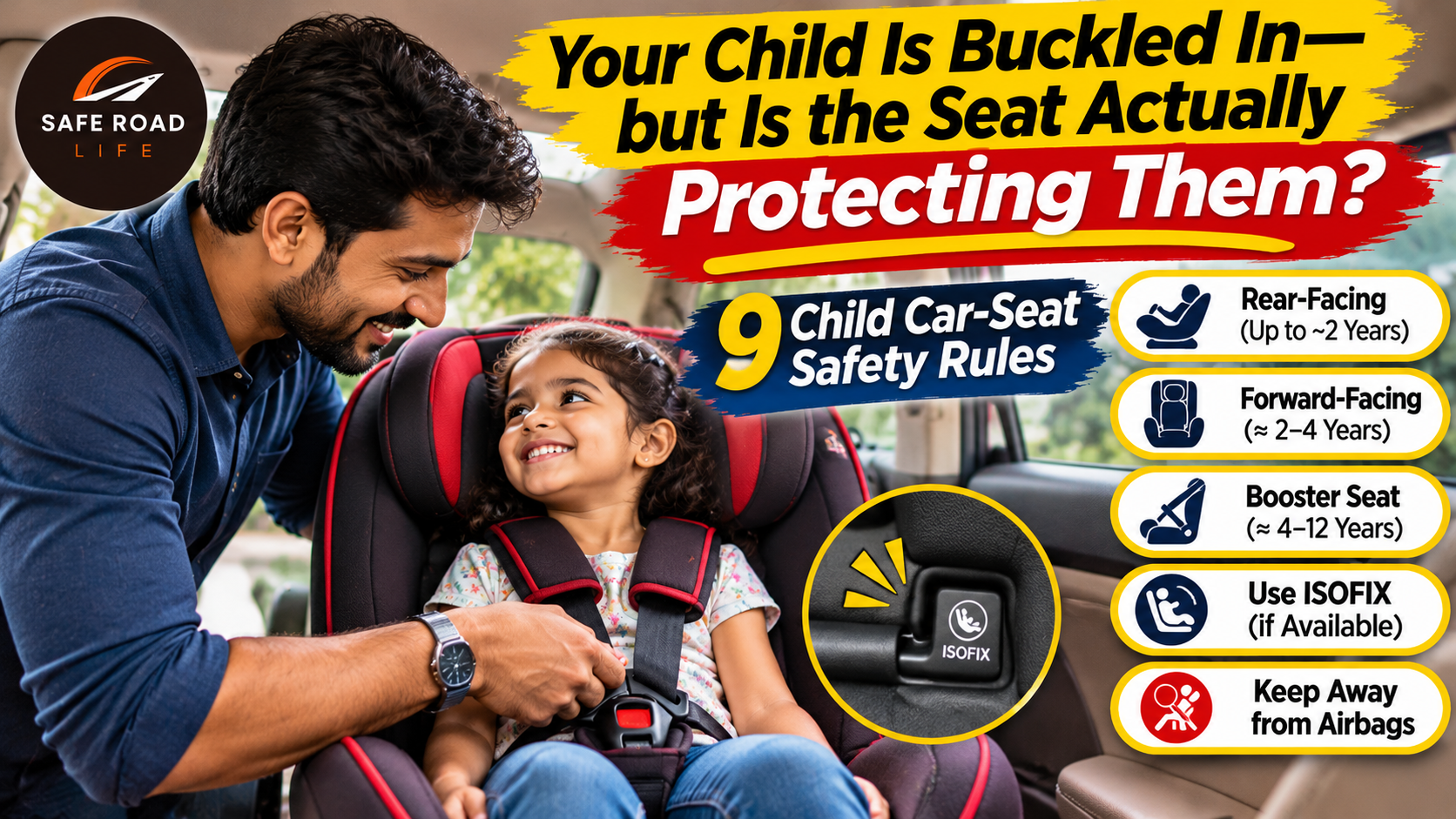
9 child car-seat safety rules every parent should know
1. Choose by the child’s height and weight—not just age
Age can be a useful guide, but children grow at different rates. Check the child seat’s approved height and weight limits and the vehicle owner’s manual. Never move a child to the next seat stage simply because they have had a birthday or want to sit like an adult.
2. Keep infants rear-facing for as long as the seat allows
A rear-facing seat supports a young child’s head, neck and back during a sudden stop or crash. Keep the child rear-facing until they reach the maximum height or weight limit stated by the seat manufacturer. Do not turn the seat forward-facing early for convenience.
3. Move to a forward-facing seat with a harness at the right time
Once a child has outgrown the rear-facing limits, use a suitable forward-facing child seat with its internal harness, following the manufacturer’s instructions. If the seat and vehicle provide a top-tether anchor, use it as directed. Do not use a seat beyond its approved limits.
4. Use a booster until the adult seat belt fits properly
A booster raises the child so the vehicle’s lap-and-shoulder belt can sit in the correct position. The lap belt should lie low across the upper thighs, not the stomach. The shoulder belt should cross the centre of the chest and shoulder—not the neck, face or upper arm. If the belt does not fit correctly, the child may still need a booster.
5. Install the seat in a permitted rear seating position
Use a rear seating position approved by both the child-seat and vehicle manufacturers. Never place a rear-facing child seat in front of an active passenger airbag. A deploying airbag can cause catastrophic injury to an infant. Check the vehicle handbook for approved seating positions and airbag instructions.
6. Understand ISOFIX—and never assume it fits every car
ISOFIX uses dedicated anchor points in a vehicle to attach a compatible child restraint. Before buying, confirm that your car has the required anchorages and that the specific seat is approved for that vehicle and seating position. If installing with the vehicle seat belt, follow the exact belt-routing instructions. Do not combine ISOFIX and a seat belt unless the seat manufacturer explicitly permits it.
7. Tighten the harness and position it correctly
The harness should be snug, flat and correctly routed through the slots specified for the child’s size and seat direction. Remove bulky jackets before buckling up because thick padding can leave the harness dangerously loose. Follow the seat manual for harness height, buckle position and any chest-clip instructions applicable to that model.
8. Check the installation before every journey
A child seat that looks secure may still be fitted incorrectly. Check that it is installed tightly at the belt path, has the correct recline angle and that all connectors, belts and tethers are secured. Make sure the child is not twisted, leaning out or sharing a belt with another passenger. Recheck after moving the seat between vehicles.
9. Use the correct seat on every trip—even a short one
Most journeys are routine until something unexpected happens. Do not hold a child on your lap, allow them to stand between seats or let them share an adult’s seat belt. Never leave a child unrestrained because the destination is nearby. After a significant crash, follow the child-seat manufacturer’s replacement guidance and have the vehicle’s seat belts and anchorages checked.
What Indian parents should know
India’s child-restraint framework includes Automotive Industry Standard AIS-072. The Rajasthan State Road Safety Cell’s public guidance explains that child restraints are grouped by the child’s mass and notes the requirement under Section 194B(2) of the Motor Vehicles Act for children below 14 years to use a safety belt or child restraint system. The portal lists a ₹500 penalty for the stated offence. Parents should check the latest applicable central and state rules and use an approved restraint suitable for the child and vehicle.
Before purchasing a seat, check the child’s height and weight, the vehicle handbook, the seat’s approval label and the permitted installation positions. Do not assume that every seat marketed online will fit every car.
The 30-second parent check before moving
- Is this the correct seat for my child’s current height and weight?
- Is the seat installed in a vehicle-approved position?
- Are ISOFIX connectors, seat belt and top tether used as instructed?
- Is the harness snug, flat and correctly positioned?
- Is the child away from an unsafe active airbag position?
- Is everyone in the vehicle buckled up?
Frequently asked questions
At what age can a child use a normal seat belt?
There is no universal age that guarantees a correct fit. A child should use a booster until the vehicle’s lap-and-shoulder belt fits properly: low across the upper thighs and across the centre of the chest and shoulder. Follow local law and the child-seat manufacturer’s guidance.
Can I put a rear-facing baby seat in the front passenger seat?
Never place a rear-facing child seat in front of an active passenger airbag. Use an approved rear seating position and follow the vehicle and child-seat manuals.
Is ISOFIX safer than using a seat belt?
Both methods can provide protection when the child seat is approved for the vehicle and installed exactly as instructed. ISOFIX can make attachment simpler, but an incorrectly fitted ISOFIX seat is not safe. Compatibility and correct installation matter most.
Can I use a second-hand child car seat?
Be cautious. Do not use a seat with an unknown crash history, missing parts, damage, missing labels or no usable instructions. Check its manufacture date and expiry guidance, and confirm that it has not been recalled or modified.
A safer journey begins before the engine starts
Your child cannot judge whether a seat belt fits, whether a harness is loose or whether a child seat is installed correctly. That responsibility belongs to the adults in the vehicle.
Do not just buckle your child in. Make sure the restraint is right, fitted correctly and used every single time.
DRIVE SAFE. STAY SAFE.
@SafeRoadLife
Sources and further reading
- US Centers for Disease Control and Prevention: Preventing Child Passenger Injury
- World Health Organization: Road Traffic Injuries—Children
- Rajasthan State Road Safety Cell: Child Restraint guidance and Indian standards
- American Academy of Pediatrics: Child Passenger Safety policy statement
SafeRoadLife shares practical road-safety education. Always follow the latest local laws and the vehicle and child-restraint manufacturers’ instructions.
About the Author