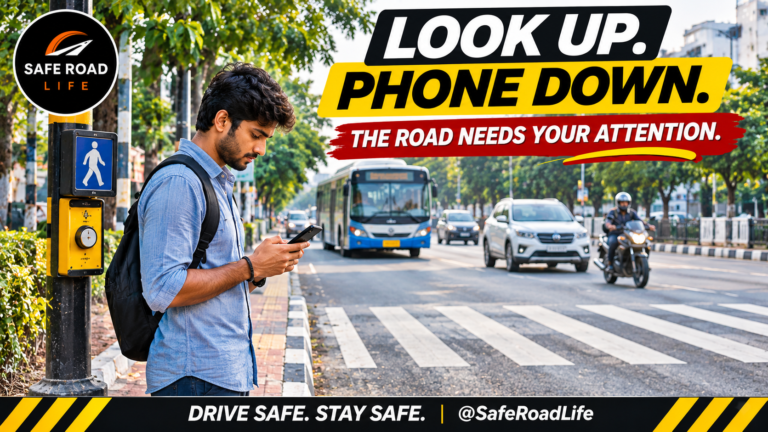
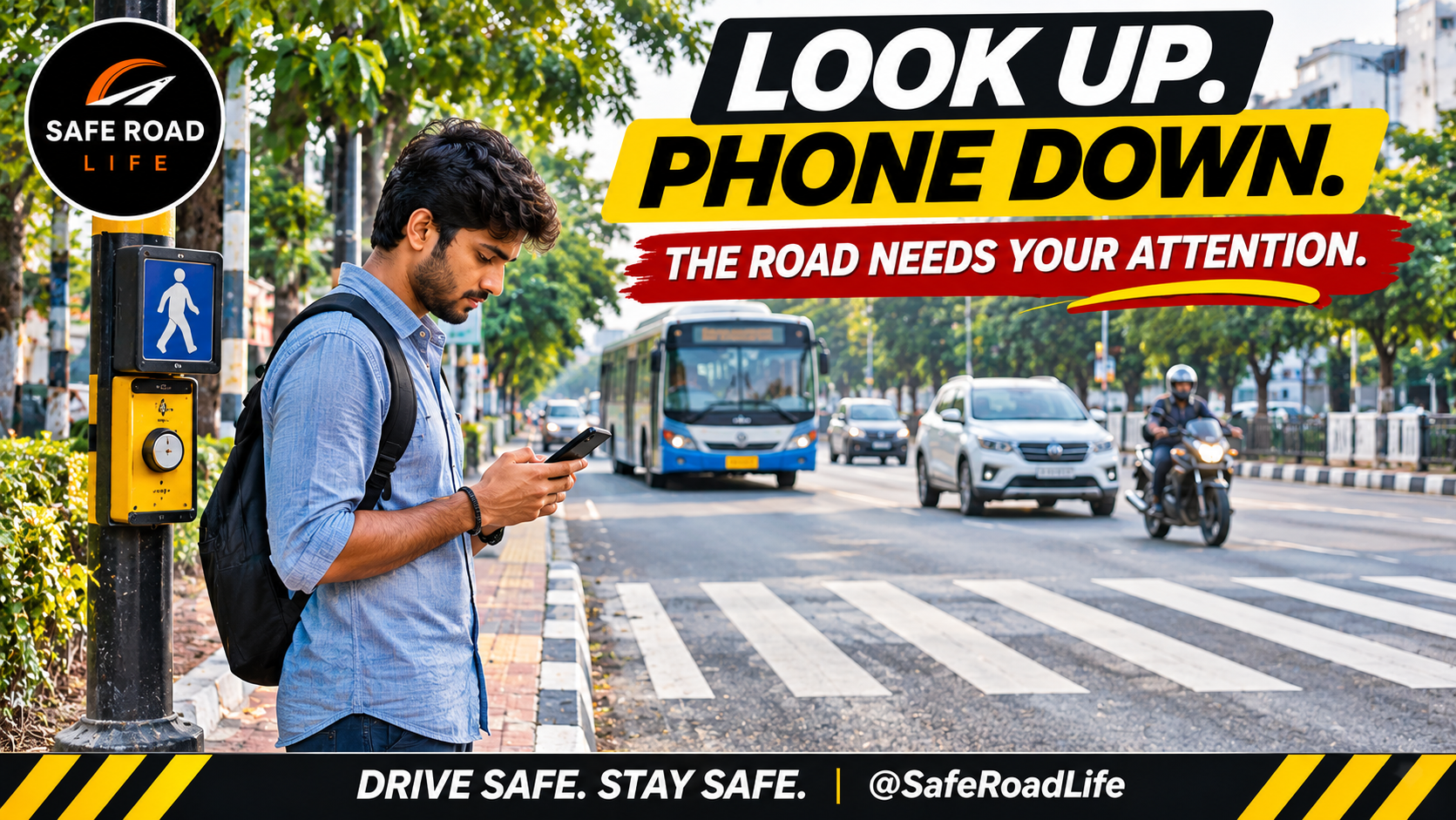
A pedestrian can be standing on the footpath, walking towards a bus stop or crossing a familiar street—and still be exposed to danger. The risk becomes greater when attention is fixed on a mobile phone.
A message, a short video, a phone call or a pair of loud earphones can take attention away from approaching traffic. A person may step off the kerb without checking, miss a turning vehicle or fail to notice a motorcycle approaching through a gap.
The problem is not that mobile phones are always dangerous. It is that roads demand attention, and a screen can compete for it.
Research reviewed by road-safety authorities identifies smartphone distraction as a concern for pedestrian behaviour. The exact relationship between phone use and crashes is complex, but the practical safety message is clear: keep your attention on the road environment.
A road crossing is not the right place to finish a message.
1. Stop walking before you use your phone
If you need to reply to a message, check directions or make a call, move to a safe place away from the kerb and pedestrian flow. Do not continue walking with your eyes fixed on the screen, particularly near junctions, parking entrances and busy roads.
2. Never text while crossing a road
Crossing requires you to look for vehicles approaching from different directions, judge their speed and keep checking as you move. Texting takes your eyes and attention away from that task. Put the phone away before stepping onto the road.
3. Remove or pause headphones near traffic
Music and calls can make it harder to hear horns, reversing alarms, emergency vehicles and other warning sounds. Keep the volume low enough to remain aware of your surroundings. Pause audio before crossing busy roads or moving through a crowded traffic area.
4. Use designated pedestrian crossings
Choose a zebra crossing, signal-controlled crossing, foot overbridge or subway where available and appropriate. Avoid taking shortcuts through moving traffic. A few saved seconds are not worth exposing yourself to a vehicle that may not have seen you.
5. Stop, look and listen before stepping off the kerb
Do not step directly from the footpath into the road. Stop at a safe distance from the edge. Look in all directions, listen for approaching traffic and wait until there is a safe gap or the crossing signal permits you to proceed.
6. Never assume a driver has seen you
A driver may be watching another vehicle, checking a mirror or approaching a turn. Make yourself visible. Look towards approaching traffic and do not begin crossing merely because one vehicle has slowed down. Check the other lanes too.
7. Stay alert at bus stops and vehicle entrances
Buses, cars and two-wheelers may enter or leave roadside spaces unexpectedly. Avoid standing close to moving vehicles while using your phone. At bus stops, wait in a safe area and board only after the vehicle has stopped properly.
8. Give children and older pedestrians your full attention
Children may move suddenly, and older people may need additional time to cross. Keep children by the hand near roads. Help older pedestrians where needed, and never let a phone conversation distract you while guiding someone across traffic.
9. Be extra careful at night and in poor visibility
Dark clothing, glare, rain and poorly lit roads can make pedestrians harder to see. Use well-lit crossing points, wear visible or reflective clothing when possible, and avoid looking at your phone while walking near traffic.
A 10-second pedestrian safety checklist
- Put your phone away.
- Pause music and remove distractions.
- Use a designated crossing where available.
- Stop at the kerb.
- Look in all directions and listen.
- Wait for a safe gap or the permitted signal.
- Keep watching while crossing.
A responsibility shared by drivers and pedestrians
Pedestrians must stay alert, but responsibility does not rest on them alone. Drivers should slow down near crossings, remain alert for people stepping onto the road, and give pedestrians adequate time and space. Authorities should provide safe footpaths, visible crossings, lighting and accessible pedestrian facilities.
Roads must be designed and managed to protect people, not simply expect them to avoid danger.
The final message
A notification can wait. A message can be answered later. But a safe opportunity to cross the road may last only a few seconds.
“Your eyes belong on the road when your feet are near traffic. No message is more important than reaching home safely.”
DRIVE SAFE. STAY SAFE.
@SafeRoadLife
References
NHTSA — Pedestrian Safety: Understanding the Problem
World Health Organization — Pedestrian Safety Manual
Maharashtra Highway Traffic Police — Road Safety Guidelines
UK Highway Code — Rules for Pedestrians
About the Author