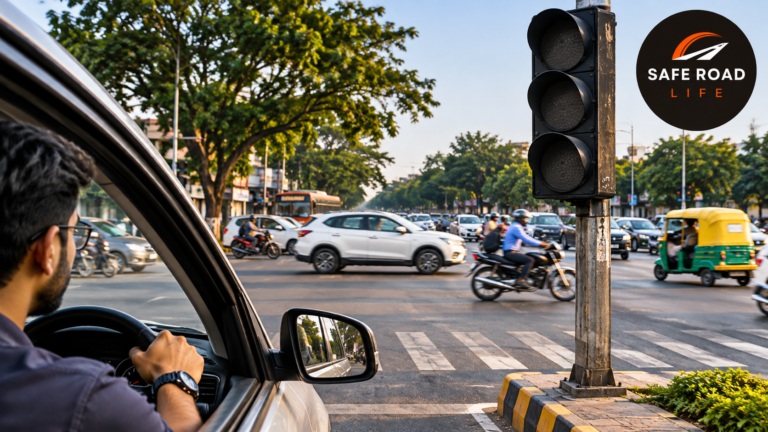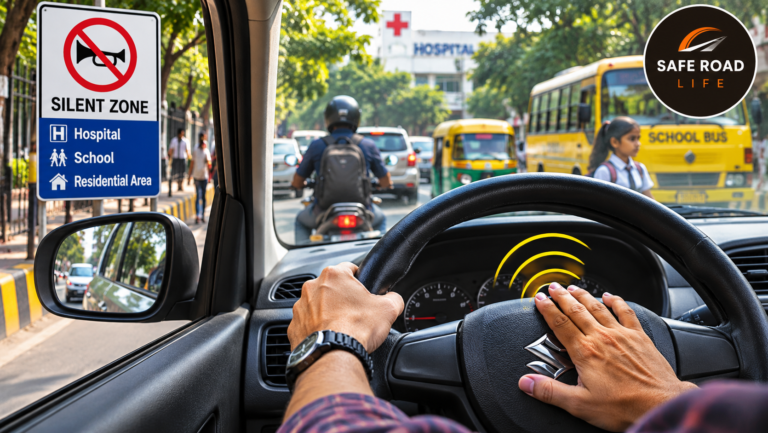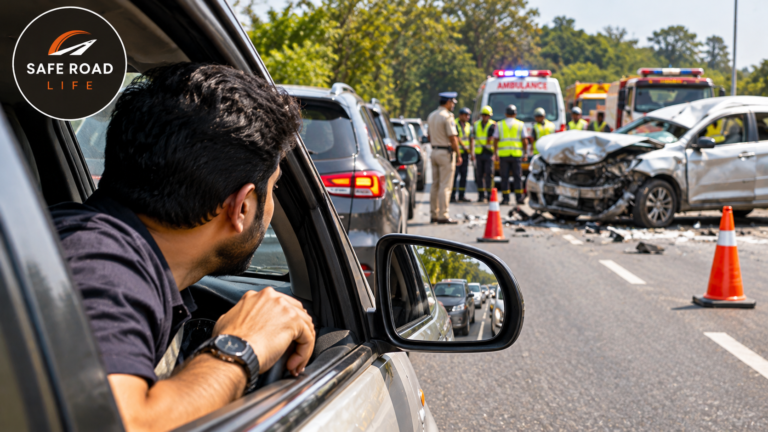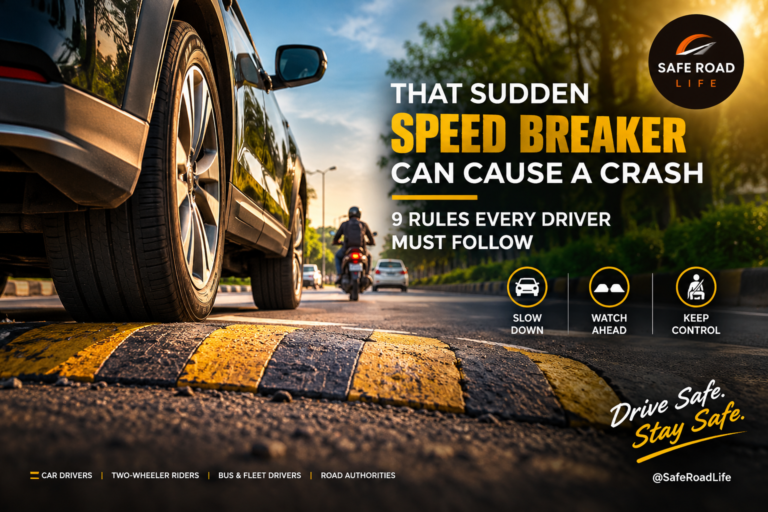
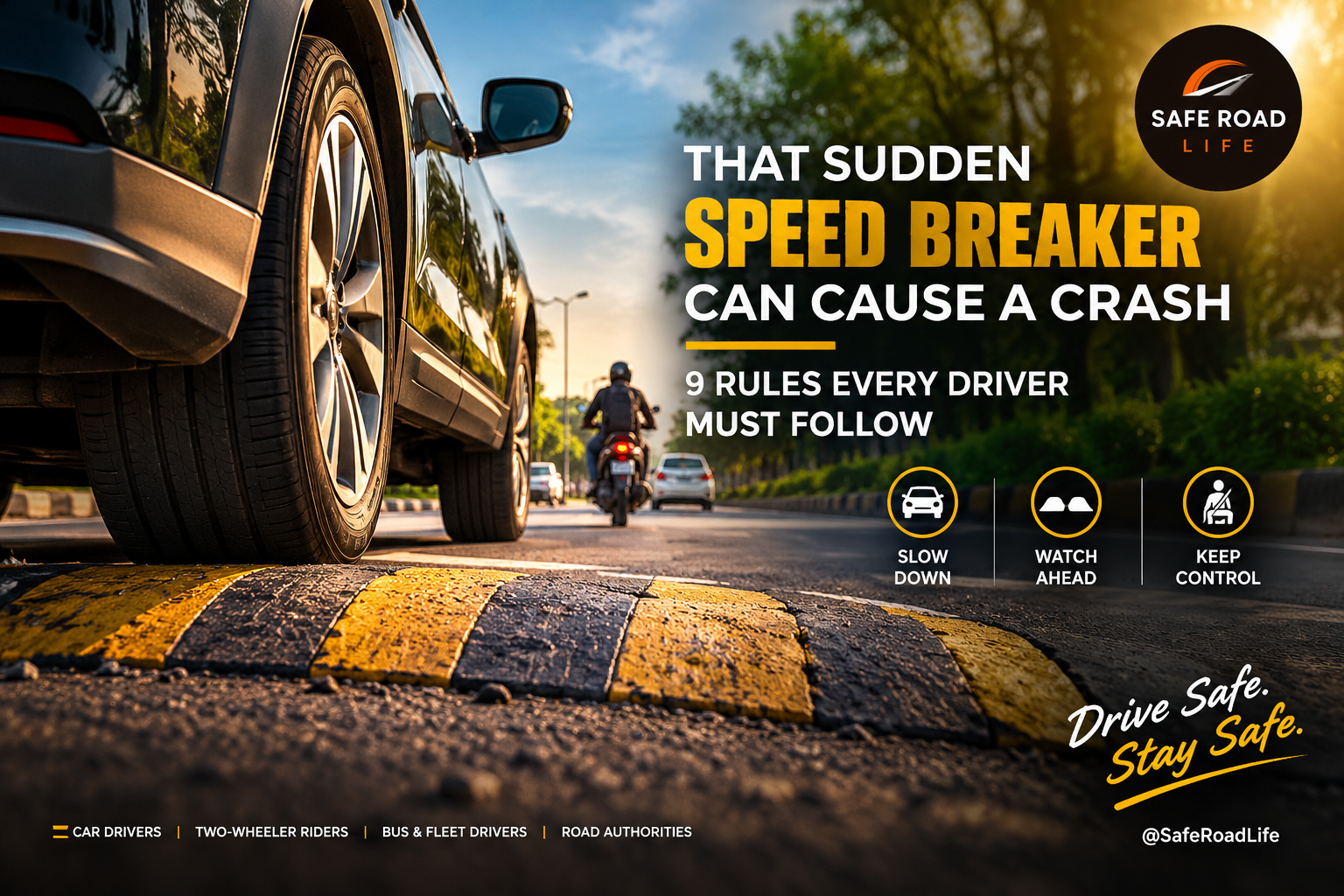
You are travelling along a familiar road when, without much warning, a speed breaker appears ahead. The vehicle in front brakes sharply. A motorcyclist swerves. A passenger is thrown forward. In a moment, a poorly approached speed hump can create danger for everyone using the road.
Speed breakers and road humps are intended to calm traffic and protect people near schools, residential streets and busy pedestrian areas. But they work only when drivers notice them in time and approach them correctly. The safest response is not sudden braking or a last-second swerve. It is anticipation, controlled speed and attention to the road.
Why speed breakers catch drivers off guard
Some humps are clearly marked, painted and signposted. Others may be faded, unmarked, damaged or difficult to see at night. Rainwater, glare, parked vehicles and heavy traffic can hide their shape. On two-wheelers, hitting a hump too fast can unsettle the rider and affect balance. In a car or bus, abrupt braking can injure occupants or cause a following vehicle to collide from behind.
9 rules for crossing speed breakers safely
1. Look far ahead—not just at the vehicle in front
Scan the road surface as you approach residential areas, schools, hospitals, intersections and pedestrian crossings. Watch for warning signs, road markings, raised surfaces and changes in the road profile. Do not depend entirely on the brake lights of the vehicle ahead; it may react too late.
2. Reduce speed gradually before the hump
Ease off the accelerator and brake smoothly while the vehicle is still on level ground. Aim to reach the hump at a low, controlled speed appropriate to its height, shape and visibility. Avoid hard braking at the last moment, especially on wet or loose surfaces.
3. Keep a safe gap behind the vehicle ahead
Leave enough space to respond if the vehicle in front slows suddenly. Tailgating becomes especially risky near speed breakers because drivers may not see the hump until the vehicle ahead brakes. Never accelerate to close a gap just before a raised section.
4. Cross straight and avoid sudden steering
Approach the hump in your lane and keep the steering steady. Do not swerve around it into the path of a motorcycle, cyclist or vehicle travelling beside you. Avoid crossing diagonally unless the road layout or an obstacle makes it necessary and the manoeuvre can be completed safely.
5. Two-wheeler riders: stay balanced and alert
Slow down before reaching the hump, keep both hands on the handlebar and maintain a stable posture. Avoid sharp braking, sudden acceleration or turning while the wheels are on the raised surface. Do not ride over a hump while carrying an unstable load or with a passenger shifting position.
6. Be extra careful in rain and at night
Water can hide the edges of a hump, while poor lighting can make an unmarked one difficult to identify. Reduce speed further when visibility or grip is poor. Use appropriate headlights, keep the windscreen clear and avoid driving through standing water at a speed that prevents you from reading the road surface.
7. Never overtake near a speed breaker
A vehicle may slow down or stop before a hump, and pedestrians or cyclists may be crossing nearby. Do not attempt to pass it by moving into the opposite lane or squeezing through a narrow gap. Wait until you have a clear view and a safe, legal opportunity to overtake.
8. Bus and fleet drivers must protect passengers
Professional drivers should anticipate speed humps early and decelerate smoothly. Sudden braking or accelerating over a hump can throw standing passengers off balance and place stress on the vehicle. Follow the approved route, observe local speed restrictions and report damaged or unmarked humps through the fleet or road-authority reporting process.
9. Report dangerous or unauthorised road humps
A hump that is unusually high, poorly shaped, damaged or unmarked can create a hazard rather than improve safety. Report its exact location to the relevant road-owning agency or local authority. If you are driving, make the report only after stopping safely; never use a phone while moving.
What should road authorities do?
Traffic-calming measures should be designed and installed according to applicable engineering standards, with suitable warning signs, markings, visibility and maintenance. A speed hump should not be an unexpected obstacle. Authorities should inspect existing installations, remove or correct unsafe ones and provide safe pedestrian facilities where traffic calming is needed.
Slow down before the bump—not after it
A speed breaker is a warning to reduce speed, not a challenge to your suspension or driving skill. Read the road early, brake smoothly, keep your lane and give the vehicle behind you enough room. A few seconds of caution can prevent a fall, a rear-end collision or an injury to a passenger.
DRIVE SAFE. STAY SAFE.
@SafeRoadLife
References
- Ministry of Road Transport and Highways (MoRTH) — Road safety and highway standards
- Indian Roads Congress — Road and traffic engineering standards
- MoRTH — Road Safety
About the Author