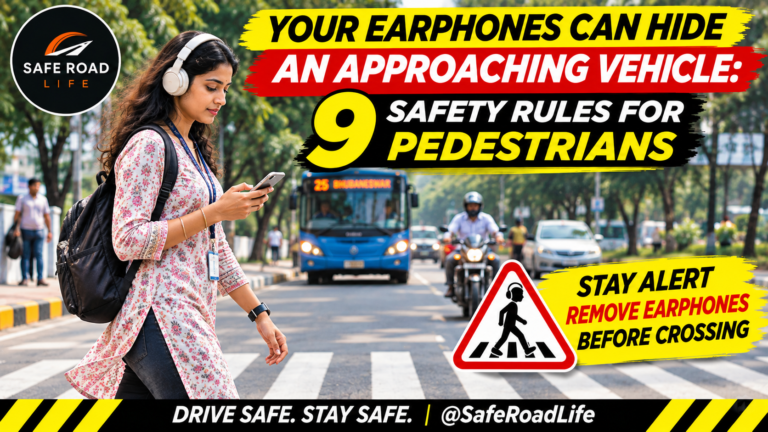
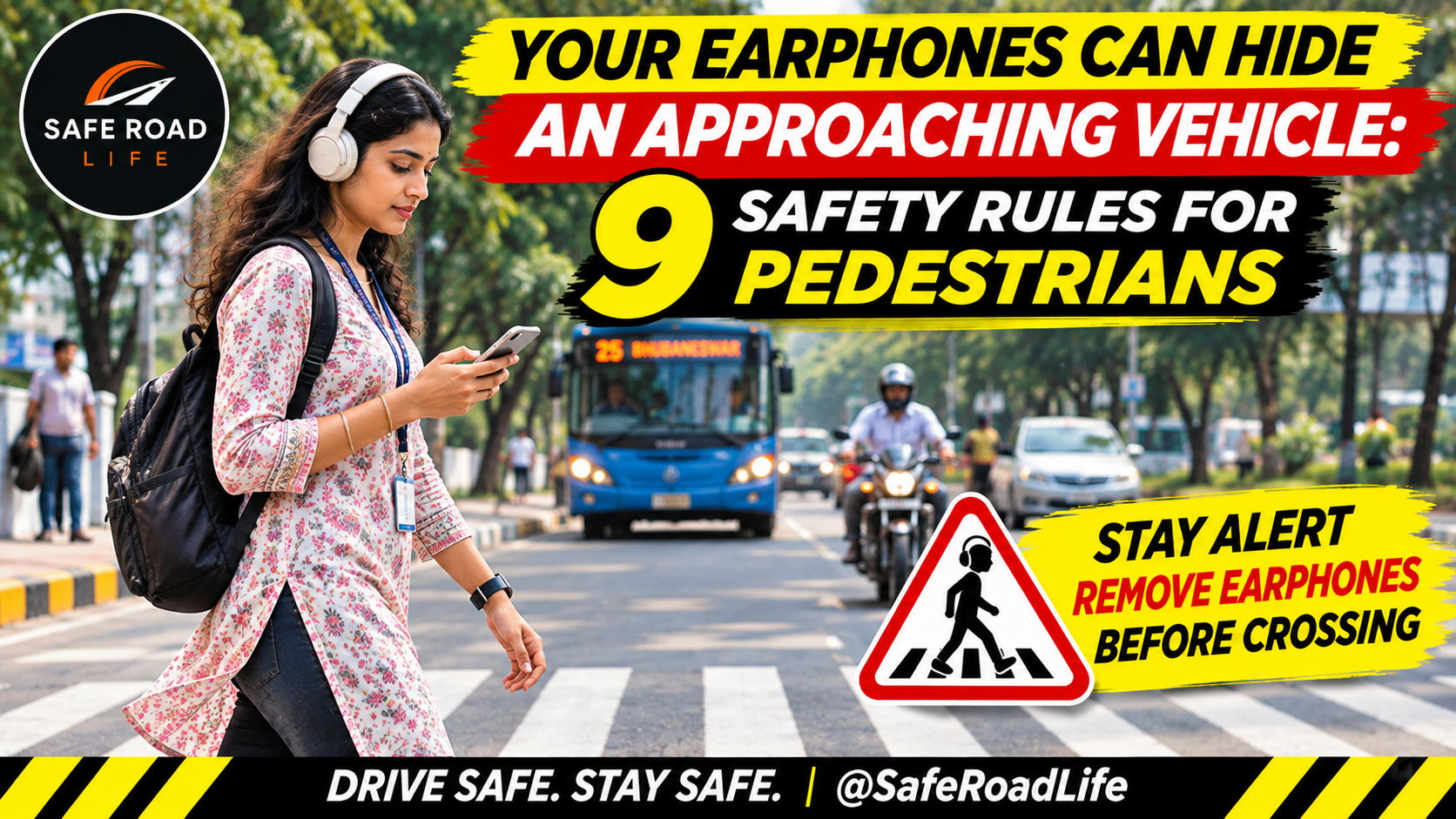
Music can make a walk enjoyable. A podcast can make a daily commute feel shorter. But when earphones isolate us from the sounds around us, an ordinary road crossing can become dangerous.
Traffic safety depends on more than eyesight. The sound of an approaching vehicle, a horn, a bicycle bell or an emergency siren may provide valuable warning of a developing hazard. Noise-cancelling headphones, loud music and phone conversations can reduce awareness at precisely the moment pedestrians need it most.
A road does not become safe simply because you cannot hear the danger approaching.
1. Remove or pause earphones before crossing
Before stepping onto a road, pause your music or conversation. Remove earphones when necessary so you can pay full attention to surrounding traffic. Do not rely only on hearing. Look carefully in every relevant direction.
2. Never cross while looking at your phone
Reading messages, watching videos or changing songs can take your eyes away from moving traffic. Stop using the phone before crossing. Keep your head up and concentrate on the road.
3. Use designated pedestrian crossings
Choose marked crossings, pedestrian signals, footbridges or subways where available and appropriate. A zebra crossing does not guarantee that every driver will stop. Check that approaching vehicles have actually yielded before entering their path.
4. Look for motorcycles and bicycles
Two-wheelers can be less conspicuous than larger vehicles, especially in congested traffic. Check carefully for motorcycles, scooters and bicycles before crossing, including when other vehicles have stopped.
5. Never assume a silent road is an empty road
Electric vehicles, bicycles and some slow-moving vehicles may produce little warning noise. Even without earphones, hearing alone cannot reliably tell you whether a road is clear. Look first. Listen where possible. Cross only when safe.
6. Be extra cautious near buses and trucks
Large vehicles can obstruct your view of other traffic. Their drivers may also have difficulty seeing pedestrians close to the vehicle. Never step suddenly from behind a parked bus, truck or other large obstruction. Move to a location where you can see approaching traffic and be seen by drivers.
7. Avoid crossing between parked vehicles
Parked cars and roadside obstructions can hide pedestrians from approaching drivers. Whenever possible, use a designated crossing with a clear view. Do not emerge unexpectedly into a live traffic lane.
8. Teach children safe listening habits
Children may become absorbed in music, games and conversations. Parents and teachers should explain why crossing a road requires full attention. Young children should be supervised according to their age and ability.
9. Stay alert until you reach the other side
Do not restart music, look at your phone or become distracted halfway across the road. Continue observing traffic until you have reached a safe pedestrian area. A crossing is complete only when you are safely off the carriageway.
Pedestrian safety checklist
- Pause music before crossing.
- Put the phone away.
- Use designated crossings.
- Look in all relevant directions.
- Check for motorcycles and bicycles.
- Never rely on hearing alone.
- Avoid crossing from behind parked vehicles.
- Supervise children near traffic.
- Remain attentive until the crossing is complete.
A message for schools, employers and communities
Pedestrian distraction should be included in road-safety awareness programmes, particularly for students, office commuters, delivery workers and people walking near busy transport hubs.
Drivers also have a responsibility to anticipate pedestrians, reduce speed where necessary and yield as required. A distracted pedestrian is not an excuse for careless driving. Road safety is a shared responsibility.
“Music can wait until you reach the other side. Your life cannot be replayed.”
Enjoy your journey, but never disconnect from the road around you.
DRIVE SAFE. STAY SAFE.
@SafeRoadLife
About the Author