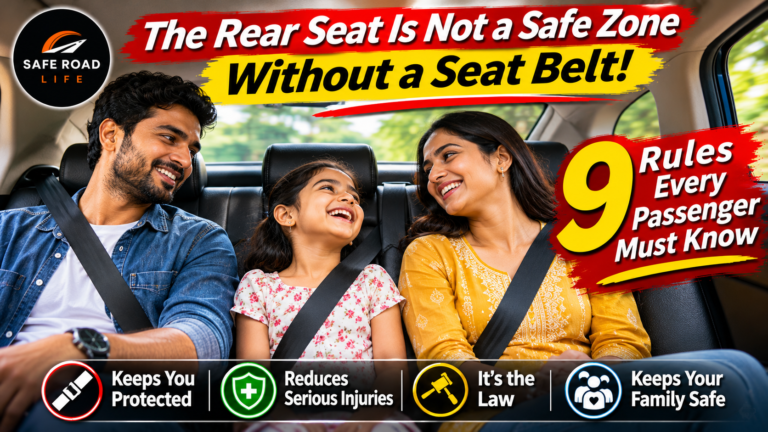
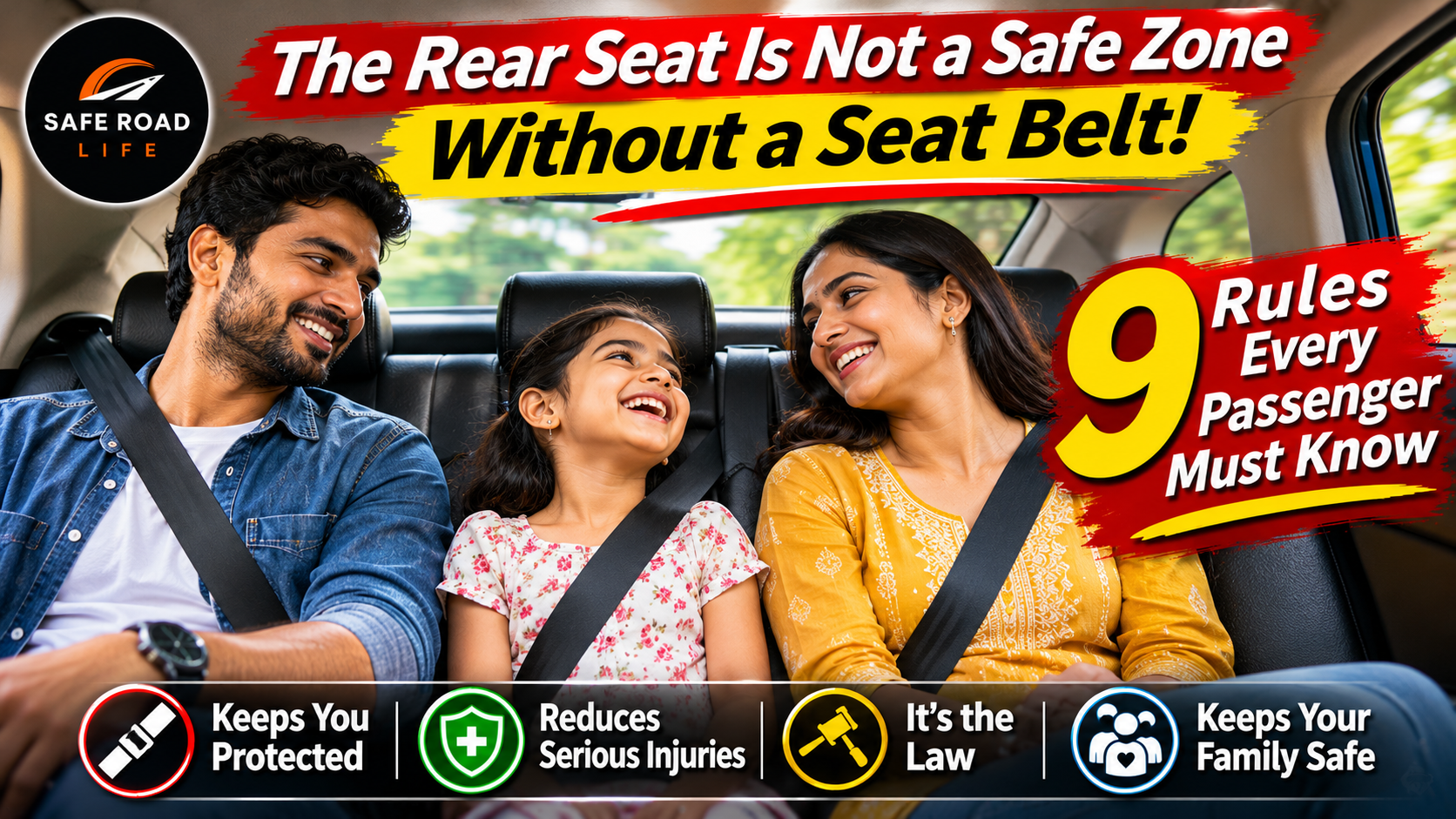
Many passengers buckle up before the car moves—but some still believe the rear seat is safer without a seat belt. That belief can be deadly. In a sudden stop or crash, an unrestrained rear-seat passenger can be thrown forward, strike the interior, injure another occupant or be ejected from the vehicle.
The back seat is not a safety bubble. Every person in the vehicle needs the right restraint, correctly fitted and used on every journey—even a short trip.
Why rear-seat passengers must wear seat belts
A seat belt helps keep the body in the occupant space and spreads crash forces across stronger parts of the body. Without it, a passenger continues moving when the vehicle suddenly slows. The passenger may hit the front seat, dashboard, roof or another person. A rear passenger who is not restrained can also put the driver and front passenger at risk.
Airbags are designed to work with seat belts, not replace them. A seat belt also helps position the occupant for the protection systems fitted to the vehicle. Always follow the vehicle manufacturer’s instructions.
9 rear-seat belt rules every passenger should follow
1. Buckle up before the vehicle moves
Do not wait until the car reaches the main road or highway. Put the belt on before the journey begins. The most serious crash can happen close to home, and no passenger can predict when another road user will make a mistake.
2. Use the lap and shoulder belt together
Where a three-point belt is provided, use both sections. The lap portion should lie low and snug across the hips or upper thighs—not across the soft stomach. The shoulder portion should cross the centre of the chest and shoulder, away from the neck and face. Never tuck the shoulder belt behind your back or under your arm.
3. Keep the belt flat and untwisted
A twisted, folded or trapped belt may not sit correctly against the body. Pull it out smoothly, remove twists and check that it is not caught in the door or seat mechanism. The buckle should click securely into the correct receptacle.
4. Sit upright against the seatback
A seat belt is designed for a normal seated position. Avoid lying across the seat, leaning far sideways or sliding down under the belt. These positions can allow the body to move beneath the lap belt in a crash. Sit back with your hips against the seat and keep the belt properly positioned.
5. Never share one belt between two people
One belt is designed to restrain one occupant. Two people sharing a belt can collide with each other and neither is properly protected. If there are more passengers than approved seating positions and belts, do not make the trip until suitable transport is arranged.
6. Choose the correct child restraint
Small children need a child restraint appropriate for their height, weight and age, installed according to both the child-seat and vehicle manuals. Do not hold a child on an adult’s lap and assume the adult’s belt will protect both. Never place a rear-facing child restraint in front of an active passenger airbag.
7. Pregnant passengers should still buckle up
Pregnancy is not a reason to travel unbelted. Position the lap belt low under the abdomen, snug across the hips, and place the shoulder belt between the breasts and to the side of the abdomen. Do not put the shoulder belt behind the back or under the arm. Ask a healthcare professional or consult trusted road-safety guidance if you need help adjusting the belt comfortably.
8. Do not use belt clips or accessories that change the fit
Unapproved clips, extenders, cushions or positioning devices can change how the belt fits and may interfere with its operation. Use only equipment approved by the vehicle or child-restraint manufacturer for that specific seat and occupant.
9. Check the belt and buckle regularly
Look for fraying, cuts, damaged stitching, a buckle that will not latch, or a belt that does not retract properly. After a serious collision, have the seat belts and related restraint systems inspected and replaced as directed by the manufacturer—even if damage is not obvious.
Common rear-seat mistakes to stop today
- Believing that short journeys do not need seat belts.
- Wearing only the lap section when a three-point belt is available.
- Putting the shoulder belt behind the back or under the arm.
- Allowing children to move around or stand between the seats.
- Holding a child on an adult’s lap instead of using an appropriate restraint.
- Sharing one seat belt between two passengers.
- Using damaged belts or unapproved belt-positioning accessories.
The 10-second rear-seat safety check
- Everyone seated: Is every passenger in an approved seating position?
- Every person restrained: Is each passenger using their own belt or suitable child restraint?
- Correct fit: Is the lap belt low across the hips and the shoulder belt across the chest?
- Secure buckle: Is the belt flat, untwisted and clicked into place?
- Children protected: Is each child restraint appropriate and installed as instructed?
Make this a family rule—not a driver request
The driver should not have to argue with passengers about seat belts. Make one simple rule for every journey: the vehicle does not move until everyone is correctly restrained. Parents, friends, colleagues and professional drivers can all help make this habit normal.
A seat belt cannot prevent every injury, but using it correctly gives you a much better chance of staying in the protected seating position during a crash. The rear seat is only a safer place when its occupant uses the protection provided.
Share this with someone who still travels in the back without buckling up. A reminder before the journey is better than regret after a crash.
DRIVE SAFE. STAY SAFE.
@SafeRoadLife
Trusted safety guidance
For more information, read the U.S. National Highway Traffic Safety Administration seat-belt guidance, the World Health Organization road-traffic injury fact sheet, and your vehicle and child-restraint manuals. Follow the seat-belt laws and child-restraint requirements that apply where you travel.
About the Author