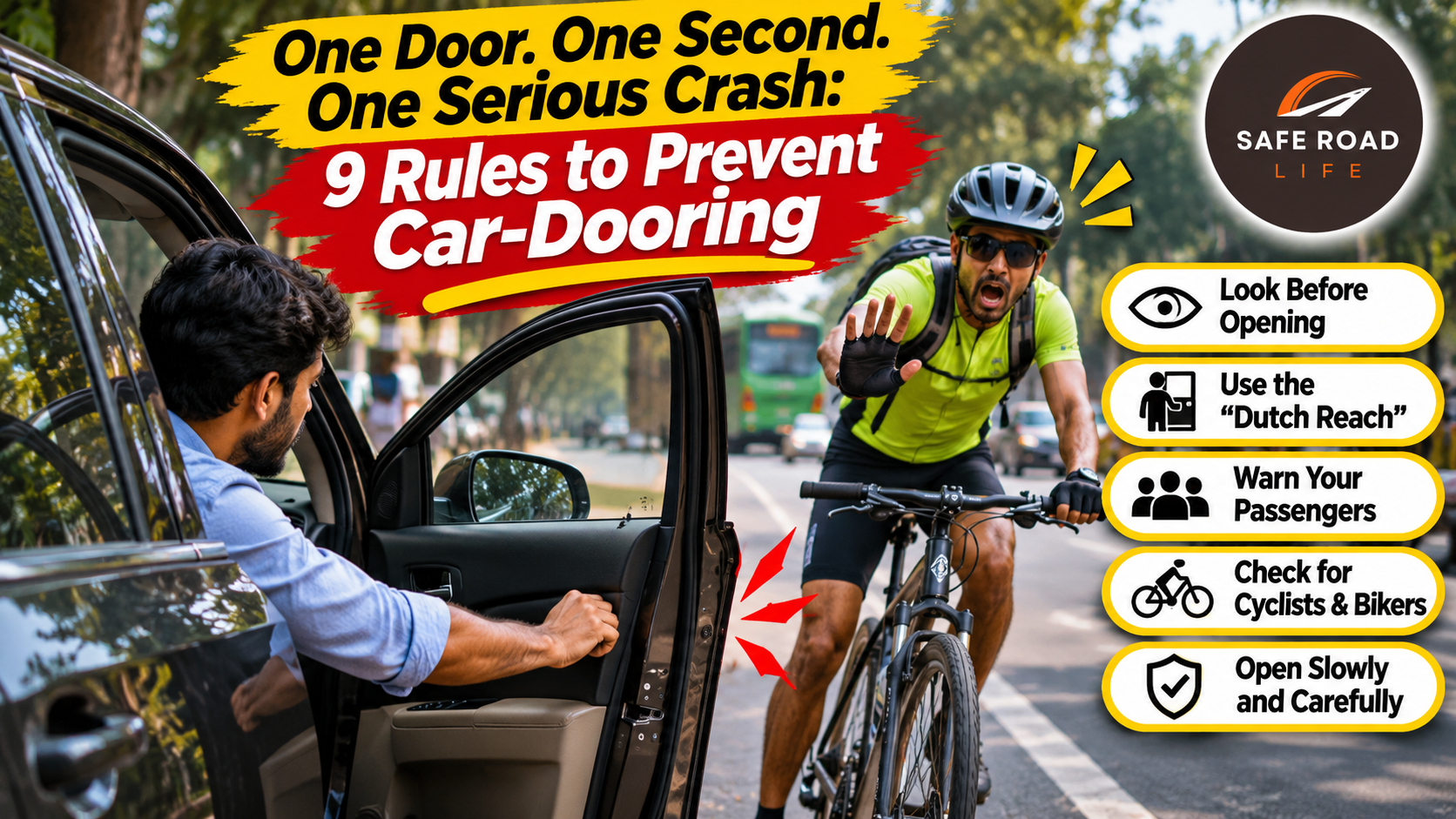
A parked car can become a sudden road hazard in the time it takes someone to pull a door handle. A driver or passenger opens a door without checking, a cyclist or motorcyclist has no time to react, and a routine journey can turn into a life-changing crash. This is known as car-dooring.
Dooring is not only a cycling issue. It can injure motorcyclists, scooter riders and pedestrians, too. The risk is especially serious on busy urban streets where two-wheelers travel close to parked vehicles and passengers step out into traffic.
What is car-dooring?
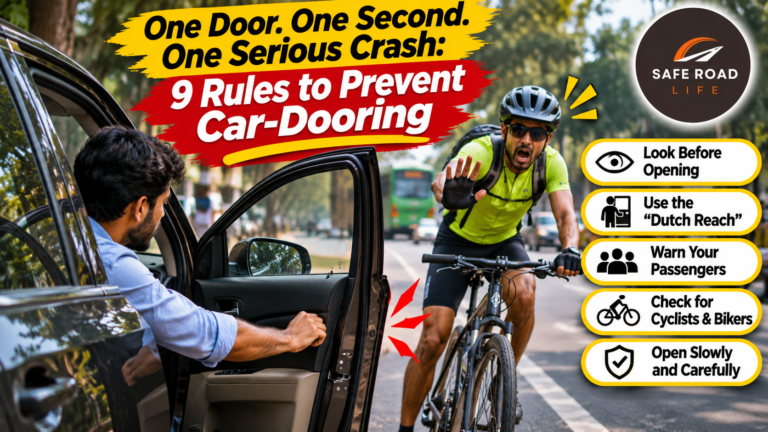
Car-dooring happens when someone opens a vehicle door into the path of an approaching road user. The person approaching may collide directly with the door or swerve into moving traffic to avoid it. Even at relatively low speeds, a sudden fall can lead to severe injuries.
Road-safety guidance from New Zealand’s transport agency specifically warns that opening vehicle doors can force cyclists to change direction unexpectedly. It advises drivers to check carefully and use the opposite hand to open the door, helping them turn and look behind. The UK Highway Code also recommends this technique, commonly called the Dutch Reach.
9 rules every driver and passenger should follow
1. Practise the Dutch Reach every time
If you are opening the driver-side door, use your right hand rather than your left. For the passenger-side door, use your left hand rather than your right. Reaching across your body turns your shoulders and head, making it easier to look over your shoulder before opening the door. Teach this habit to every family member.
2. Check mirrors—and then look over your shoulder
Mirrors do not show everything. A cyclist or motorcyclist may be close to the vehicle and outside the mirror’s field of view. Check the side mirror, look over your shoulder and scan the footpath before opening the door.
3. Open the door slowly and only a little at first
Do not push the door wide open in one movement. After checking, release the latch and open the door slightly. Pause and check again before stepping out. A small opening gives you another chance to stop if someone is approaching.
4. Make the rear-seat check compulsory
Rear-seat passengers can create the same danger as drivers. Before anyone opens a door, the driver should remind passengers to check for approaching traffic. Parents should teach children never to push a door open without an adult’s instruction.
5. Choose a safe place to stop and exit
Where possible, stop in a designated parking area or away from moving traffic and cycle lanes. Avoid dropping passengers into the road, at junctions, beside bus stops or where visibility is restricted. If a safe exit is not available on the traffic side, consider whether passengers can leave from the footpath side without crossing danger.
6. Cyclists: stay out of the door zone
If you cycle, avoid riding close to parked vehicles where possible. Leave enough lateral space for a door to open. The UK Highway Code advises cyclists to leave a door’s width or about one metre when passing parked vehicles. If the road is too narrow, slow down, assess the traffic behind and choose a safer position rather than squeezing through.
7. Drivers: give cyclists room when passing
Do not squeeze past a cyclist near parked cars. They may need to move away from an opening door, pothole or drain cover. New Zealand’s road guidance requires at least 1.5 metres when passing a cyclist in the same direction and says drivers should wait if they cannot pass safely. Follow the passing-distance law and guidance that applies where you drive.
8. Use extra caution at night and in poor visibility
At night, in rain or in crowded streets, it may be harder to notice a two-wheeler approaching. Never assume the road is clear because you cannot hear an engine or see a headlight immediately. Check carefully, especially before opening a door into a cycle lane or the edge of a traffic lane.
9. Build a “look before you open” culture
Fleet operators, taxi services, schools and families should include dooring prevention in driver and passenger briefings. Put a simple reminder near the door handle: LOOK BACK. OPEN SLOWLY. A consistent habit is more reliable than a warning given only after a near miss.
Why this matters on Indian roads
Indian city streets often bring cars, buses, motorcycles, scooters, bicycles, pedestrians, vendors and parked vehicles into a limited space. A passenger stepping out without checking can force a two-wheeler into moving traffic. The safest approach is shared responsibility: people inside vehicles must check before opening, and people riding past parked vehicles should anticipate that a door may open.
Do not treat the Dutch Reach as a substitute for checking. It is a simple physical reminder that helps turn your body toward approaching traffic. Always look, pause and open carefully.
A 5-second exit check
- Look in the side mirror.
- Look over your shoulder.
- Check the footpath and cycle lane.
- Open the door a little and pause.
- Step out only when the space is clear.
Frequently asked questions
What does “car-dooring” mean?
Car-dooring is a collision or near-collision caused when a vehicle door is opened into the path of a cyclist, motorcyclist, pedestrian or another road user.
What is the Dutch Reach method?
It means opening a vehicle door with the hand furthest from that door. This turns your upper body and encourages you to look over your shoulder before opening it.
Should passengers use the Dutch Reach too?
Yes. Every occupant—including rear-seat passengers—should check for cyclists, motorcyclists and pedestrians before opening a door.
How much space should a cyclist leave from parked cars?
There is no single worldwide measurement. The UK Highway Code advises cyclists to leave a door’s width or about one metre where possible. Cyclists should adapt to local road conditions and applicable rules.
Make one small habit part of every journey
A door should never become an unexpected obstacle for someone sharing the road. Before you step out, turn around. Check. Pause. Then open.
One look over your shoulder can prevent a crash that changes someone’s life.
DRIVE SAFE. STAY SAFE.
@SafeRoadLife
Sources and further reading
- UK Government: Highway Code changes, including the Dutch Reach (Rule 239)
- UK Highway Code: Rules for cyclists, including clearance from parked vehicles
- NZ Transport Agency: Sharing the road with cyclists
- Hampshire County Council: Cycling safety and the Dutch Reach
SafeRoadLife promotes practical road-safety habits for drivers, passengers and all road users. Always follow the traffic laws and official guidance applicable in your location.
About the Author