Your pet may be part of the family, but an ordinary car journey can expose an unrestrained animal to serious danger. A sudden brake, sharp turn or collision can injure a pet and distract the driver. Safe travel starts before the vehicle moves.
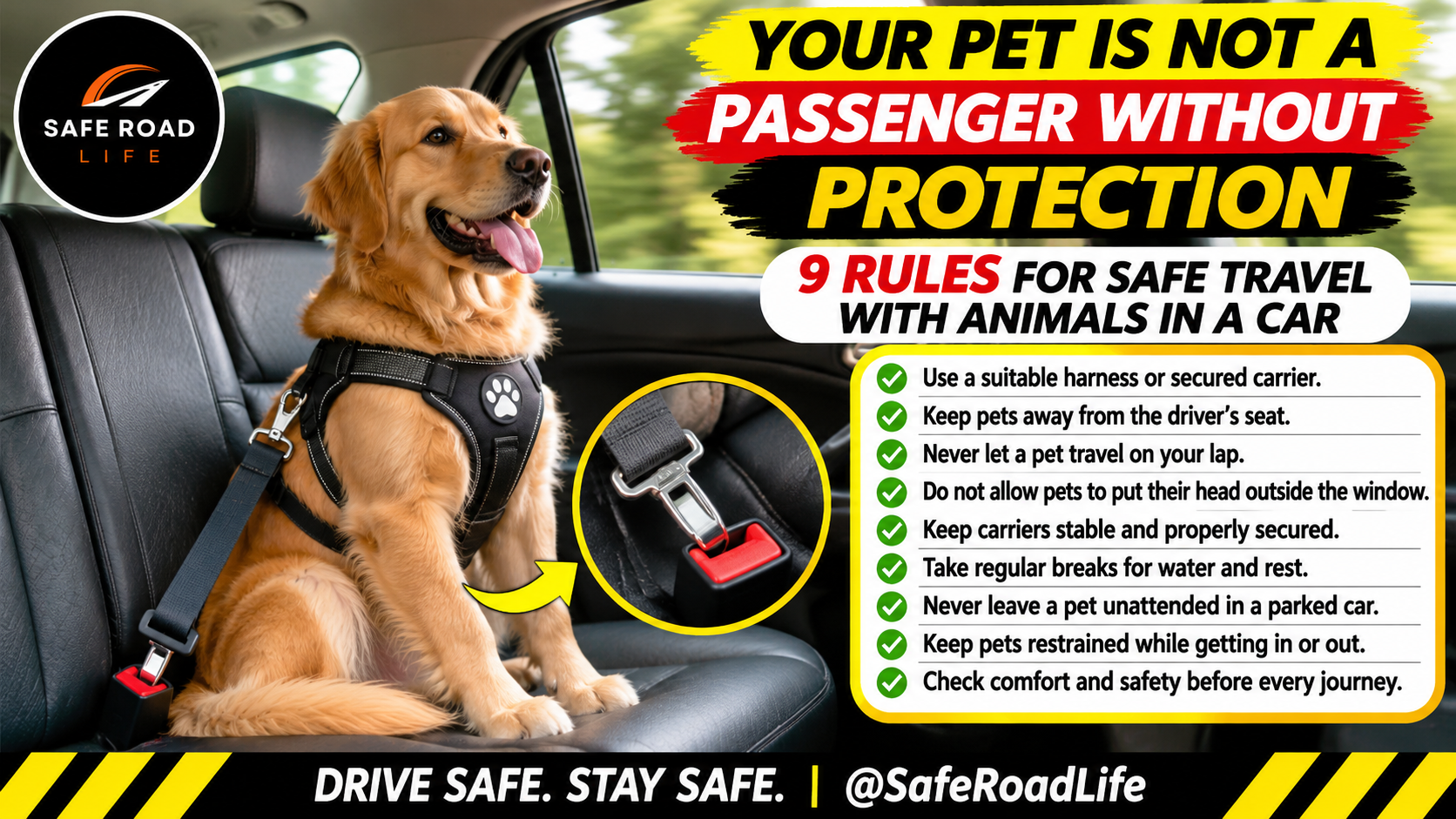
9 rules for safe travel with pets
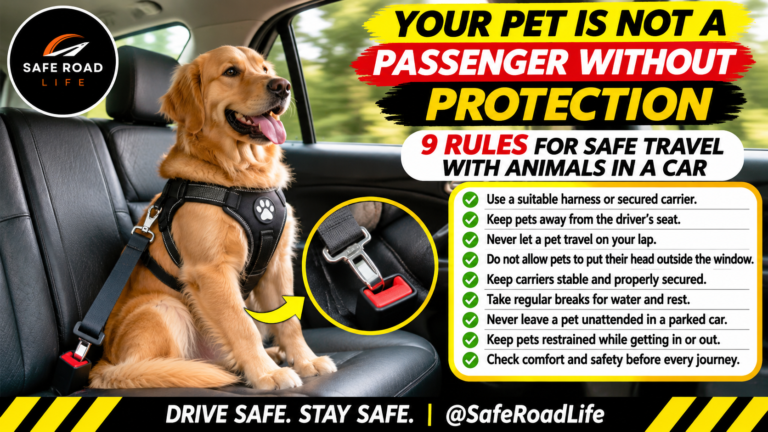
- Use a suitable restraint. Choose a well-fitted pet travel harness designed for vehicle use or a sturdy carrier appropriate to the animal’s size. Follow the product and vehicle instructions.
- Keep pets away from the driver. Never allow an animal to sit on the driver’s lap, near the pedals or where it can interfere with steering and controls.
- Secure the carrier. Place it in a suitable position and secure it so it cannot slide, tip or become a projectile during sudden braking.
- Keep heads and paws inside. Open windows can expose pets to debris, injury and the risk of jumping or falling out.
- Never travel with a loose pet. Even a calm animal can move unexpectedly when startled or during an emergency manoeuvre.
- Plan breaks. On longer journeys, stop in a safe place for water, toilet needs and rest. Never open the door until the pet is securely restrained or on a lead.
- Never leave a pet unattended in a parked car. Cabin temperatures can rise quickly, even when a window is slightly open or the vehicle is parked in shade.
- Prepare for entry and exit. Use a lead or secure carrier before opening the door, and keep the animal away from moving traffic.
- Check before departure. Confirm the restraint is fitted correctly, the carrier is stable and your pet has enough space and ventilation.
A safer journey is a planned journey
Choose equipment suited to your pet and vehicle, introduce it gradually before a long trip, and consult a veterinarian if your animal has travel anxiety or health concerns. Never compromise the driver’s concentration or the pet’s security for convenience.
“Your pet trusts you with its life. Make every journey safe enough to honour that trust.”
Drive Safe. Stay Safe.
@SafeRoadLife
About the Author