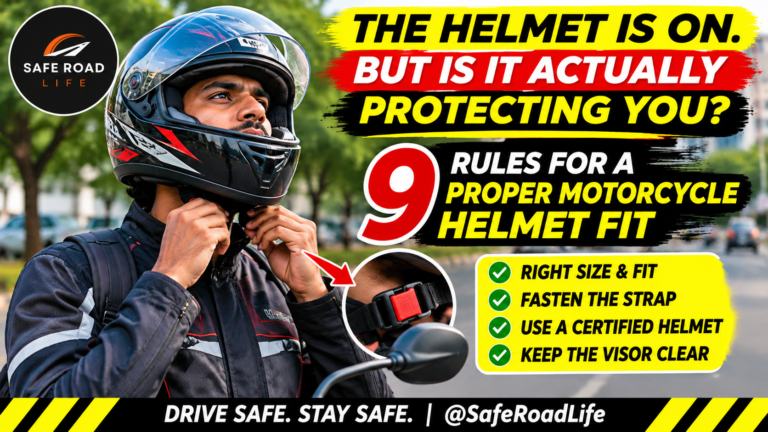
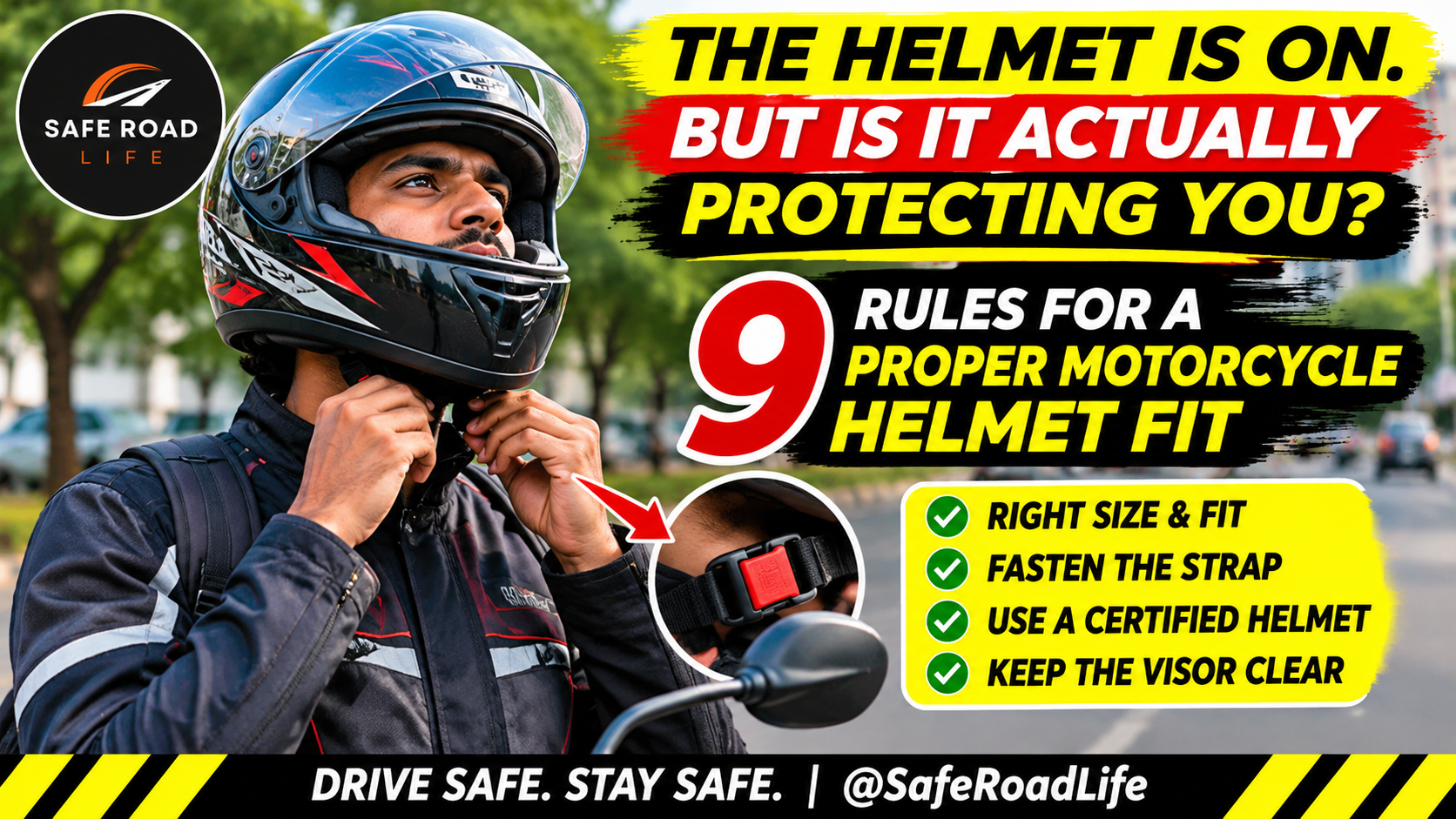
A helmet is one of the most important pieces of protective equipment for a motorcyclist. But simply wearing one does not guarantee effective protection. A helmet that is too loose, incorrectly fastened, damaged or unsuitable for the rider may not perform as intended in a crash.
On Indian roads, where riders share space with cars, buses, trucks and unpredictable traffic, the helmet must be treated as essential safety equipment—not a formality for avoiding a challan.
A helmet resting on your head is not the same as a helmet protecting your head.
1. Choose the correct helmet size
Measure your head and refer to the manufacturer’s sizing chart. Try the helmet before buying it. It should feel snug and evenly secure, without painful pressure points. Do not choose an oversized helmet simply because it feels more comfortable at first.
2. Check the fit around your head
The inner padding should make consistent contact around your head and cheeks. A helmet that shifts easily or leaves large gaps may be too large. Different brands and models can fit differently, so check the actual fit rather than relying only on the size label.
3. Fasten the chin strap every time
A helmet left unfastened can come off during a collision. Secure the chin strap before moving, even for a short ride. Never assume that the helmet will stay in place just because it feels tight on your head.
4. Adjust the strap correctly
Follow the manufacturer’s instructions for the retention system. The strap should be secure beneath your chin without restricting breathing or causing discomfort. Check that the buckle is fully engaged and that excess strap is managed properly.
5. Check helmet movement before riding
With the strap fastened, hold the helmet and gently try to move it from side to side and front to back. Your skin should move with the helmet, and it should not roll or shift excessively. If it moves independently, reassess the size and fit.
6. Never use a damaged or compromised helmet
Cracks, a damaged shell, deteriorated padding or a compromised retention system can affect protection. Replace a helmet after a significant impact, even if damage is not obvious, and follow the manufacturer’s replacement guidance. Do not attempt to repair structural damage with glue or improvised materials.
7. Choose a certified helmet from a reliable source
In India, check for the applicable BIS/ISI certification and buy from a reliable seller. Avoid counterfeit products and helmets with doubtful certification markings. A low price is never worth compromising the protection of your head.
8. Keep the visor clean and clear
A scratched, dirty or fogged visor can reduce visibility, especially at night or in rain. Clean it using products suitable for the visor material and replace it when scratches or damage interfere with your view. Keep the visor mechanism working properly.
9. Never compromise for convenience
Do not ride with the strap open, the helmet tilted backwards or a loose fit. Do not carry a helmet on your elbow or hang it from the motorcycle while riding. Wear it correctly and securely on every journey, however short.
Do not forget the pillion rider
The person riding behind you needs proper head protection too. Ensure the pillion wears a suitable, correctly fitted and fastened helmet. A rider wearing a helmet while the pillion travels without one has not made the journey safe.
Before you start: the helmet safety check
- Correct size and snug fit
- No excessive movement on the head
- Chin strap properly fastened
- Buckle and retention system in good condition
- No known impact damage or structural cracks
- Applicable certification checked
- Clear visor and unobstructed vision
- Rider and pillion both protected
A message to every motorcyclist
Do not treat a helmet as an accessory or a traffic-police requirement. It is protective equipment that must fit, function and be worn correctly. Make helmet inspection part of your daily pre-ride routine, and encourage your family and fellow riders to do the same.
“A helmet cannot protect the head it cannot stay on.”
Make the fit right. Fasten the strap. Every ride, every time.
DRIVE SAFE. STAY SAFE.
@SafeRoadLife
About the Author