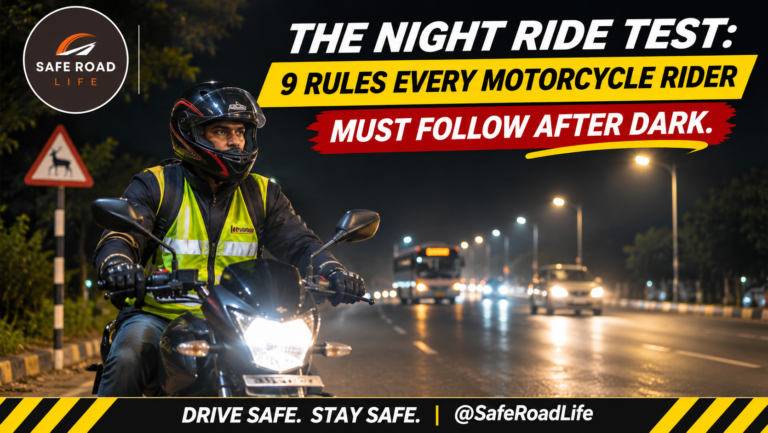
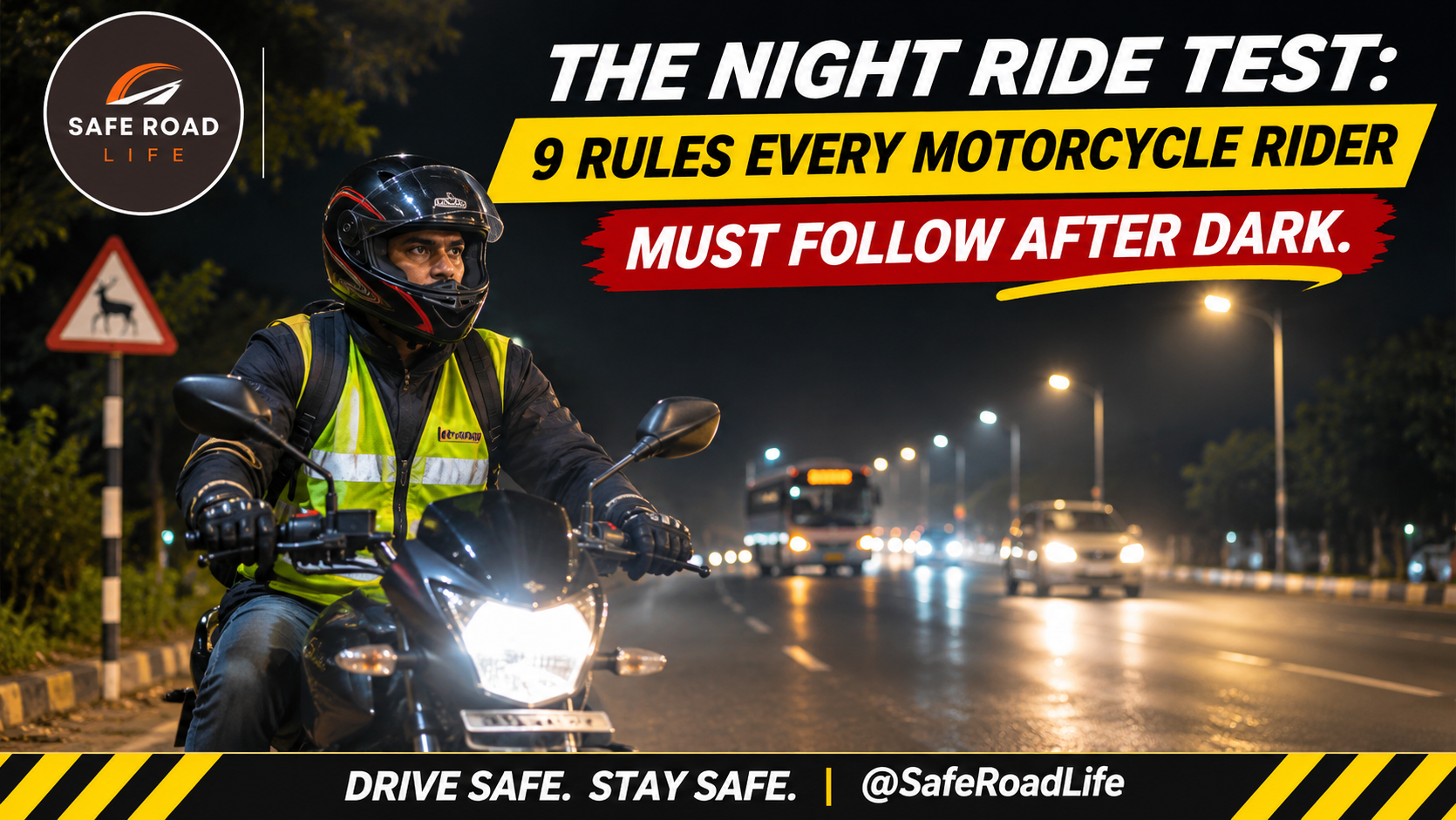
Night riding demands more than switching on the headlight. Reduced visibility, glare, poorly lit roads, unexpected obstacles and difficulty judging distance can turn an ordinary journey into a dangerous one.
A motorcycle offers little physical protection. When visibility decreases, a rider must increase awareness, reduce speed where necessary and make every movement predictable.
The darkness does not forgive a careless decision.
1. Check your headlight before departure
Check the headlight, tail lamp, brake lamp and indicators before starting. Make sure the beam is correctly aimed and both high and low beams work properly. A weak or incorrectly adjusted headlight can reduce your ability to detect hazards and may inconvenience approaching drivers.
2. Wear a properly fitted, certified helmet
Use a helmet that meets applicable safety standards, fits correctly and has its chin strap securely fastened. A helmet is not useful protection if it is loose or comes off during a crash. Keep the visor clean and clear so dust, scratches and glare do not interfere with your vision.
3. Make yourself visible to other road users
Wear reflective or high-visibility elements where practical. Keep your rear reflector and tail lamp clean. Do not assume that a vehicle approaching from behind can easily see a dark-coloured motorcycle or rider.
4. Reduce speed when visibility is limited
Ride at a speed that allows you to identify hazards and stop safely within the distance you can see. Poor lighting, rain, dust, glare and unfamiliar roads may require a much lower speed than you would use during daylight.
5. Avoid looking directly into high-beam glare
An approaching vehicle’s high beam can temporarily reduce your ability to see the road. Avoid staring at the light. Maintain a safe position within your lane, reduce speed if necessary and use the road edge as a visual reference without drifting towards it.
6. Keep a safe following distance
At night, it may take longer to notice that the vehicle ahead has slowed down or stopped. Leave enough space to react and brake smoothly. Avoid riding close behind buses, trucks and cars whose lights may obscure your view.
7. Watch for pedestrians, animals and unlit vehicles
People crossing outside designated areas, animals, parked vehicles and poorly lit two-wheelers can be difficult to identify at night. Approach settlements, junctions, markets and roadside activity slowly. Never assume that an apparently empty road is clear.
8. Avoid sudden lane changes and overtaking
Judge the speed and distance of other vehicles carefully before overtaking. Use indicators, check mirrors and blind spots, and never force a pass when visibility or available space is insufficient. If you cannot clearly see the road ahead, do not overtake.
9. Stop and rest when fatigue appears
Night riding can increase fatigue, particularly after a long working day or extended journey. Repeated yawning, heavy eyelids, poor concentration and delayed reactions are warning signs. Stop at a safe, well-lit place and rest. Do not try to defeat sleep with loud music or excessive caffeine.
Before every night ride: a quick checklist
- Headlight and tail lamp working.
- Brake light and indicators working.
- Helmet properly fitted and secured.
- Visor clean and clear.
- Reflective clothing or elements visible.
- Tyres and brakes checked.
- Route and weather conditions considered.
- Rider alert and fit to travel.
A message for every road user
Drivers should allow motorcycles adequate space and avoid using high beams unnecessarily. Road authorities should maintain street lighting, road markings and reflective signs. Riders must make themselves visible and ride within the limits of their sight distance.
Road safety is a shared responsibility.
The final message
At night, the safest rider is not the one who reaches first. It is the one who sees danger early, makes calm decisions and arrives safely.
“At night, ride not by how fast you can go, but by how far ahead you can safely see.”
DRIVE SAFE. STAY SAFE.
@SafeRoadLife
Further reading
WHO — Helmets: A Road Safety Manual for Decision-Makers and Practitioners
Ministry of Road Transport and Highways, India
NHTSA — Motorcycle Safety
About the Author