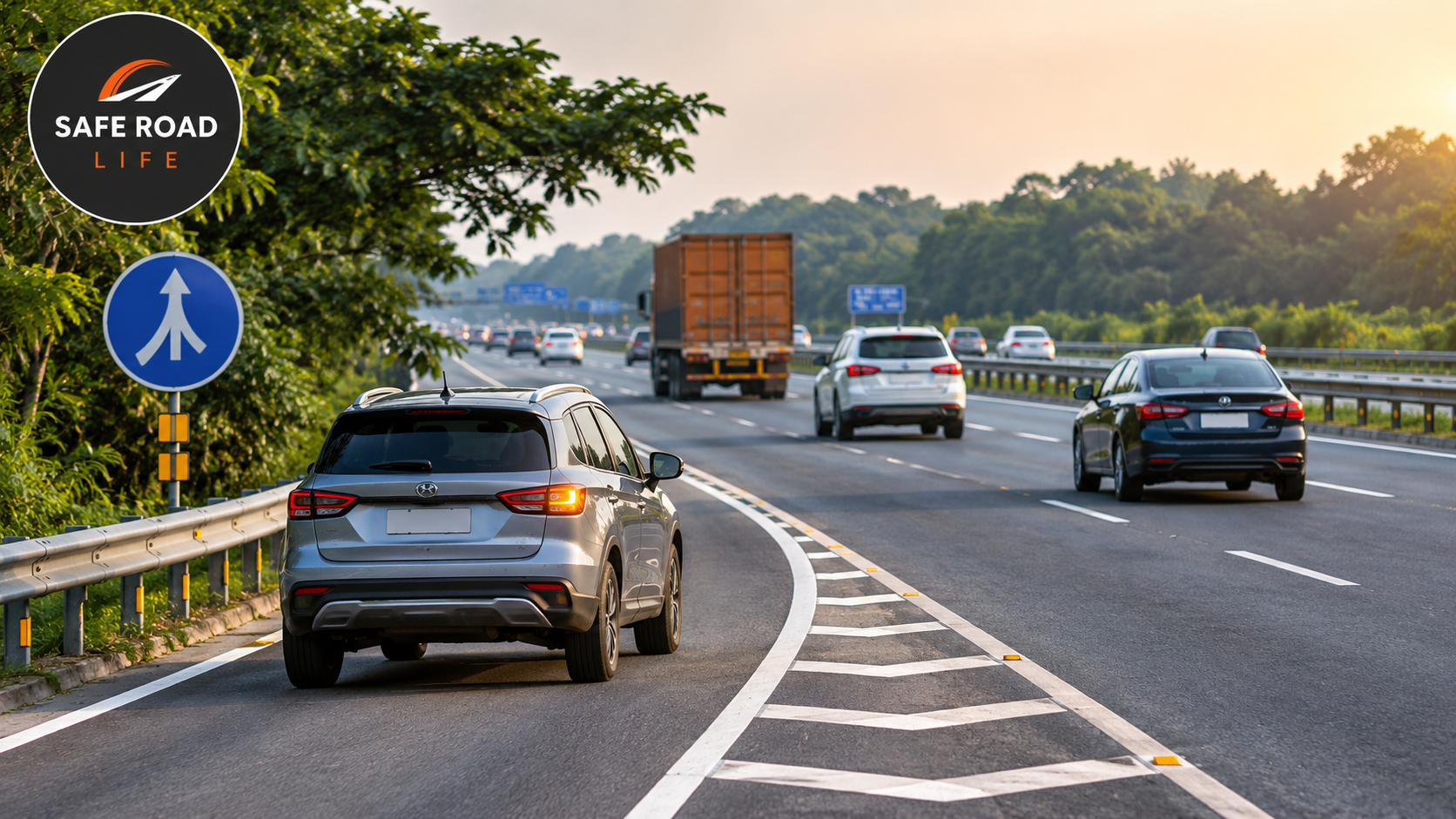
A vehicle is moving at highway speed. Another is approaching from a short entry lane, trying to find a safe gap. One driver accelerates without checking. The other refuses to ease off. A few seconds of impatience can turn a routine merge into a sudden brake, a sideswipe or a chain reaction.
Merging is one of the most demanding everyday driving tasks because two streams of traffic must become one without forcing either vehicle into danger. It is not a competition for the first available space. It is a planned manoeuvre that depends on observation, communication, speed control and cooperation.
The driver joining the highway must give way
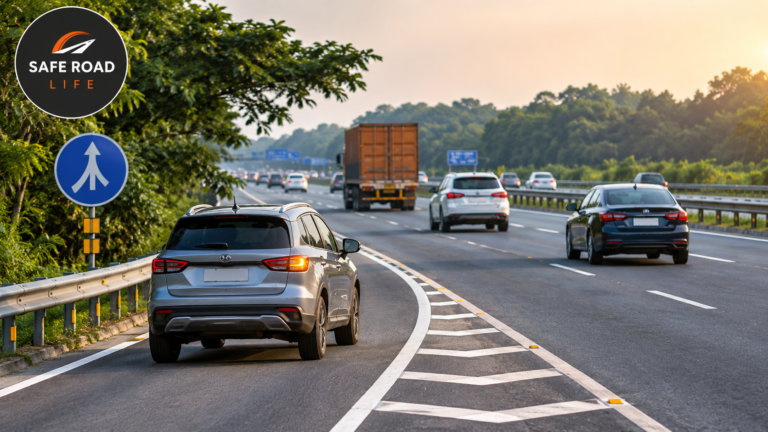
Under India’s Motor Vehicles (Driving) Regulations, 2017, a vehicle entering a national highway, state highway or major district road must give way to traffic already travelling on it. Where an acceleration lane is provided, drivers should use it to build up speed before merging. They must watch traffic through their rear-view and side-view mirrors and signal their intention.
This is important: an indicator communicates what you intend to do; it does not give you the right to move into an occupied space. The gap must be genuinely safe before you enter it.
Use the entry lane to prepare—not to panic
Look ahead as you approach the joining point. Read the road signs and lane markings early. Check the traffic flow, identify a possible gap and use the acceleration lane to bring your speed closer to the speed of the traffic, while staying within the posted limit and maintaining control.
Do not crawl along the entry lane and then attempt to force your way into fast-moving traffic at the last moment. Equally, do not accelerate blindly. If the lane is short, visibility is poor or traffic is dense, make a calm decision based on the space actually available. Never cross a solid line or use the shoulder to manufacture a gap.
Mirrors are not enough: check the blind spot
A car, motorcycle or even a small commercial vehicle can sit outside the useful field of a mirror. Before moving across, check the rear-view mirror, the relevant side mirror and the blind spot with a brief shoulder check where it is safe to do so. Keep watching the vehicle ahead as well; a driver on the ramp can be distracted by traffic behind and miss a sudden slowdown in front.
Signal in good time, make one smooth movement when the gap is available, and cancel the indicator after completing the merge. Avoid sharp steering or last-second lane changes. If the gap closes, do not squeeze in. Adjust your speed and look for another opportunity.
Drivers already on the highway have a role too
Having priority does not mean having to make the situation harder. If a vehicle is trying to join, stay alert and create room when it is safe and practical. A small, controlled adjustment in speed or a safe lane change can help traffic flow. But do not brake harshly, swerve or move into another lane without checking that it is clear.
Never accelerate simply to block a merging vehicle. That turns a manageable interaction into a contest. At the same time, a merging driver must not assume that highway traffic will automatically move aside. Cooperation is valuable; predictable driving is essential.
When two lanes become one, take turns sensibly
Roadworks, lane closures and narrowing carriageways create a different kind of merge. Watch for advance warning signs, reduce speed progressively and follow temporary markings and traffic controllers. Avoid racing past a queue at the last moment or blocking a vehicle that is already positioned to merge safely. Where traffic is moving slowly and the layout permits, an orderly alternating merge can reduce conflict. Follow local signs and instructions if they specify a different arrangement.
Heavy vehicles need particular consideration. A loaded truck or bus may need more space and time to adjust speed. Do not sit alongside it in a narrowing section, and never assume its driver can see a small vehicle close to the side.
If there is no safe gap, do not force one
Sometimes traffic is too dense, the available lane is ending, or another driver behaves unpredictably. Resist the urge to make a sudden move. Keep control, follow the road layout and obey signs or instructions. If you miss an exit or joining opportunity, continue to a safe, legal place to reroute. Reversing on an entry lane, stopping in a live lane or cutting across solid markings can create a far more serious hazard.
On wet roads, in darkness or when visibility is reduced, allow more time and space. Tyres have less grip on slippery surfaces, and other drivers may not see your indicator or vehicle as early as you expect. A safe merge should never depend on another road user making an emergency reaction.
A smooth merge is a shared responsibility
The safest highway journeys are not made by the driver who gets ahead by half a car length. They are made by people who read the road early, communicate clearly, respect right of way and leave enough room for others to move predictably.
When joining a highway, give way, check mirrors and blind spots, signal, match the traffic speed where the road design allows, and move only when a safe gap exists. When already on the highway, stay alert and make space when it is safe. A few seconds of patience can prevent a crash that may affect people who had nothing to do with the decision.
DRIVE SAFE. STAY SAFE.
@SafeRoadLife
Sources
- Motor Vehicles (Driving) Regulations, 2017 – Regulation 15: Merging in traffic
- National Highways Authority of India – Road Safety Audit Manual, section on merging areas
- UK Highway Code – Rule 259: Joining the motorway
About the Author