A road tunnel can shorten a journey, cut through a mountain and keep traffic moving in difficult terrain. But the moment you enter one, the driving environment changes. Visibility, ventilation, escape options and emergency response are different from an open road. A small mistake inside a confined space can quickly affect many people.
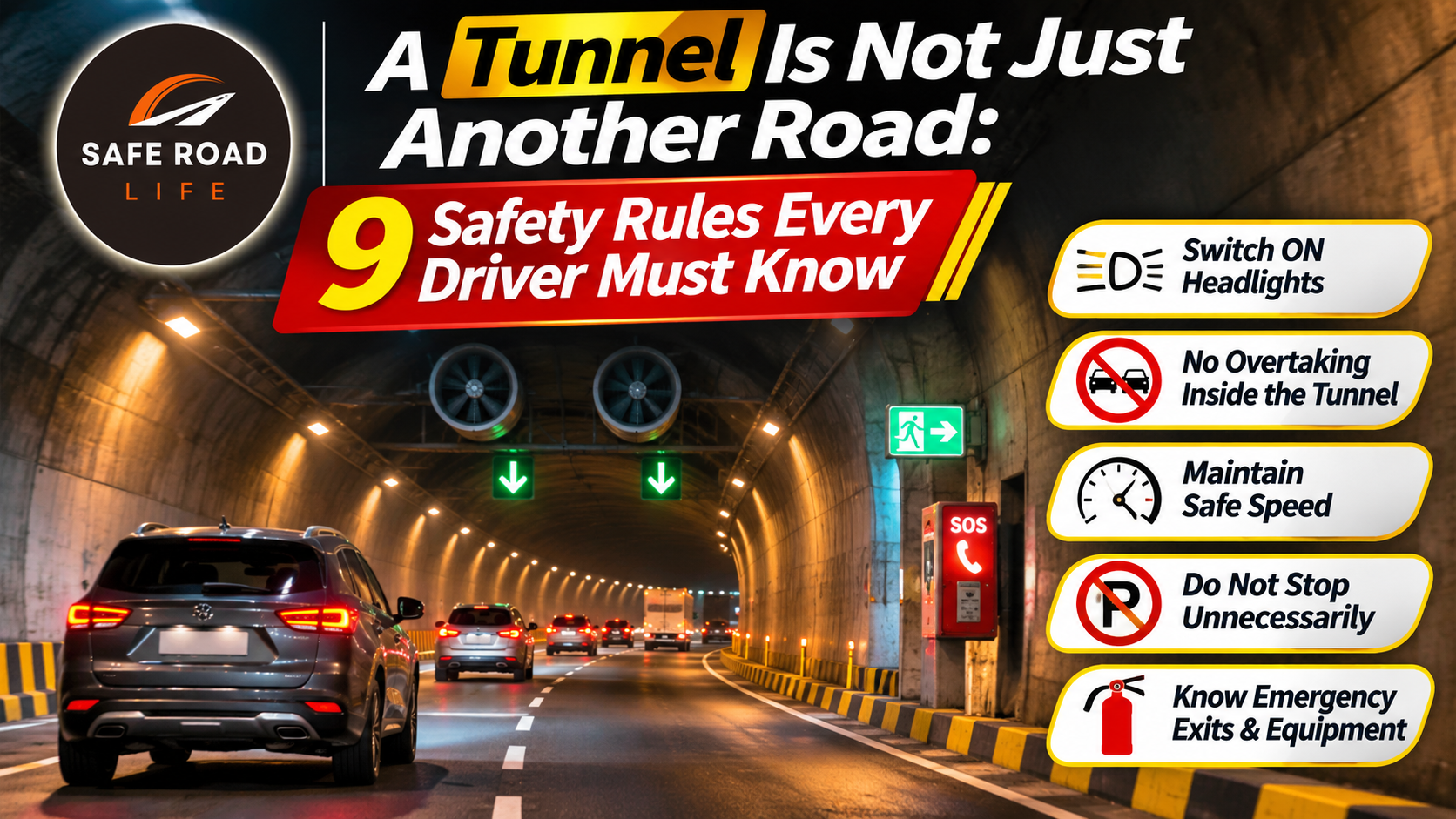
India’s Motor Vehicles (Driving) Regulations, 2017 specifically address tunnel driving. Regulation 20 requires dipped headlights before entering a tunnel and prohibits overtaking, U-turns and reversing inside it. It also explains what drivers must do if stopping becomes unavoidable. These are not optional driving tips; they are part of the rules that govern safe tunnel use.
Whether you are driving through the Atal Tunnel, a highway tunnel in the hills or an urban road tunnel, remember these nine practical rules.
1. Prepare your vehicle before approaching the tunnel
Do not wait until you are at the entrance to discover a problem. Check that your fuel or battery range is adequate, tyres are in safe condition, brakes and lights are working, and the load is properly secured. Make sure your windscreen is clean and your mirrors are correctly adjusted. If a warning light, overheating issue, brake defect or other serious fault suggests the vehicle may fail, do not enter until it has been checked.
Pay attention to vehicle-height, width, weight and dangerous-goods restrictions displayed before the tunnel. Never assume that a vehicle or load that fits on the open road will automatically be permitted inside.
2. Switch on dipped headlights before entry
Regulation 20 of the Motor Vehicles (Driving) Regulations, 2017 says drivers must switch on dipped lights before entering a tunnel. Do this before reaching the entrance—not after the vehicle enters the darker section. Dipped headlights help you see the road and make your vehicle more visible to others.
Remove sunglasses if they reduce visibility, and never use high-beam headlights in a way that dazzles or distracts oncoming or preceding drivers. Follow the tunnel’s lighting instructions and electronic signs.
3. Never overtake, make a U-turn or reverse
A tunnel is not a place to recover lost time. Regulation 20 expressly prohibits overtaking, making a U-turn and driving backwards inside a tunnel. Stay in your lane, maintain a predictable path and follow lane-control signals. If you miss an exit, continue safely and use the permitted route outside the tunnel to turn back.
Do not cross a solid line, force your way around a slow vehicle or follow another driver who is breaking the rules. A sudden lane movement in a confined space can trigger a chain collision.
4. Keep a safe gap and avoid sudden braking
Maintain a generous following distance, even when traffic slows. Tunnel walls can make a minor collision more disruptive, while limited sight distance may leave the driver behind with little time to react. Look well ahead, watch brake lights and ease off the accelerator early when traffic begins to compress.
Do not tailgate, weave between lanes or accelerate to close a gap. If traffic stops, remain alert and leave enough room to move if instructed by tunnel staff.
5. Obey signs, signals and tunnel-control instructions
Watch for speed-limit changes, lane arrows, red lane-closure crosses, height restrictions, variable message signs and instructions from tunnel personnel. A red signal or closed-lane indication means do not enter that lane. If the tunnel is closed or an authority directs traffic to stop, do not try to pass barriers or follow another vehicle through.
Where radio or public-address announcements are provided, listen carefully. Identify emergency phones, fire equipment and marked pedestrian escape exits as you travel, without taking your eyes off the road for long.
6. Do not stop or park inside a tunnel unless it is unavoidable
Never stop to take photographs, check your phone, wait for someone or attend to a minor inconvenience inside a tunnel. Regulation 20 prohibits stopping or parking unless it is absolutely unavoidable. If you must stop because of a breakdown, crash or immediate danger, switch on hazard warning lights and follow the tunnel authority’s instructions.
The regulation also specifies reflective warning triangles 20 metres in front of and behind a vehicle when such a stop is unavoidable. Do not walk into a live traffic lane to place a triangle if doing so would expose you to danger; follow the tunnel operator’s emergency procedure and instructions from responders.
7. If your vehicle breaks down, make the safest move possible
If the vehicle develops a problem, do not panic or make a sudden stop in a running lane if you can safely reach a designated emergency bay or a safe stopping area. If it is safe and the vehicle remains controllable, follow the tunnel’s instructions for exiting or reaching the nearest safe stopping point. Switch on hazard lights, apply the parking brake once stopped and contact tunnel control using an emergency phone or the displayed contact method.
Do not reverse, attempt a risky repair in a traffic lane or stand behind the vehicle. Stay inside or move to a protected area only as directed by tunnel staff, unless there is an immediate threat such as fire or smoke that requires evacuation.
8. If there is fire or smoke, leave the vehicle and evacuate as directed
Fire and smoke inside a tunnel can become life-threatening very quickly. If your vehicle catches fire, or you are instructed to evacuate, stop in the safest available place, switch off the engine if it is safe to do so, leave the vehicle and move towards the nearest marked emergency exit. Take passengers with you, help children and anyone who needs assistance, and follow illuminated exit signs and public-address instructions.
Do not waste time collecting luggage or personal belongings. Do not walk deeper into smoke or move towards the tunnel entrance simply because it is familiar; use the nearest safe escape route indicated by the tunnel system or emergency personnel. Never re-enter until authorities say it is safe.
9. Stay calm, communicate and never create a second emergency
In a tunnel incident, sudden reversing, turning around, getting out to film, or driving around emergency vehicles can put more people at risk. Keep your attention on the road, leave emergency access clear and follow instructions from the control room, police, fire services and tunnel staff. Use the emergency phone or the local emergency number displayed in the tunnel to report a crash, fire, stopped vehicle or other hazard.
If traffic is stopped, remain patient and keep a safe gap. Do not assume the queue is moving just because vehicles ahead begin to roll. Move only when the lane is clear and the tunnel signals permit it.
A quick tunnel-driving checklist
- Vehicle roadworthy, enough fuel or charge, and load secured.
- Dipped headlights switched on before entry.
- Speed limit, lane signals and tunnel signs obeyed.
- No overtaking, U-turns, reversing or unnecessary stopping.
- Safe following distance maintained; sudden braking avoided.
- Emergency phones, bays and escape signs noticed.
- In a breakdown or fire, follow the tunnel’s emergency procedure and staff instructions.
Frequently asked questions
Should I switch on headlights inside a road tunnel during daytime?
Yes. Regulation 20 requires dipped headlights before entering a tunnel. Switch them on in advance, even in daylight.
Can I overtake a slow vehicle inside a tunnel?
No. The Motor Vehicles (Driving) Regulations, 2017 prohibit overtaking inside a tunnel. Stay in your lane and maintain a safe gap.
Can I stop inside a tunnel if my vehicle develops a problem?
Stopping is permitted only when absolutely unavoidable. Use a designated emergency bay or safe stopping place if possible, switch on hazard lights and contact tunnel control. Follow the operator’s instructions.
What should I do if there is a fire inside a tunnel?
Follow the tunnel’s evacuation instructions, leave the vehicle when directed or when there is immediate danger, and use the nearest marked emergency exit. Do not collect belongings or re-enter the tunnel.
The safest tunnel journey is the one where every driver follows the same rules
A tunnel gives you a shorter route, not extra room for mistakes. Prepare before entry, keep your driving smooth, obey every signal and know how to respond if something goes wrong. Your calm decision can protect not only your passengers but everyone travelling behind you.
DRIVE SAFE. STAY SAFE.
@SafeRoadLife
References and further reading
- The Motor Vehicles (Driving) Regulations, 2017 — Regulation 20: Entering a tunnel.
- Ministry of Road Transport and Highways — 2026 SOP for passage of vehicles carrying hazardous material through tunnels on National Highways.
- Queensland Department of Transport and Main Roads — Tunnel safety and emergency response guidance.
- Federal Highway Administration — Road Tunnel Safety.
About the Author