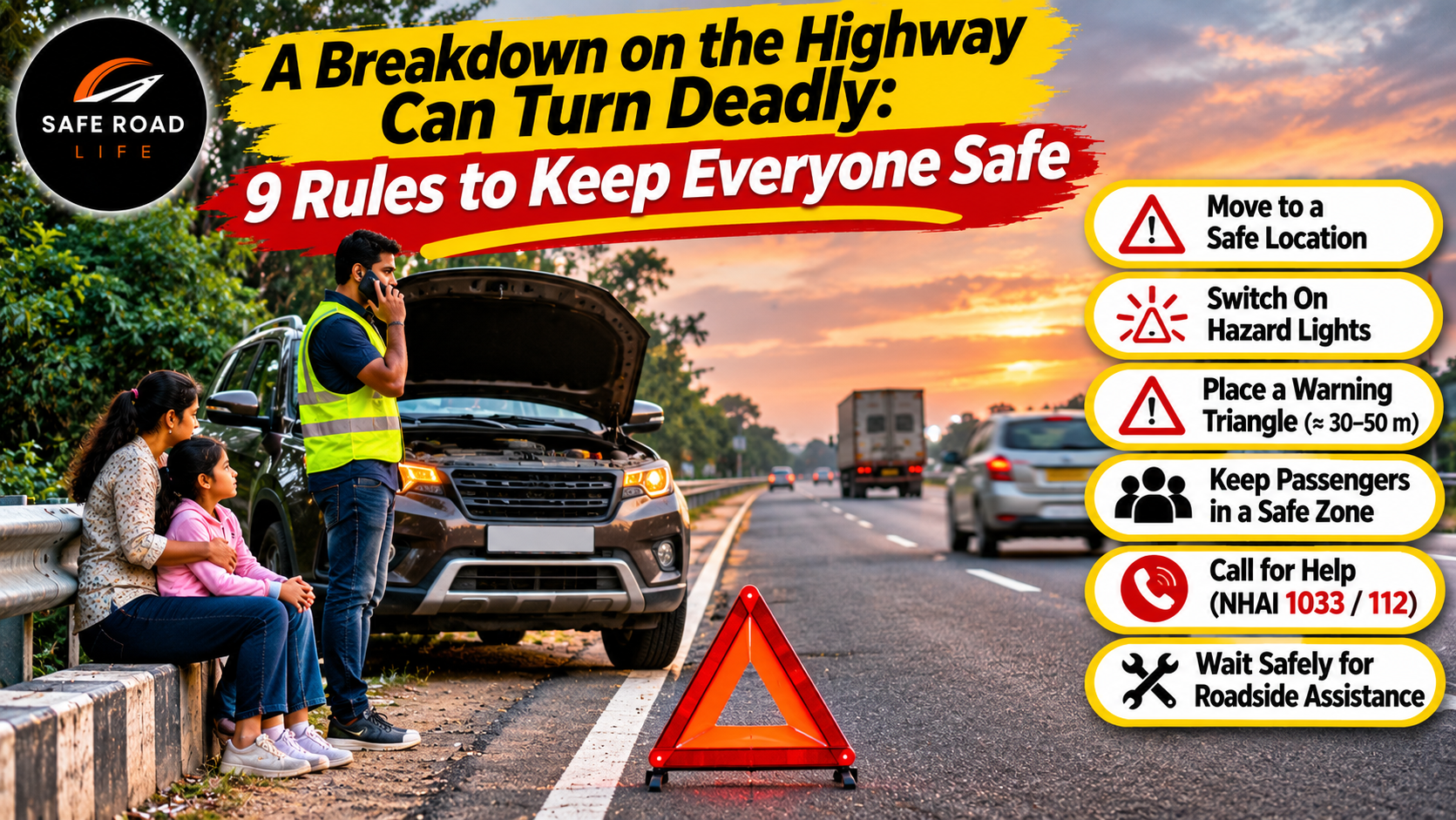
A vehicle breakdown is stressful. A breakdown in a live traffic lane can become life-threatening. The danger is not only the mechanical fault—it is the approaching traffic, poor visibility, unsafe roadside repairs and passengers standing too close to moving vehicles.
Whether you drive a car, bus, truck or two-wheeler, the first priority after a breakdown is not to repair the vehicle. It is to protect people and prevent a second crash.
Why a stopped vehicle becomes a road hazard
Drivers approaching a stationary vehicle may not recognise the danger in time, particularly at night, in rain, on curves or near the crest of a hill. A passenger stepping out into traffic or a driver changing a tyre beside a fast-moving lane can be exposed to a serious secondary collision.
The UK Highway Code advises drivers to seek a place of relative safety, use hazard lights when creating an obstruction and keep people away from moving traffic. The key principle applies everywhere: get out of the traffic environment before dealing with the mechanical problem.
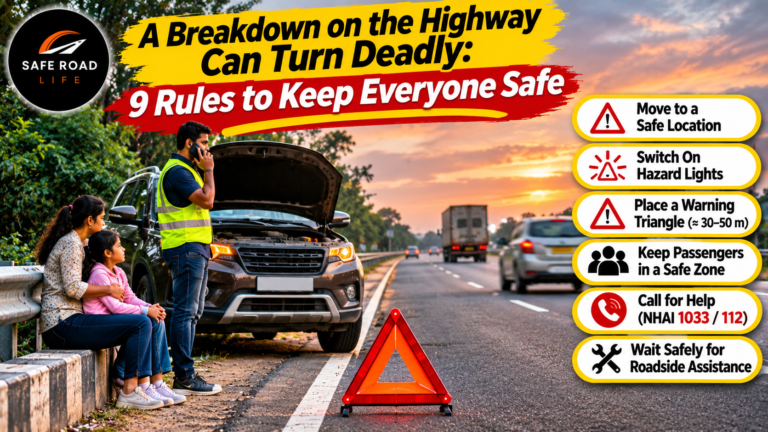
9 rules to follow when your vehicle breaks down
1. Recognise the warning signs early
Warning lights, loss of power, unusual vibration, smoke, overheating, a tyre problem or abnormal steering can signal a developing fault. Do not continue at highway speed hoping the problem will disappear. Reduce speed smoothly, switch on hazard lights if you are slowing abnormally and look for a safe place to leave the carriageway.
2. Move completely out of moving traffic if possible
If the vehicle is still controllable, signal and move to a designated parking area, service area or a safe place well clear of traffic. Avoid stopping on a bend, just beyond a crest, near a junction or in a narrow shoulder. Do not make a sudden manoeuvre that creates a new crash risk.
3. Switch on hazard lights and make the vehicle visible
Activate hazard warning lights as soon as you are stopped or are moving abnormally slowly because of a fault. In darkness or poor visibility, use the vehicle lighting appropriate to the situation. Keep the vehicle as visible as possible, but remember that hazard lights do not make a dangerous stopping place safe.
4. Decide whether it is safer to stay inside or get out
This decision depends on the exact location. If the vehicle is stopped in a live lane or there is no safe exit away from traffic, keep seat belts fastened, keep hazards on and call emergency help immediately. If you can safely exit away from traffic and reach a protected place behind a barrier or well away from the road, do so carefully. Never stand between your vehicle and approaching traffic.
5. Keep passengers, especially children, away from the carriageway
Do not allow passengers to stand beside the vehicle, walk along the road or gather behind it. If it is safe to leave, move everyone to a protected area away from traffic. Keep children under close control. Do not cross the highway to reach a shop, fuel station or another vehicle.
6. Do not attempt roadside repairs in a dangerous location
Changing a tyre, checking under the bonnet or inspecting a leaking component beside moving traffic can put you directly in the path of another vehicle. Do not crawl under a vehicle or stand in front of or behind it on a live road. Call trained roadside assistance and wait in a safe place.
7. Use warning triangles only when it is safe and appropriate
A reflective warning triangle may help alert approaching drivers on some roads, but placing it must never put you in danger. Do not walk along a high-speed carriageway or motorway to position one. Follow the road authority’s instructions and local rules; on some motorways, warning triangles are specifically discouraged or prohibited because retrieving or placing them exposes people to traffic.
8. Call the right emergency or roadside assistance service
On Indian National Highways, call 1033 for round-the-clock highway assistance, including vehicle breakdown support, ambulances, cranes and patrol vehicles. For an immediate threat to life or a serious emergency, call 112. Give the road or highway number, direction of travel, nearest kilometre marker, toll plaza or landmark, and describe the exact problem. Share your live location if you can do so safely.
9. Rejoin traffic only when it is safe
Before moving again, check that the fault has been resolved by a competent person and that the vehicle is safe to drive. Build up speed only where the road layout permits and merge without forcing other drivers to brake or swerve. If the vehicle is not roadworthy, arrange recovery rather than taking another risk.
Special warning: breakdowns on expressways and high-speed roads
High-speed roads leave very little time for approaching drivers to react. A vehicle stopped on a shoulder is still exposed to traffic. If your vehicle develops a fault, leave the main carriageway at the next safe exit or service area if it remains controllable. If it cannot continue, use the safest available refuge and follow the road operator’s emergency instructions.
Never walk along a live lane to inspect damage, retrieve luggage or place a warning device. Never stand behind the vehicle taking photographs. If you cannot reach a safe place outside the vehicle, stay belted in and call for urgent assistance.
Build a simple roadside emergency kit
- Fully charged mobile phone and charging cable or power bank.
- Reflective vest kept within easy reach—not buried under luggage.
- Flashlight or torch with working batteries.
- First-aid kit and essential personal medicines.
- Drinking water and basic supplies for passengers.
- Vehicle documents and roadside assistance contact details.
- Manufacturer-approved tools and spare tyre equipment, if applicable.
Before every long journey: prevent avoidable breakdowns
Check tyre condition and pressure, engine oil, coolant, fuel or battery charge, lights, wipers and warning indicators. For an electric vehicle, plan charging stops and understand the manufacturer’s breakdown and towing instructions. Do not ignore a warning simply because the vehicle is still moving.
Frequently asked questions
What should I do first if my car breaks down on a highway?
Keep control, move out of moving traffic if it is safe, switch on hazard lights and protect everyone from passing vehicles. If the car is stopped in a live lane or you cannot exit safely, remain belted in and call emergency help.
What is the National Highway emergency helpline in India?
NHAI’s 1033 helpline operates 24 hours a day, seven days a week and assists National Highway users with vehicle breakdowns, medical emergencies and other highway-related problems. Call 112 for an immediate emergency requiring emergency response.
Should I put a warning triangle behind my broken-down car?
Only if it is permitted and can be placed without exposing you to traffic. Never walk along a motorway or high-speed carriageway to place one. Follow local road authority instructions.
Is it safe to change a tyre on the highway shoulder?
Not if you are close to moving traffic or cannot work in a protected area. Move to a safer location if possible and call roadside assistance. A tyre change is never worth risking a life.
Remember: the vehicle can wait. Your life cannot.
A breakdown is a mechanical problem. A person standing in a live traffic lane can turn it into a tragedy. Stay visible, keep passengers protected, call for help and never take a roadside repair risk that puts you in danger.
DRIVE SAFE. STAY SAFE.
@SafeRoadLife
Sources and further reading
- Press Information Bureau / Ministry of Road Transport & Highways: NHAI 1033 National Highway Helpline (14 September 2026)
- UK Department for Transport: Highway Code—Breakdowns and incidents
- West Bengal Transport Department: Driver Training Manual—Vehicle breakdown guidance
- US National Highway Traffic Safety Administration: Emergency roadside kit and trip preparation
SafeRoadLife shares practical road-safety education. Emergency procedures and warning-device rules may vary by road type and jurisdiction. Always follow instructions from the relevant road authority and emergency responders.
About the Author