An electric vehicle can look completely silent after a collision. The dashboard may be dark, the motor may make no sound and the occupants may already be out. But a damaged high-voltage battery can still present serious hazards.
For drivers, fleet teams, bystanders and recovery operators, one rule matters: never assume a crashed electric vehicle is electrically safe just because it is switched off.
Why a crashed EV needs a different safety response
Electric and hybrid vehicles contain high-voltage components. A collision can damage cables, battery enclosures or electrical connections. Official guidance from the U.S. National Highway Traffic Safety Administration (NHTSA) warns that damaged high-voltage batteries may remain energised and can release hazardous or flammable gases. Battery damage can also create an immediate or delayed fire risk.
This does not mean every electric vehicle is more likely to catch fire than a petrol or diesel vehicle. It means responders and recovery teams must recognise the additional hazards and follow vehicle-specific emergency procedures.
8 safety rules after an electric vehicle crash
1. Identify the vehicle before approaching
Look for the vehicle make and model, EV or hybrid badges, charging port and high-voltage warning labels. If you are unsure, tell emergency services that the vehicle may be electric or hybrid. Do not rely only on the absence of engine noise.
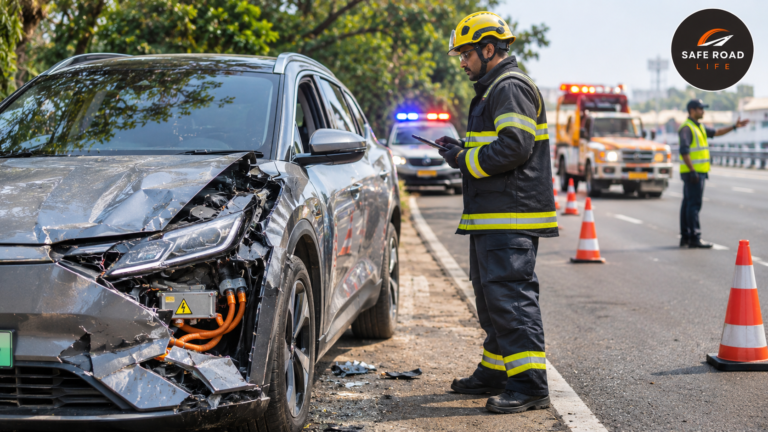
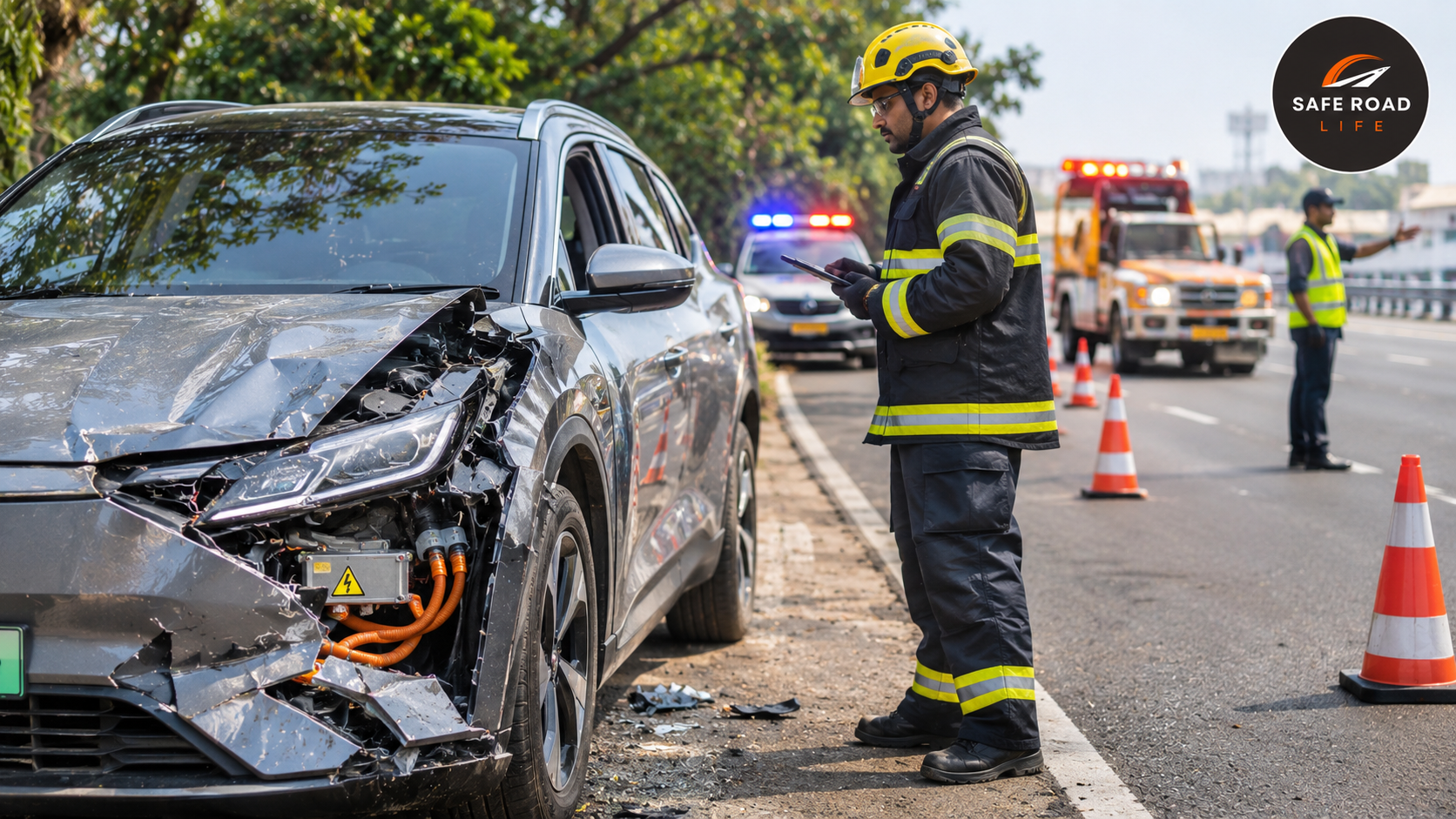
2. Keep clear of damaged orange cables
Orange-coloured cables commonly identify high-voltage wiring. Never touch, cut, pull or move damaged cables. Do not touch exposed electrical components or attempt to open battery covers. Keep bystanders away and leave technical isolation to trained responders.
3. Do not assume the vehicle is safe because it is silent
Some electric vehicles can remain capable of movement even when they make little or no noise. Do not stand in front of or behind a crashed vehicle where it could move. Trained responders should immobilise it using the vehicle-specific procedure.
4. Watch for battery warning signs
Move away and alert emergency services if you notice smoke, sparks, flames, unusual chemical odours, hissing, popping, bubbling or a rapidly increasing temperature around the battery area. Do not approach to investigate or touch leaking fluids.
5. Keep people away from smoke and vapours
Battery gases and fire smoke can be hazardous. Do not inhale them. Move to a safe location away from the vehicle and, where possible, upwind and uphill. Keep clear of traffic and follow instructions from emergency responders.
6. Tell the fire, police and ambulance teams it is an EV
Share the vehicle make and model if known, whether it was charging, where the impact occurred and whether smoke, heat or fluid leakage is visible. This information can help responders locate the correct emergency response guide and plan a safer approach.
7. Do not tow or store a damaged EV casually
A damaged electric vehicle may require a manufacturer-approved recovery method. Incorrect towing can cause further damage. A vehicle with suspected battery damage may also need a designated isolation and monitoring area. Recovery operators should follow the vehicle-specific emergency response guide and local fire-service instructions—not improvise.
8. Treat the vehicle as a potential delayed hazard after the crash
A battery problem may develop after the initial impact. Do not park a severely damaged EV inside a garage, workshop or crowded depot until it has been assessed and cleared under the applicable manufacturer and emergency-service procedure. If smoke, heat, unusual sounds or vapours appear later, move away and call emergency services.
What drivers and fleet managers should do before an incident
- Keep the vehicle owner’s manual and emergency contact details accessible.
- Train drivers to identify the vehicle’s EV or hybrid status and report it clearly after a crash.
- Ensure depot supervisors know the emergency escalation process and the location of isolation controls for charging equipment.
- Keep vehicle-specific emergency response information available to authorised responders and recovery partners.
- Use only technicians trained and equipped for high-voltage work for inspection, isolation and repair.
- Include EV crash response and post-incident vehicle handling in fleet emergency drills.
What ordinary road users should never attempt
- Do not cut orange cables or open the battery enclosure.
- Do not touch exposed electrical parts or leaking fluids.
- Do not attempt to disconnect the high-voltage battery yourself.
- Do not move a badly damaged EV unless there is an immediate threat and emergency services direct you to do so.
- Do not assume that flames have gone out or that the vehicle is safe to store because it has cooled down.
Frequently asked questions
Can an electric vehicle still be dangerous after it is switched off?
Yes. High-voltage components and damaged battery cells may retain hazardous energy. Treat a crash-damaged EV as potentially energised and leave assessment and isolation to trained personnel.
What do orange cables mean in an electric vehicle?
Orange is commonly used to identify high-voltage wiring. Never touch or cut these cables, especially if they are damaged or exposed.
Can a damaged EV battery catch fire later?
Battery damage can create a delayed fire risk. Any unusual heat, smoke, vapour, hissing or popping should be treated as an emergency warning. Keep clear and contact emergency services.
Can any tow truck recover a crashed electric car?
No. Recovery requirements vary by vehicle and damage. Use the manufacturer’s emergency response guide and an appropriately equipped recovery operator. Incorrect towing can damage the vehicle further.
EV safety does not end when the vehicle stops
Electric mobility brings important benefits, but emergency readiness must evolve with the technology. A quiet vehicle is not proof of a safe vehicle. Recognising high-voltage hazards, keeping people clear and calling trained responders can prevent a second emergency after the first crash.
DRIVE SAFE. STAY SAFE.
@SafeRoadLife
Trusted safety references
NHTSA – Electric and Hybrid Vehicles: Battery, charging and safety
NHTSA – Emergency Response Guides for electric-powered vehicles
U.S. Fire Administration – Emergency Response to Electric Vehicle Incidents
This article provides general public-awareness information. Emergency response, high-voltage isolation, firefighting, towing and storage must be handled by trained personnel using vehicle-specific instructions and local procedures.
About the Author