An airbag is designed to protect you in a crash. But it deploys with extraordinary speed—and if you are sitting too close, leaning forward, placing your feet on the dashboard or travelling unrestrained, that same safety system can cause devastating injuries.
The key message: airbags are supplemental restraints. They are designed to work with seat belts, not replace them. Your seating position matters before the journey begins.
Why the way you sit matters
Frontal airbags inflate in a fraction of a second. A person who is too close to the steering wheel or dashboard may be struck while the airbag is still expanding. The U.S. National Highway Traffic Safety Administration (NHTSA) explains that sitting too close can increase the risk of serious injury. It also says children under 13 should ride in the rear seat.
8 airbag safety rules every car occupant should follow
1. Wear your seat belt on every trip
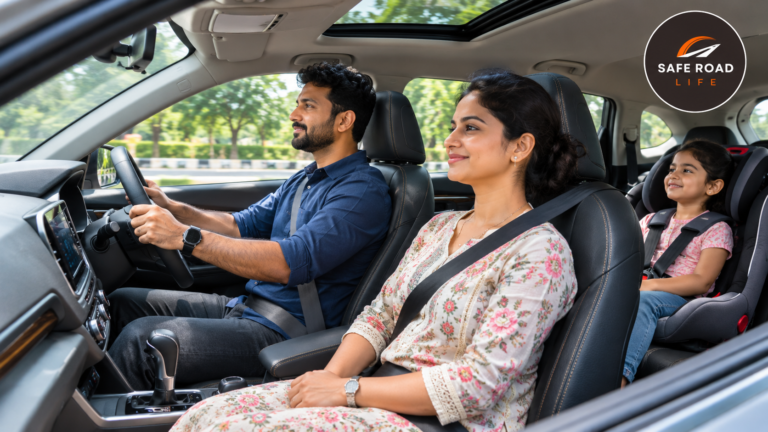
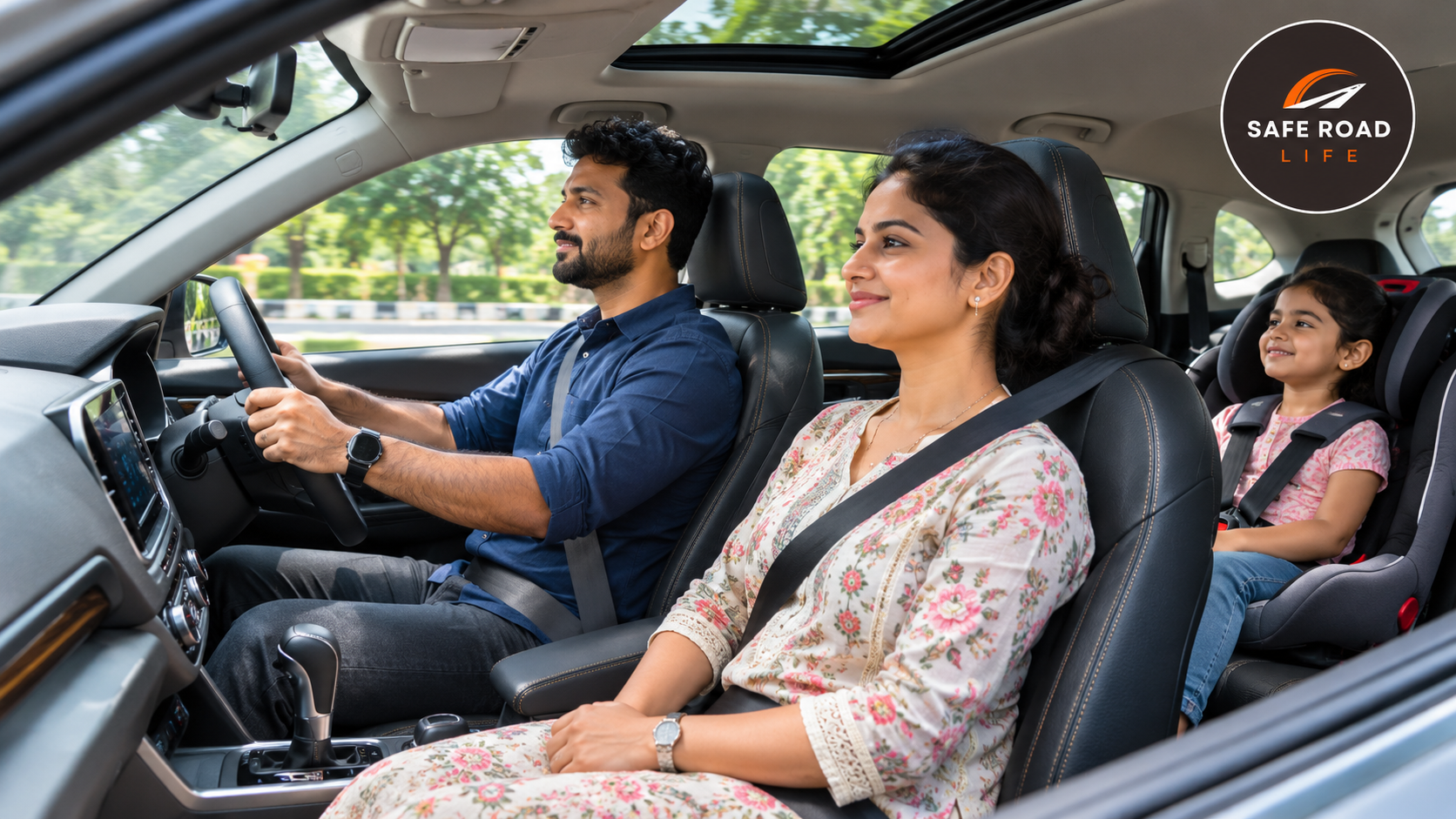
An airbag is not a substitute for a seat belt. Buckle up before the vehicle moves, keep the lap belt low across your hips and the shoulder belt across your chest, and never place the shoulder belt behind your back or under your arm.
2. Keep a safe distance from the steering wheel
NHTSA recommends at least 10 inches (about 25 cm) between the centre of the steering wheel and the driver’s breastbone, where this can be achieved while maintaining full control of the vehicle. Move the seat back as far as practical, but make sure you can still reach the pedals and operate the vehicle safely. Follow your vehicle manufacturer’s instructions.
3. Move the front passenger seat back
The front passenger should sit upright and as far from the dashboard as practical. Do not lean forward to look at a phone, rest against the dashboard or stretch your legs onto it.
4. Keep children under 13 in the rear seat
Use a child restraint appropriate for the child’s height, weight and developmental stage. Never place a rear-facing child seat in front of an active passenger airbag. Check both the child-seat instructions and the vehicle owner’s manual for correct installation.
5. Never put your feet on the dashboard
A passenger who rests their feet on the dashboard can be in the path of a deploying airbag. The force can drive the legs and body backwards and cause severe injuries. Keep both feet on the floor.
6. Sit upright—do not lean against the door or airbag area
Avoid leaning forward, slouching, lying across the seat or resting your head against a door where a side airbag may be fitted. Sit centrally in the seat and use the seat belt correctly.
7. Keep the airbag area clear
Do not attach ornaments, phone holders or other objects over an airbag cover. Never place objects or people between an occupant and an airbag. Use only accessories approved for your vehicle and never modify the airbag system.
8. Treat the airbag warning light seriously
If the airbag or SRS warning light stays on, flashes abnormally or appears after a collision, arrange an inspection by an authorised service centre. After an airbag deploys, it must be replaced by a qualified technician before the vehicle is driven again. Do not attempt a DIY repair.
Common airbag myths that can put lives at risk
- Myth: “The airbag means I do not need a seat belt.” Reality: airbags are designed to work with seat belts.
- Myth: “A child is safe in the front if the car has advanced airbags.” Reality: children under 13 should ride in the rear seat in an appropriate restraint.
- Myth: “Keeping my feet on the dashboard is harmless on a short trip.” Reality: a crash can happen on any journey, and that position can expose the passenger to severe injury.
- Myth: “An airbag warning light can wait until the next service.” Reality: a warning may indicate a fault in a critical restraint system. Get it checked promptly.
A quick safety check before you drive
- Driver and passengers are wearing seat belts correctly.
- The driver can reach the controls while maintaining a safe distance from the steering wheel.
- The front passenger seat is positioned away from the dashboard.
- Children are secured in the correct rear-seat child restraint.
- No feet, objects or accessories are placed in an airbag deployment area.
- No unresolved airbag or SRS warning is being ignored.
Frequently asked questions
Can an airbag injure someone who is wearing a seat belt?
Airbags can cause injuries, particularly if an occupant is too close or out of position. Correct seat-belt use and proper seating position help reduce the risk while allowing the airbag to provide its intended protection.
How far should a driver sit from the steering wheel?
NHTSA recommends at least 10 inches (25 cm) from the centre of the steering wheel to the driver’s breastbone, provided the driver can still operate the vehicle safely. Always consult the vehicle owner’s manual for model-specific guidance.
Should children sit in front of an airbag?
Children under 13 should ride in the rear seat in an age- and size-appropriate restraint. Never put a rear-facing child seat in front of an active passenger airbag.
The safest position is the one you choose before the crash
You cannot control when another vehicle makes a mistake. You can control whether you buckle up, sit correctly and keep the airbag deployment area clear. A few seconds of preparation can make a critical difference when a crash happens.
DRIVE SAFE. STAY SAFE.
@SafeRoadLife
Trusted safety references
NHTSA – Air Bags: Protection, positioning and safety guidance
CDC – Preventing Child Passenger Injury
Safety guidance can vary by vehicle design and local regulations. Always follow the owner’s manual, child-restraint manufacturer instructions and applicable local requirements.
About the Author