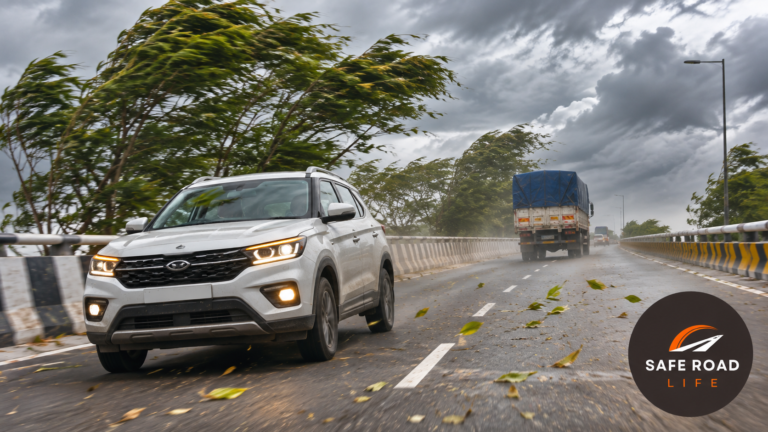
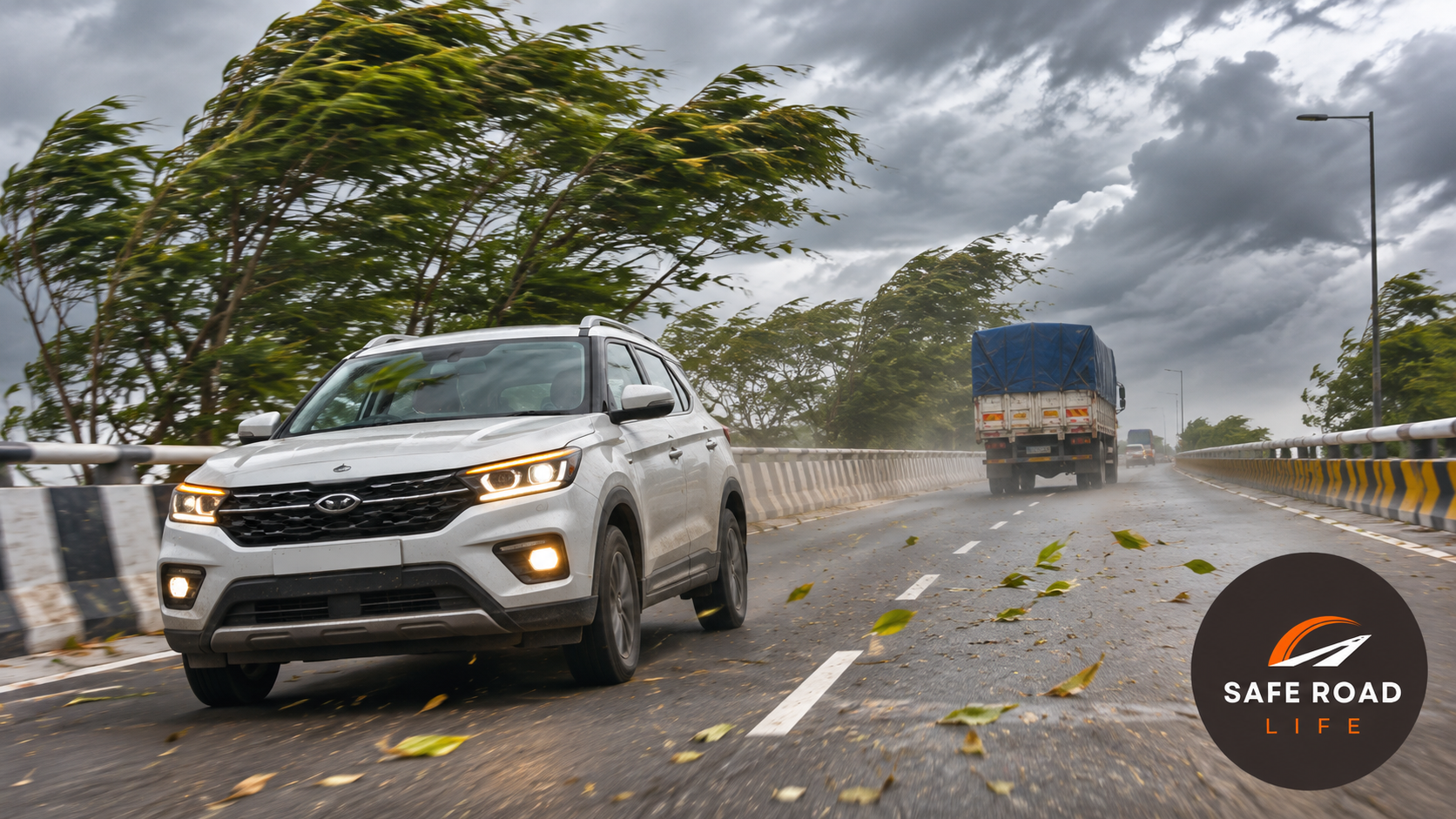
Strong crosswinds can push a vehicle out of its lane in a split second. The highway may look clear, but one sudden gust can turn an ordinary journey into a dangerous situation.
You cannot see the wind approaching or control its direction. But you can prepare for it. Knowing how to drive safely in strong crosswinds can help you stay in control and protect everyone sharing the road.
Strong crosswinds are a serious road-safety hazard for cars, buses, trucks, vans and motorcycles, particularly on open highways, bridges, flyovers and coastal roads. High-sided vehicles are especially vulnerable because their large surface area catches more wind. Even experienced drivers can be surprised when a sudden gust strikes from the side.
How strong crosswinds affect vehicles on highways
A crosswind applies pressure to the side of a moving vehicle, potentially pushing it away from its intended path. The danger becomes greater when a vehicle moves from a sheltered road section into an open area, crosses an exposed bridge or flyover, or encounters changing airflow around a truck or bus. Unsecured luggage and cargo can also catch the wind.
The greatest danger is often not the wind itself, but the driver’s sudden reaction to it. A sharp steering movement or abrupt braking can make a difficult situation worse. Reduce speed smoothly and avoid overcorrecting.
How to drive safely in strong crosswinds: 9 precautions
1. Check weather warnings before starting
Check weather forecasts and route alerts before beginning a long journey. If severe winds are expected, consider postponing travel until conditions improve.
2. Reduce speed before entering exposed roads
Slow down gradually when approaching bridges, flyovers and open highway stretches. Lower speed gives you more time to respond to sudden gusts. Always drive within posted limits and adapt your speed to conditions.
3. Keep both hands firmly on the steering wheel
Maintain a balanced grip and make smooth steering corrections. Avoid sudden movements that could destabilise your vehicle. Look well ahead rather than focusing only on the road immediately in front.
4. Maintain extra distance from heavy vehicles
Trucks, buses and container vehicles can be affected by wind pressure. Keep a safe following distance and avoid remaining alongside them unnecessarily, particularly on exposed stretches.
5. Exercise extra caution on bridges and flyovers
These exposed sections can experience strong crosswinds. Avoid unnecessary overtaking, maintain a steady line and follow warning signs and traffic-authority instructions.
6. Secure luggage and vehicle loads
Check roof carriers, tarpaulins, ropes and cargo before departure. Loose materials can become dangerous objects for other road users. Never carry an unstable or poorly secured load.
7. Give two-wheeler riders extra protection
Motorcyclists should reduce speed, maintain a steady grip and avoid riding close to heavy vehicles. If conditions become difficult, stop only at a designated safe location away from moving traffic.
8. Watch for falling branches and flying debris
Strong winds can throw branches, plastic sheets and other objects onto the road. Look ahead, maintain distance and avoid sudden swerving. Change direction only when the path is clear and safe.
9. Know when to stop driving
If wind conditions make vehicle control difficult, do not continue taking unnecessary risks. Find a suitable rest area or service station away from moving traffic and wait for conditions to improve. Avoid stopping beneath unstable trees, hoardings or structures.
Do’s and Don’ts when driving in strong crosswinds
DO: Reduce speed according to road conditions, keep both hands on the steering wheel, maintain extra distance, secure all luggage and cargo, and follow weather and traffic warnings.
DON’T: Make sudden steering corrections, overtake unnecessarily, drive too close to high-sided vehicles, stop in live traffic lanes or ignore official severe-weather warnings.
Why safe driving in strong winds matters
Driving patiently in strong crosswinds helps reduce the risk of lane departures, loss of balance and sudden conflicts with nearby traffic. It also protects motorcyclists, cyclists and pedestrians who may be exposed to flying debris or a vehicle that drifts from its path. A short delay is a small price for keeping everyone safe.
Quick safety checklist before your next journey
- Have I checked the weather forecast and route warnings?
- Is my vehicle’s cargo properly secured?
- Am I maintaining a safe speed for the conditions?
- Am I keeping sufficient distance from heavy vehicles?
- Do I know where I can stop safely if conditions worsen?
You cannot control the wind, but you can control your decisions
Every journey deserves a safe ending. Never allow speed, deadlines or overconfidence to dictate your decisions during dangerous weather. Reaching your destination late is always better than never reaching it.
DRIVE SAFE. STAY SAFE.
@SafeRoadLife
Sources and further reading
- Ministry of Road Transport and Highways – India
- Traffic Scotland – Driving in High Winds
- UK Highway Code – Adverse Weather Conditions
- National Highways – Travelling in Strong Winds
- Transport Canada – Crosswind Stabilisation
About the Author