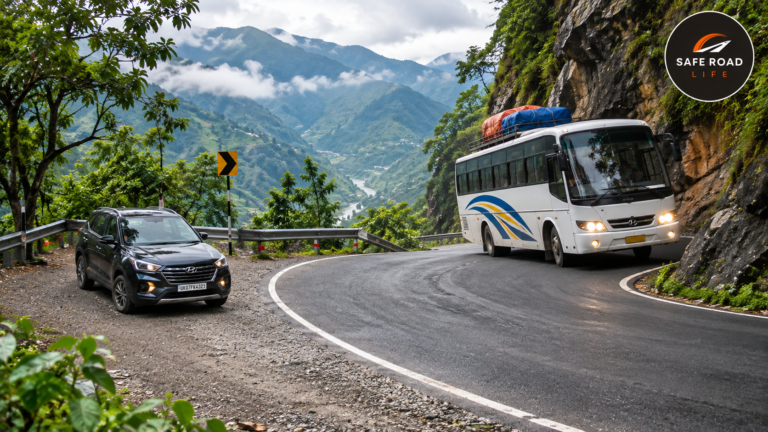
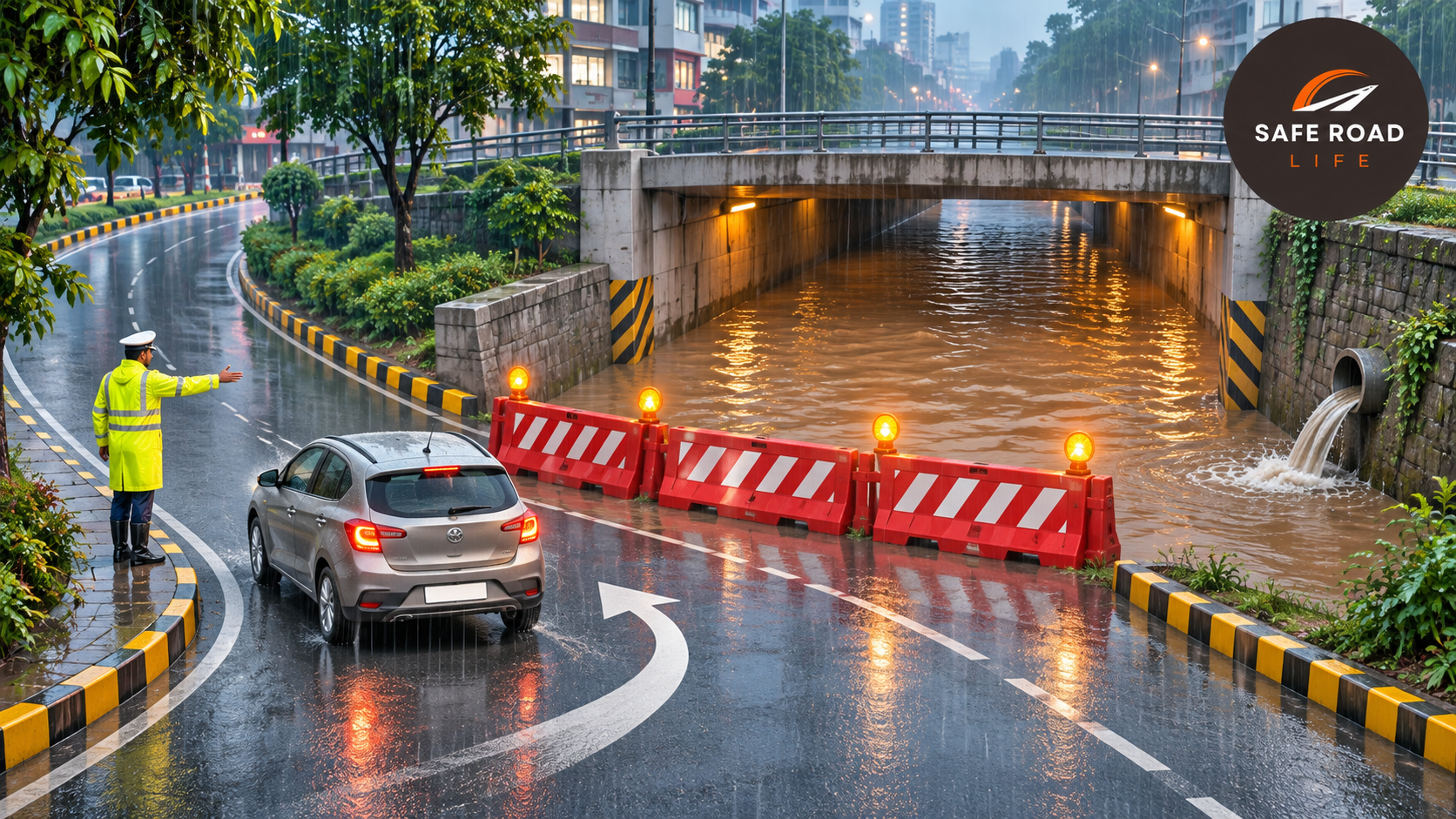
The road ahead looks like a shallow pool. A bus has crossed it. A car behind you is waiting. Should you follow?
One of the most dangerous decisions during heavy rain is driving into water covering the road. What appears shallow from the driver’s seat may hide a pothole, an open drain, a damaged road edge or a fast-moving current. The water can also stall or sweep away a vehicle.
The safest rule is simple: never attempt to drive through a flooded road when you cannot confirm it is safe. Delhi Fire Service and the Government of India’s fire and civil-defence guidance specifically warn people not to drive over flooded roads because the depth and condition of the road beneath the water may be impossible to judge.
Why a flooded road is more dangerous than it looks
Floodwater can conceal missing manhole covers, broken surfaces, open drains, debris and collapsed shoulders. Moving water can push a vehicle sideways, while water entering the engine or electrical systems can cause a breakdown. Even after the rain becomes lighter, water levels can continue rising as runoff arrives from nearby areas.
Do not use the height of another vehicle, the apparent water level or a phone video as proof that your car can cross. Different vehicles have different ground clearance, air-intake positions, weight and stability. There is no universal water-depth figure that makes a flooded road safe for every vehicle.
8 rules to follow when you see water across the road
1. Stop before reaching the water
Reduce speed gradually and stop at a safe distance on firm ground before the flooded section. Do not brake suddenly in the middle of traffic or stop so close that another vehicle can push you into the water. Keep enough space to manoeuvre away safely.
2. Do not guess the depth or strength of the current
Water can hide a sudden drop, damaged pavement or an open drain. A road that looks level may have been washed out below the surface. Moving water can also be stronger than it appears. Do not walk into it to test the depth or use a stick from the roadway as a reason to attempt a crossing.
3. Turn around or use an official diversion
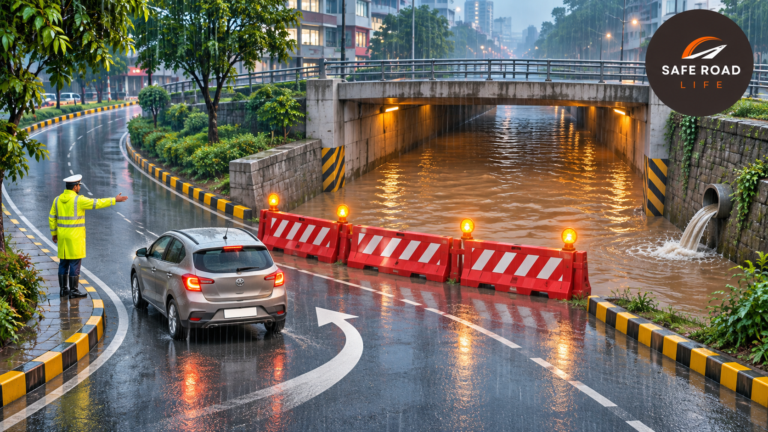
If the road is flooded or closed, choose another route. Turn around only where there is enough space and it can be done legally and safely. Follow police, fire-service and road-authority instructions. Do not reverse blindly on a busy road or make a sudden U-turn across traffic.
4. Never follow another vehicle into floodwater
A bus, truck, tractor or SUV may appear to pass, but that does not prove the route is safe for your vehicle. You cannot see the road beneath the water or know whether the current is getting stronger. Wait for an authorised all-clear or take another route.
5. Respect barricades and road-closure signs
Do not drive around a barricade, move a traffic cone or enter a closed underpass because the road looks quiet. Closures may protect drivers from deep water, hidden structural damage or hazards that are not visible from the approach. A detour is safer than a rescue.
6. Avoid underpasses, low bridges and fast-flowing areas
Low-lying underpasses, dips, causeways and roads beside drains or rivers can collect water rapidly. Avoid them during heavy rain or flood alerts. Do not park beside a stream, drainage channel or low point where rising water may surround the vehicle.
7. If water rises around a stopped vehicle, prioritise people
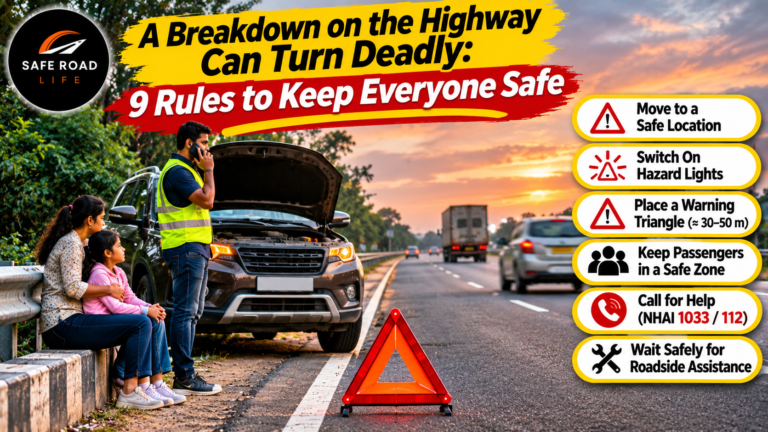
Call emergency services and follow their instructions. If the water is rising and you can exit safely onto higher ground without entering dangerous moving water, leave the vehicle and move to safety. Do not delay to save luggage or valuables. Never step into fast-flowing water or approach submerged electrical wires. If the exit route itself is dangerous, stay in the safest available position and tell responders your exact location.
8. Do not restart a vehicle that stalled in floodwater
If your vehicle stalls after water exposure, do not repeatedly try to start it. Water may have entered the engine or electrical systems, and restarting can make the damage worse. Get occupants to safety first, then arrange a professional inspection and recovery. Do not drive the vehicle again until it has been checked.
Do’s: Prepare before driving in heavy rain
- Check official weather, traffic and road-closure advisories before departure.
- Plan an alternate route that avoids known low-lying roads and underpasses.
- Keep your phone charged and emergency contacts accessible.
- Maintain working headlights, tail lamps, wipers and tyres.
- Allow extra journey time and postpone non-essential travel when authorities advise against it.
- Keep a safe distance and watch for sudden waterlogging, fallen branches and debris.
- Tell someone your route if travelling through an area affected by flooding.
Don’ts: Avoid these common flood-driving mistakes
- Don’t drive through water just because it looks shallow.
- Don’t follow a larger vehicle through a flooded stretch.
- Don’t drive around barricades or ignore a road closure.
- Don’t enter an underpass or dip where water is collecting.
- Don’t walk into moving floodwater to inspect the road.
- Don’t stop in a low-lying area where water may rise around your vehicle.
- Don’t restart an engine that has stalled after water exposure.
- Don’t stand near or touch fallen power lines, especially where water is present.
Why these precautions matter
Protects lives first: Avoiding floodwater reduces the risk of occupants being trapped or swept away.
Prevents avoidable breakdowns: Staying out of water helps protect engines and electrical systems from water damage.
Reduces secondary crashes: Stopping before a flooded section and following diversions avoids sudden manoeuvres and stranded vehicles in traffic lanes.
Keeps rescue routes clear: Respecting closures helps emergency teams reach people who genuinely need assistance.
The two-minute rain and flood-route check
- ☐ Have I checked weather and traffic advisories?
- ☐ Is my route clear of reported flooding and closures?
- ☐ Do I have an alternate route?
- ☐ Are my wipers, lights and tyres in safe condition?
- ☐ Is my phone charged and emergency contact available?
- ☐ Am I prepared to turn back rather than cross floodwater?
Remember: You do not know what is hidden beneath floodwater, and your vehicle is not a rescue boat. If a road is flooded, do not test it. Stop, turn back safely and choose a safer route.
Share this message with family members, professional drivers, delivery riders and fleet teams. One decision to avoid a flooded road can prevent a life-threatening emergency.
Drive Safe Stay Safe
@SafeRoadLife
Sources and further reading
- Delhi Fire Service – Flood Safety: Do Not Drive Over Flooded Roads
- Directorate General, Fire Services, Civil Defence & Home Guards, Ministry of Home Affairs – Urban Flood Safety
- U.S. Centers for Disease Control and Prevention – Floodwater Safety
- Delhi Traffic Police – July 2025 Newsletter: Waterlogging and Vehicle Breakdowns
- U.S. National Weather Service – Flood Safety and Preparedness
About the Author