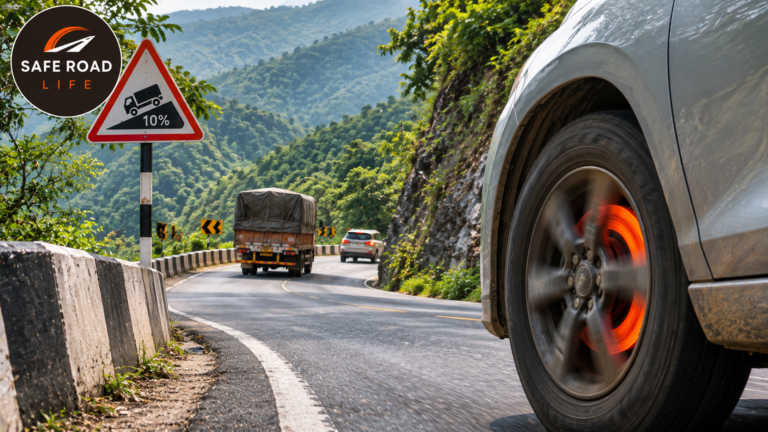
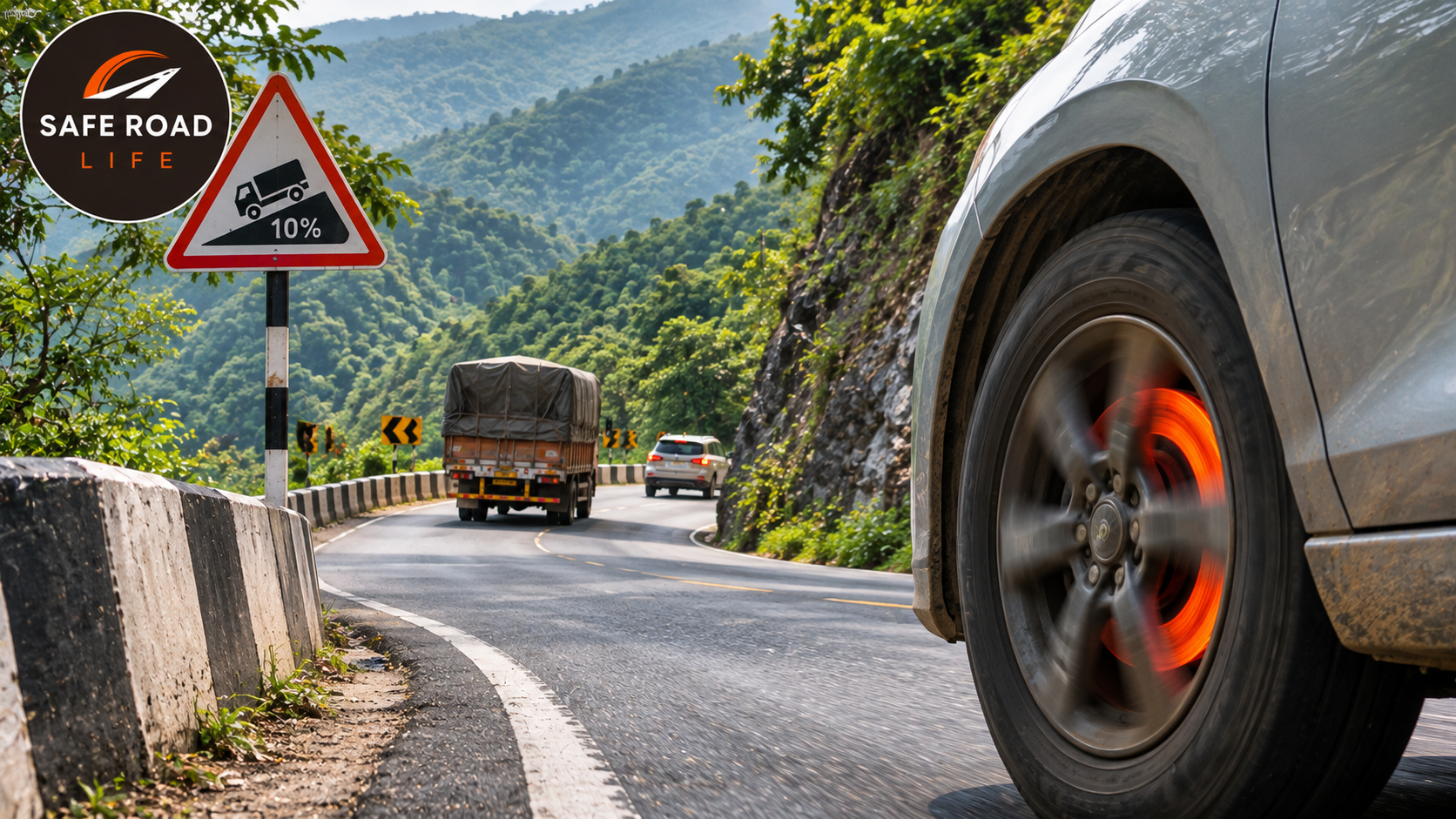
A vehicle begins descending a long mountain road. The driver presses the brake pedal again and again to keep the speed under control. The road keeps falling away. The brakes grow hotter with every application. Then, when the next sharp bend appears, the vehicle does not slow as expected.
This is the danger of brake fade: braking effectiveness reduces as the braking system overheats. It can affect cars, buses and heavy goods vehicles, especially on long or steep descents when drivers rely on continuous foot-brake application instead of controlling speed before the slope.
What brake fade really means
Brakes convert the vehicle’s motion into heat. Under normal driving, the system can dissipate that heat. But repeated or prolonged heavy braking can raise temperatures beyond what components can manage effectively. The driver may notice that the vehicle needs more pedal pressure or more distance to slow down. In severe cases, braking performance can fall dramatically.
The Ministry of Road Transport and Highways’ Road Safety Question Bank defines brake fade as a reduction in braking effectiveness and specifically addresses how to prevent it while descending. Ontario’s official air-brake handbook also warns that excessive heat can reduce brake force so severely that a vehicle may become difficult or impossible to slow or stop.
The mistake begins before the descent
Many drivers enter a downhill section at the speed they were using on level ground. They then depend on the brake pedal to control the vehicle all the way down. This creates a cycle of repeated braking and heat build-up. A loaded vehicle, a steep gradient, tight bends and high speed can make the demand on the braking system even greater.
Safe descent begins before the slope. Reduce speed while the road is still manageable. Read warning signs, observe recommended speed limits and select an appropriate lower gear before starting down. Follow the vehicle manufacturer’s instructions for the transmission and any engine-braking or hill-descent systems. Never coast downhill in neutral.
Let the right gear help control speed
Engine braking uses the resistance of the engine and drivetrain to help control the vehicle when a suitable lower gear is selected. It reduces the need to keep the service brakes applied continuously. The correct gear depends on the vehicle, gradient, load, road surface and manufacturer’s guidance; there is no single gear that suits every descent.
Do not shift into neutral to let the vehicle roll. Do not make an abrupt downshift that could upset the vehicle or cause driven wheels to lose grip, particularly on a slippery surface. In an automatic vehicle, use only the lower-gear or descent-control modes described in its owner’s manual.
Brake deliberately, not continuously
Foot brakes are still essential. Use them when traffic, bends or changing conditions require you to reduce speed, applying them smoothly and with enough distance. Avoid riding the brake pedal for the entire descent. Plan ahead, maintain a safe following gap and choose a speed that leaves room to respond without harsh, repeated braking.
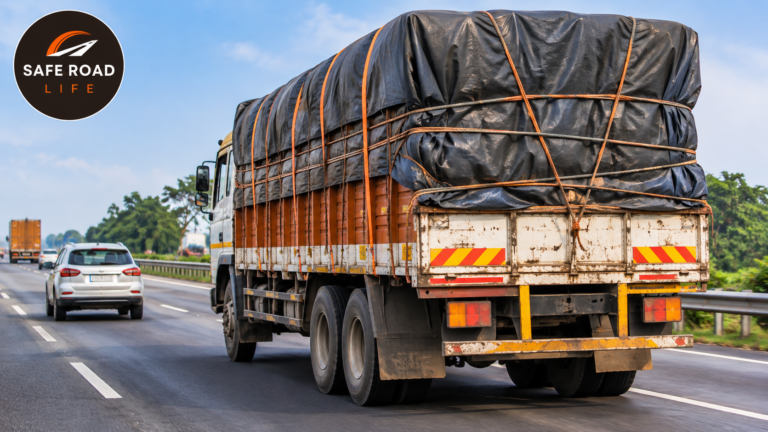
Heavy vehicle drivers must be especially careful. A fully loaded bus or truck carries greater momentum downhill and places substantial demands on its braking system. Drivers should use the vehicle’s approved auxiliary braking systems where fitted, follow the route and vehicle operating procedures, and never exceed a safe speed for the gradient and load.
Recognise warning signs early
A burning smell, smoke near a wheel, unusual brake noise, a change in pedal feel or a vehicle that takes longer to slow down can indicate a serious braking problem. Do not dismiss these signs as normal mountain-road conditions. If braking performance changes, focus on keeping the vehicle under control, reduce speed as safely as possible and use a designated emergency escape ramp if one is available and necessary.
Once you can do so safely, move out of the live traffic path to a suitable stopping area, secure the vehicle and seek professional assistance. Do not continue the journey simply because the brakes appear to recover after cooling. Have the braking system inspected before driving again. Never pour water on hot brakes; sudden cooling can damage components, and it does not fix the underlying fault.
Before a mountain journey, check the vehicle
Brake condition should never be an afterthought. Have pads or linings, discs or drums, brake fluid, air-brake components and warning systems checked according to the vehicle’s maintenance schedule. Do not ignore warning lamps, air-pressure faults or a low brake-fluid level. For commercial fleets, pre-trip inspections and defect reporting must be part of the operating routine—not paperwork completed after departure.
Drivers should also understand the vehicle they operate. A car, a loaded bus and a multi-axle truck do not respond identically on a steep descent. Training should cover the manufacturer’s recommended gear selection, auxiliary braking equipment, safe stopping locations and the correct response to a braking defect.
A safe descent is planned, not improvised
Mountain roads demand patience. Enter the descent at a controlled speed, choose the appropriate gear early, use engine braking where the vehicle allows it, and reserve the service brakes for when they are needed. Keep enough distance from the vehicle ahead and never let a schedule pressure you into descending faster than conditions permit.
The most dangerous moment may come when a driver presses the brake pedal and expects the vehicle to slow—but the system has already been pushed beyond its limits. Respect the gradient before it becomes an emergency. A few minutes saved downhill are never worth losing the ability to stop.
DRIVE SAFE. STAY SAFE.
@SafeRoadLife
Sources
- Ministry of Road Transport and Highways, Government of India – Road Safety Question Bank: brake fade and downhill driving
- Government of Ontario – Official Air Brake Handbook: Demands on Brakes While Driving
- Mahindra Owner’s Manual – Uphill and Downhill Driving / Engine Braking
- Michelin – Tips for Driving in the Mountains
About the Author