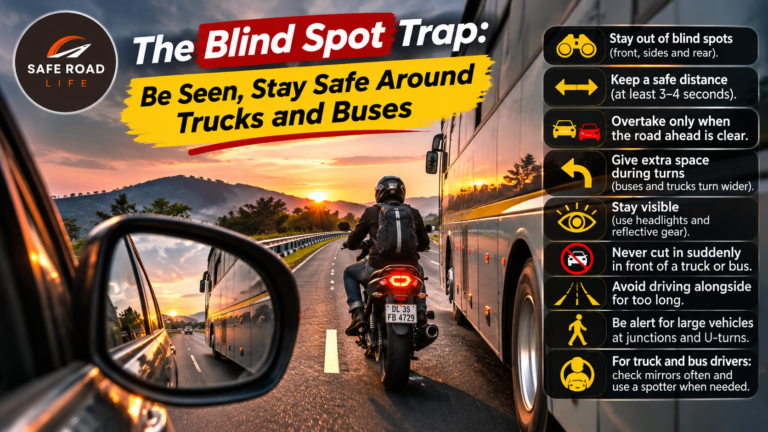
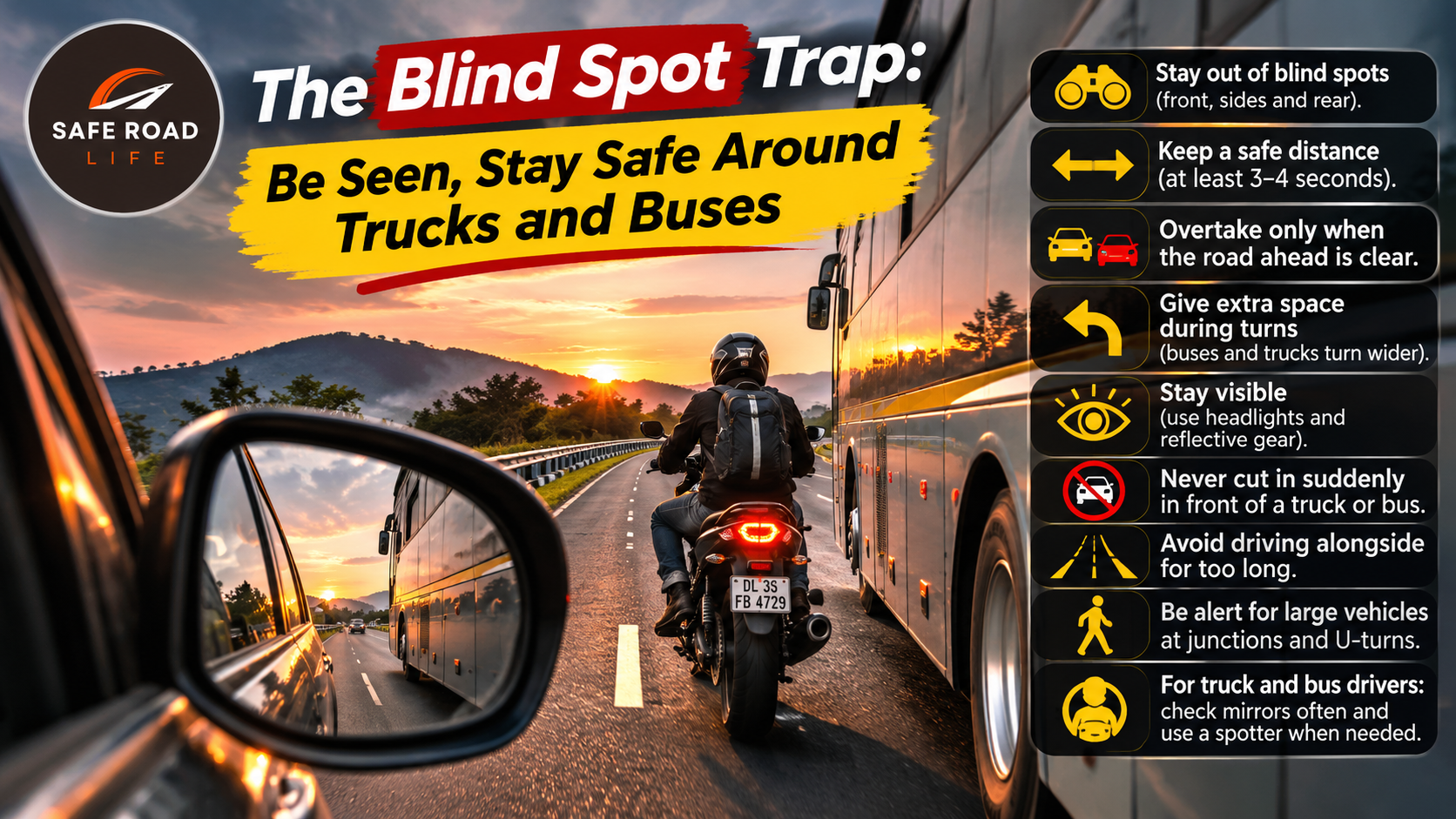
A truck or bus driver may be sitting high above the road, but that does not mean they can see everything around the vehicle. Large vehicles have blind spots at the front, rear and along both sides. A car, motorcycle, cyclist or pedestrian can disappear from the driver’s view in seconds.
These hidden areas are often called “No-Zones”. The danger is not limited to highways: buses and delivery trucks operate on crowded city streets, near schools, markets, bus stops and residential roads. Knowing where not to position yourself can prevent a devastating collision.
Why blind spots around heavy vehicles are so dangerous
Large trucks and buses are longer, taller and heavier than passenger cars. Their size affects visibility, turning space and stopping distance. The US Federal Motor Carrier Safety Administration (FMCSA) advises drivers to avoid lingering in a large vehicle’s blind spots, leave extra room and anticipate wide turns. It also reminds truck and bus drivers to check mirrors regularly and scan well ahead.
A useful reminder for other road users is: if you cannot see the heavy-vehicle driver in the relevant side mirror, do not assume the driver can see you. Mirror visibility is only a practical warning—not a guarantee that you are visible in every situation.
Where are the four major No-Zones?
- Front: A close-in area ahead of the cab may be hidden from the driver’s direct view.
- Rear: The area immediately behind a truck or bus can be difficult or impossible for the driver to see.
- Left side: A long side blind spot can hide a car, motorcycle or cyclist travelling alongside.
- Right side: The passenger-side blind area can be especially hazardous during lane changes and turns.
The exact size and shape of blind spots vary with vehicle design, mirrors, camera systems, load and road conditions. Never rely on a fixed distance or assume that a particular position is always visible.
9 rules to stay safe around trucks and buses
1. Never linger beside a heavy vehicle
Avoid travelling for a long time alongside a truck or bus. If it is safe, maintain a steady position where you can be seen, or move ahead without speeding or cutting in. Do not stay beside the cab or trailer where the driver may lose sight of you.
2. Overtake only when you have a clear view
Pass only where overtaking is permitted and the road ahead is clear. Signal, check mirrors and blind spots, and complete the manoeuvre safely without lingering beside the vehicle. Never weave through traffic or overtake from the side where visibility and road rules make it unsafe.
3. Do not cut in immediately after overtaking
Wait until you can see the full front of the truck or bus in your rear-view mirror before moving back into its lane, and leave a generous gap. Heavy vehicles need more distance to respond and stop, so cutting in sharply can remove their safety margin.
4. Never tailgate a truck or bus
Following too closely blocks your view of the road and places you in a rear blind area. You may not see hazards, brake lights or sudden traffic changes in time. Keep a safe following distance and increase it in rain, at night and on downhill stretches.
5. Give turning vehicles plenty of room
A long vehicle may need to move wide before making a turn. Never squeeze between a turning truck or bus and the kerb, footpath or roadside barrier. Watch its indicators, anticipate its movement and wait until the turn is complete.
6. Stay clear when a heavy vehicle reverses
Never walk, cycle or drive directly behind a reversing truck or bus. The driver may not see you, even with mirrors or a camera. Keep well away, make eye contact only when safe and follow the directions of a trained spotter where one is present.
7. Do not stop close behind a truck on an incline
Leave extra space when traffic stops on a slope. A heavy vehicle may roll backwards slightly when moving off. Avoid stopping close to its rear and never attempt to squeeze into the gap.
8. Be especially careful on two-wheelers
Motorcyclists and cyclists are more exposed and can be harder to detect in mirrors. Avoid riding beside a heavy vehicle, stay out of its turning path and do not attempt to pass at a junction or in slow, crowded traffic. Use lights and reflective gear when visibility is poor.
9. Heavy-vehicle drivers must check before every manoeuvre
Truck and bus drivers should adjust mirrors before departure, check them frequently, signal early and scan ahead for hazards. Before changing lanes, turning or reversing, use the vehicle’s prescribed mirror and camera checks. Where visibility is restricted, stop and use a trained spotter rather than guessing.
Heavy-vehicle driver checklist
- Adjust all mirrors before starting the trip.
- Check cameras, sensors and warning systems where fitted.
- Inspect mirrors and camera lenses for dirt, damage or obstruction.
- Scan mirrors frequently and look well ahead for developing hazards.
- Signal early and slow down before turns.
- Use a trained spotter for reversing when visibility is restricted.
- Never assume a blind spot is clear—verify before moving.
Sharing the road is a shared responsibility
Heavy-vehicle drivers must manage blind spots, turning space and stopping distance. Other road users must avoid No-Zones, give large vehicles room and resist the temptation to squeeze through a narrow gap. A few seconds of patience can prevent a lifetime of regret.
Remember: if you cannot see the driver, the driver may not see you. Stay visible, stay clear and share the road responsibly.
DRIVE SAFE. STAY SAFE.
@SafeRoadLife
Sources and further reading
- Federal Motor Carrier Safety Administration – Tips for Passenger Vehicle Drivers
- Federal Motor Carrier Safety Administration – Tips for Truck and Bus Drivers
- SAAQ (Québec) – Visibility Around Heavy Vehicles
- Federal Motor Carrier Safety Administration – Safe Driving Around Commercial Motor Vehicles
Explore more practical advice in our SafeRoadLife Safety Guides.
About the Author