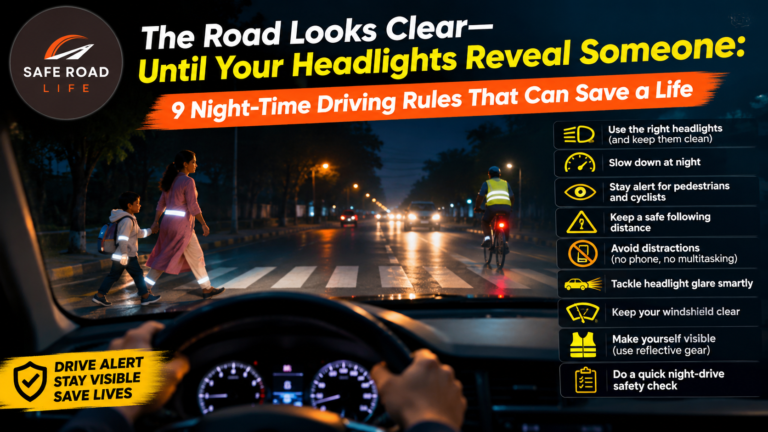
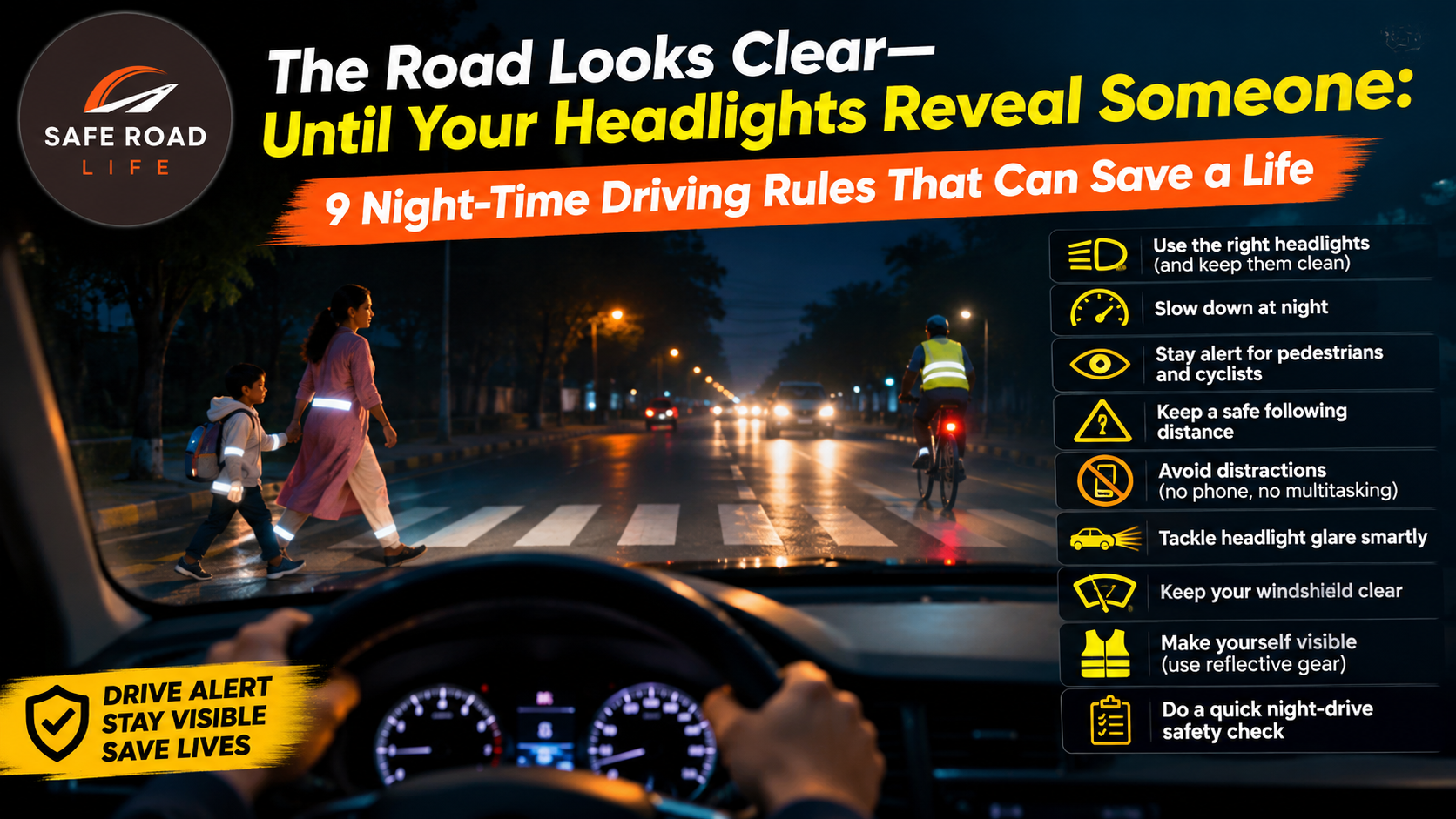
A road can look empty at night and still be full of danger. A pedestrian in dark clothing, a cyclist without adequate lights, a motorcyclist in a blind spot or a person crossing between parked vehicles may become visible only when there is very little time left to react.
Night driving is not simply daytime driving with headlights switched on. Reduced visibility, glare, fatigue and misjudgement can combine to turn an ordinary journey into a life-changing crash. The safest response is to slow down, look further ahead and expect people to be present—even when you cannot see them immediately.
Why night-time road safety deserves more attention
The World Health Organization estimates that road traffic crashes kill approximately 1.16 million people worldwide each year. More than half of road deaths involve vulnerable road users, including pedestrians, cyclists and motorcyclists. These road users have little physical protection when a vehicle strikes them.
Low-light conditions make it harder for drivers to detect movement, judge distance and recognise hazards early. Recent road-safety campaigns have also highlighted the danger of earlier sunsets and reduced visibility for people walking and cycling. The lesson applies well beyond one season or country: visibility must never be taken for granted.
9 night-time driving rules every driver should follow
1. Reduce speed before visibility reduces
Do not drive at the same speed simply because the road limit allows it. Your speed must allow you to stop safely within the distance you can clearly see. Slow down near markets, bus stops, residential streets, junctions, schools and unlit stretches.
2. Use high beam responsibly
High beam can help on dark, empty roads, but it can blind oncoming drivers and affect vehicles ahead. Dip your headlights when approaching or following other traffic, and use low beam in well-lit areas. Never use high beam to pressure another road user.
3. Keep your windscreen, mirrors and lights clean
Dust, fingerprints, scratches and moisture scatter light and increase glare. Clean the windscreen inside and out, check mirrors and make sure headlights, tail-lamps, indicators and brake lights work properly before a night journey.
4. Look beyond the vehicle directly ahead
Scan the road edges, footpaths, parked vehicles, junctions and gaps between traffic. Watch for movement, not just illuminated objects. A pedestrian may step out from behind a stationary vehicle, while a cyclist may approach from the edge of the carriageway.
5. Expect pedestrians at crossings and bus stops
Approach zebra crossings, intersections, bus stops and crowded areas at a speed that allows you to stop. Be especially alert when a bus or large vehicle has stopped: people may cross in front of it or emerge from behind it. Give pedestrians enough time and space to cross safely.
6. Do not stare into oncoming headlights
Glare can temporarily reduce your ability to see. Avoid looking directly at bright headlights; keep your attention on your lane and use the road edge as a visual guide when appropriate. If glare, rain or fog makes visibility poor, reduce speed and increase following distance.
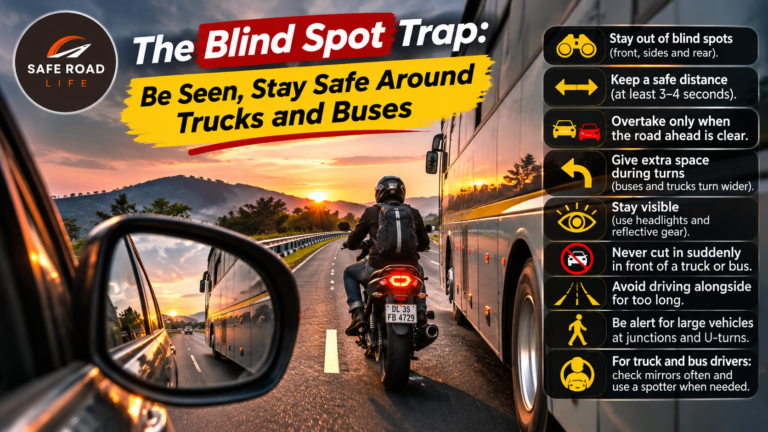
7. Give cyclists and motorcyclists extra space
Two-wheelers can be harder to judge at night, especially when their lights are obscured or the road is wet. Check mirrors and blind spots before changing lanes or turning. Overtake only when you have a clear view and sufficient room; never squeeze past a rider.
8. Never drive through fatigue
Late hours, long shifts and monotonous roads can reduce alertness. Warning signs include repeated yawning, heavy eyelids, drifting from the lane and missing road signs. Stop somewhere safe and rest. Opening a window or turning up music is not a reliable substitute for sleep.
9. Treat rain, fog and unlit roads as a warning
Wet surfaces reflect light, while fog and rain reduce the distance you can see. Use the appropriate lights, avoid sudden braking or steering and leave a larger gap. If conditions become too dangerous to continue, pull over at a safe location and wait for visibility to improve.
A 60-second night-drive safety check
- Headlights, tail-lamps, brake lights and indicators are working.
- Windscreen, mirrors and windows are clean.
- Tyres are in good condition and correctly inflated.
- Seat belts are fastened by everyone in the vehicle.
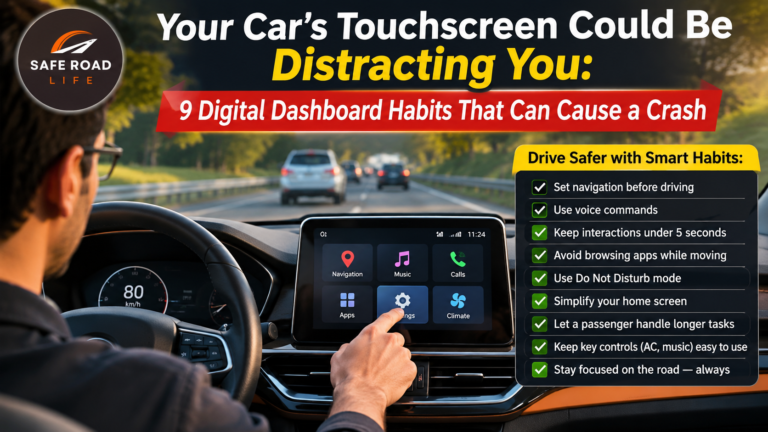
- Phone is on silent or Do Not Disturb and navigation is set before moving.
- Speed and following distance match the visibility and road conditions.
- Driver is alert, rested and fit to drive.
For pedestrians and cyclists: help others see you
Road safety is a shared responsibility. When walking at night, use footpaths and designated crossings wherever available, pause before stepping into the road and make sure approaching drivers have seen you. Wear reflective or light-coloured clothing when possible. Cyclists should use functioning front and rear lights and reflective elements, and ride predictably.
One final thought: drive for the distance you can see
At night, the most dangerous hazard may be the one your headlights have not revealed yet. A few kilometres per hour less, a careful scan and a little more patience can give you the time needed to avoid a tragedy. Do not assume the road is clear just because it looks clear.
DRIVE SAFE. STAY SAFE.
@SafeRoadLife
Sources and further reading
- World Health Organization – Road safety: global facts and risk factors
- Metropolitan Washington Council of Governments – Darker days ahead bring increased risk of traffic fatalities (6 November 2026)
- World Health Organization – Road traffic injuries
Explore more practical advice in our SafeRoadLife Safety Guides.
About the Author