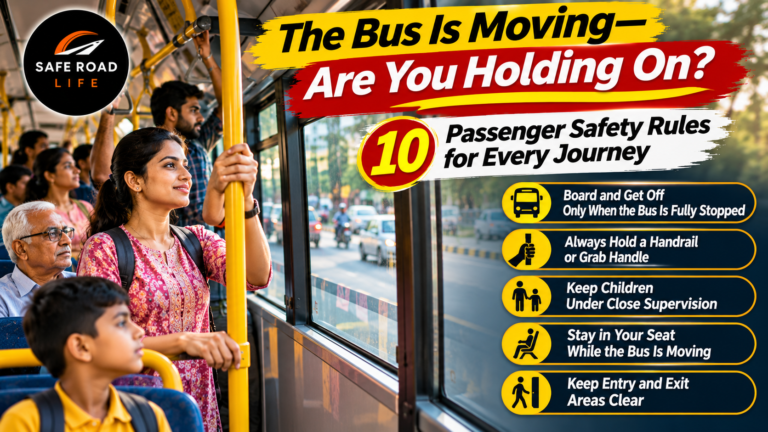
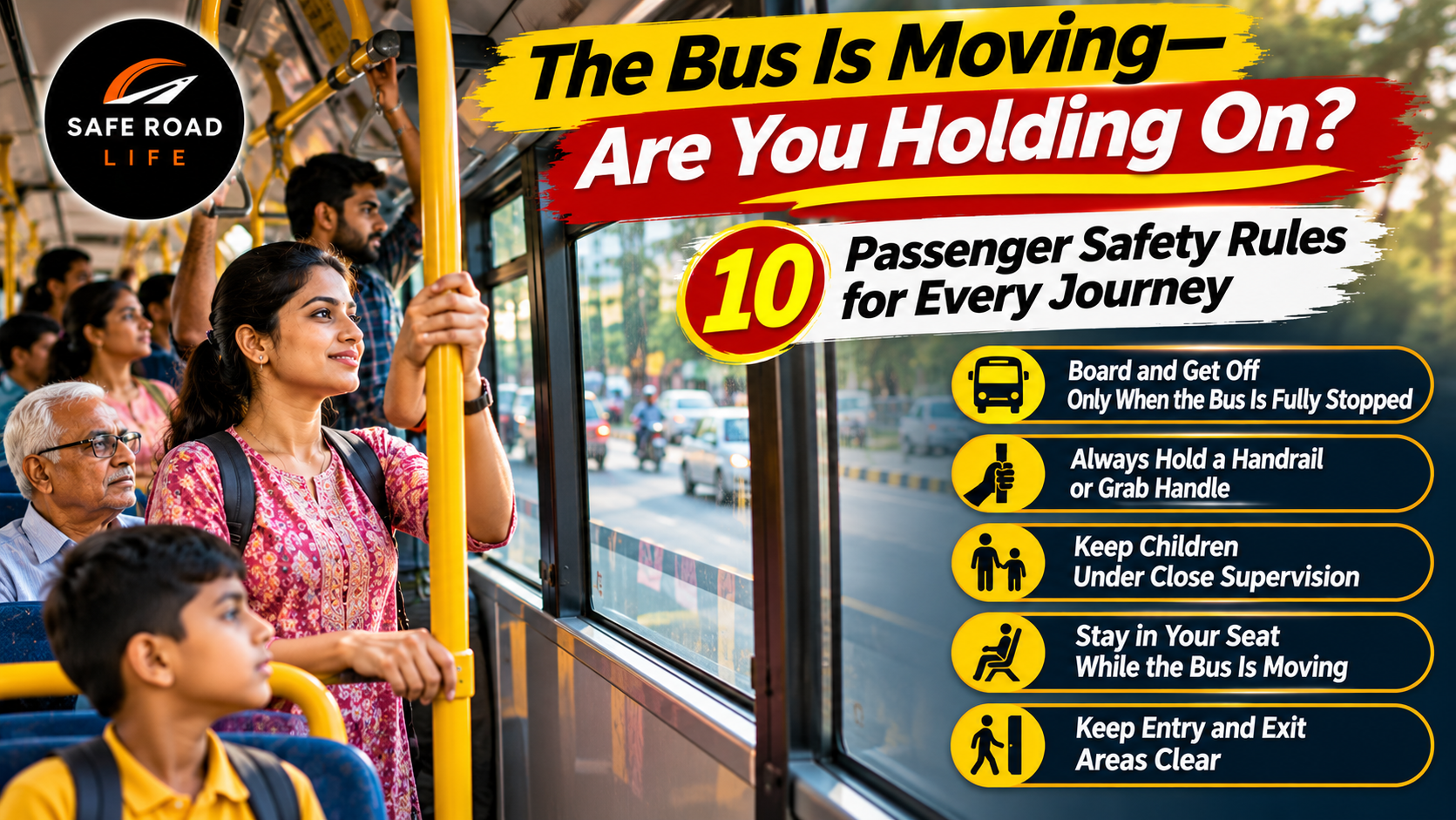
A bus pulls away from the stop. Someone is still finding a seat. Another passenger is standing near the door with a phone in one hand and a bag in the other. Then the driver brakes suddenly.
For passengers, a bus journey is not risk-free simply because someone else is driving. Falls, door entrapment, unsafe boarding and sudden movement can cause serious injuries—especially to children, older adults, pregnant passengers and people with reduced mobility.
Safe travel is a shared responsibility. These ten rules can help you board, travel and get off a bus more safely, whether you use a city bus, an electric bus or an intercity service.
1. Wait at the designated stop—and stand back from the kerb
Wait where the driver can see you and where the bus is authorised to stop. Stand back from the edge of the road as the bus approaches. Never run alongside a moving bus, chase it into traffic or try to board from the roadway.
In India, passenger conduct rules and local transport instructions generally require boarding and alighting at designated or authorised stops. Follow the instructions applicable to your service.
2. Let passengers get off before you board
Do not push into the doorway while people are trying to exit. Stand to one side, allow passengers to alight, then board in an orderly manner. This reduces crowding, trips on the steps and conflict at the entrance.
Do not board through an exit-only door or use a door that the operator has marked as unavailable for boarding.
3. Never board or get off while the bus is moving
Wait until the bus has come to a complete stop and the doors have opened. Do not jump off because the bus is slowing down, and never try to squeeze through closing doors. A moving bus can pull you off balance or trap clothing, a bag or a limb.
If the bus has already left the stop, do not run after it or grab its bodywork. Wait for the next service or use a safe, authorised alternative.
4. Use handrails and watch every step
Hold the handrail while stepping up or down. Watch the gap between the pavement and the bus floor, and be especially careful in rain, on wet footwear or when carrying luggage. Keep one hand free where possible so you can hold the rail securely.
If you drop a phone, ticket or other item near the wheels, do not reach underneath the bus. Alert the driver or staff and ask for help.
5. Find a seat—or secure a firm handhold before the bus moves
If a seat is available, sit down promptly without rushing. If you must stand, hold a fixed handrail or suitable strap with a secure grip. Stand in the designated passenger area, away from the doors and clear of the driver’s controls.
Do not stand on the steps, footboard or in a doorway. Never lean against a door or hold an external part of the bus while travelling.
6. Prepare for sudden braking and turns
Even a careful driver may need to brake suddenly to avoid a collision. When seated, keep your feet on the floor and remain properly positioned. When standing, keep your knees relaxed, feet apart for balance and one hand firmly on a handhold.
Avoid walking through the bus while it is moving. Do not use your phone in a way that distracts you from maintaining balance or noticing what is happening around you.
7. Keep bags, clothing and personal items clear of doors
Keep backpacks, shopping bags, dupattas, scarves, loose clothing and luggage away from moving doors and the aisle. A strap or loose item caught in a door can create a dangerous situation as the bus pulls away.
Place smaller bags securely between your feet when standing, without blocking other passengers or emergency access. Keep aisles and exits clear.
8. Give children and vulnerable passengers extra protection
Keep children close to you at the stop, while boarding and throughout the journey. Hold a young child’s hand and never allow children to play near the doors or move around an approaching bus.
Older adults, pregnant passengers, people with disabilities and anyone with limited mobility should be given time and space to board, sit down or secure a handhold before the bus moves. If you need assistance, tell the driver or conductor before setting off where possible.
9. Signal your stop early and remain seated until the bus stops
Press the stop button or inform the conductor with enough time for the driver to pull in safely. Do not rush towards the door while the bus is still moving. Wait until it has stopped completely, then use the designated exit and hold the handrail as you step down.
After getting off, move away from the bus and check for traffic before crossing. Never cross immediately in front of or behind a bus without first checking that the road is clear. A stationary bus can hide approaching vehicles and pedestrians.
10. Speak up about unsafe conditions—but never distract the driver
If you notice a door that will not close properly, a dangerous obstruction, overcrowding, smoke, a strong burning smell or another urgent hazard, alert the conductor or driver when it is safe to do so. In an emergency, follow crew instructions and move away from danger if possible.
Do not argue with, touch or distract the driver while the bus is moving. Report non-urgent complaints through the operator’s official helpline or grievance channel after the journey.
A 20-second passenger safety checklist
- Wait at an authorised stop and stand back from the kerb.
- Let passengers exit before boarding.
- Board and alight only after the bus has fully stopped.
- Use handrails and watch the step and pavement gap.
- Sit down or hold a secure handhold before the bus moves.
- Keep bags, clothing and children clear of doors.
- Signal your stop early and wait for a complete stop before moving.
- After alighting, check traffic before crossing.
Frequently asked questions
Is it safe to stand near the bus door while travelling?
No. Keep clear of the door area and stand in the designated passenger space, holding a handrail or strap. A doorway is not a safe place to stand because doors can open, close or malfunction and passengers need clear access.
What should I do if my bag or clothing gets caught in a bus door?
Alert the driver or conductor immediately and clearly. Do not pull yourself towards the bus or try to force the door while the vehicle is moving. The crew should stop the vehicle and follow the appropriate safety procedure.
Should I stand up before the bus reaches my stop?
Where possible, remain seated until the bus has stopped. Signal your stop early so the driver has time to pull in. If you need assistance, ask the crew or another passenger rather than walking through a moving bus.
What should passengers do during sudden braking?
If seated, keep your feet on the floor and remain in your seat. If standing, hold the handrail firmly, keep your balance and avoid moving around. Never assume the bus will always be able to brake gently.
The final message: a safe bus journey begins with every passenger
A bus driver controls the vehicle, but every passenger can help prevent falls and boarding injuries. Wait patiently. Hold firmly. Keep doors clear. Never rush a moving bus. Small habits protect not only you, but also the person standing beside you.
Do not rush to catch a bus. Do not risk a life to save a minute.
DRIVE SAFE. STAY SAFE.
@SafeRoadLife
Sources and further reading
- Transport for NSW: Safety when travelling by bus
- Meghalaya Transport Department: Road safety guidance for bus passengers
- Uttar Pradesh Police: Road safety guidance—travelling by bus
- Singapore Ministry of Transport: Smooth braking and passenger safety, 26 September 2025
- Press Information Bureau, Ministry of Road Transport and Highways: Divyang-friendly features in buses, 30 December 2019
- Office of Transport Safety Investigations: Bus door serviceability safety alert
About the Author