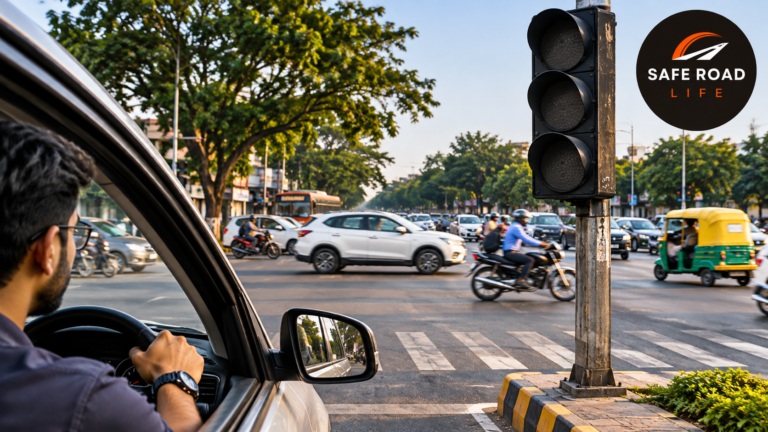
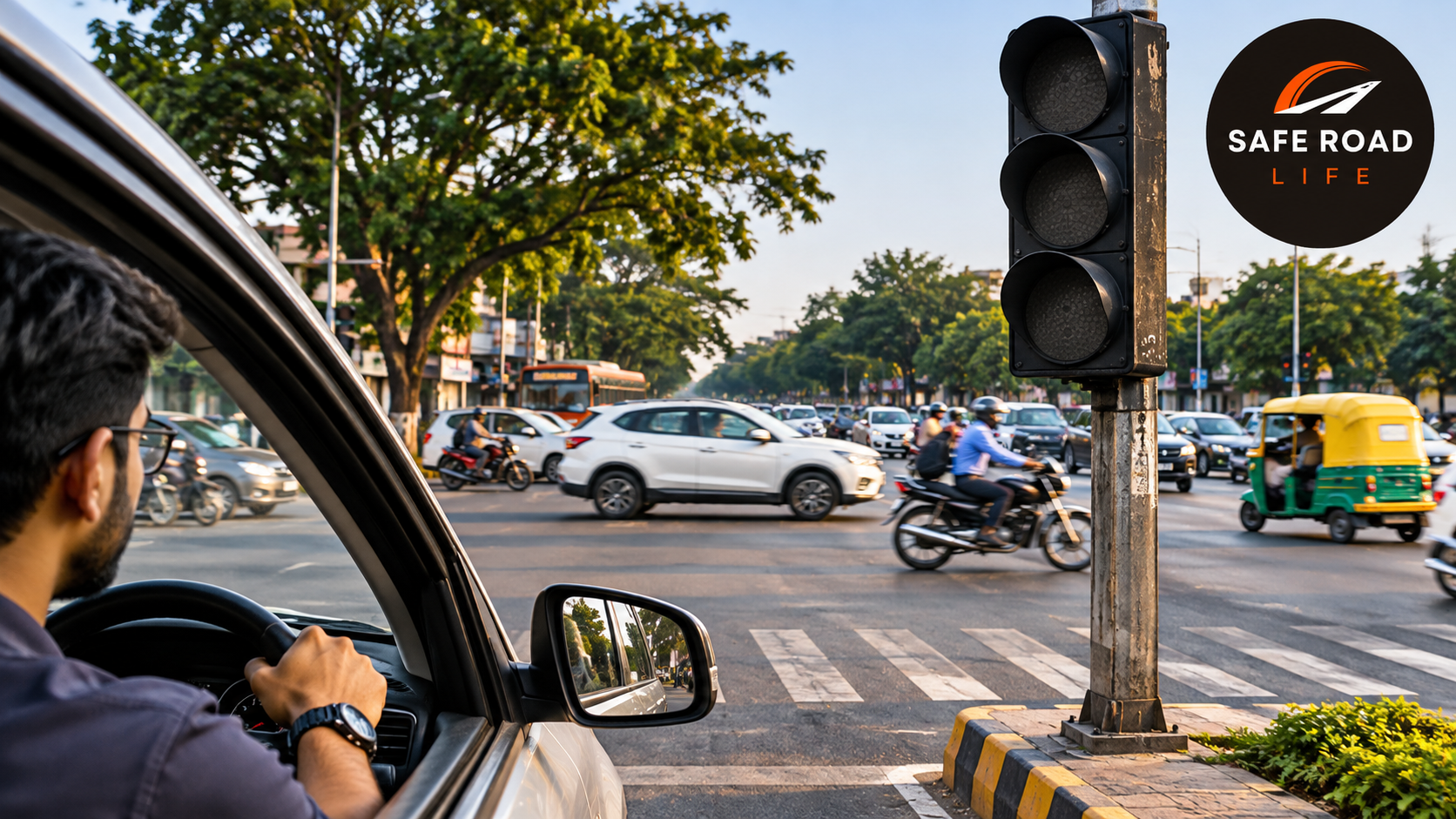
You approach a busy junction and notice something unusual: every traffic signal is dark. Cars keep rolling forward. Motorcycles squeeze through gaps. Someone honks from behind. A pedestrian hesitates at the kerb.
A failed traffic light does not mean the road has become a free-for-all. It means every road user must become more patient, more observant and more predictable. One impatient decision at an uncontrolled junction can turn a routine journey into a serious crash.
Why a failed signal is so dangerous
Traffic lights normally organise conflicting movements by giving different streams their turn. When the system stops working, drivers may not know who should move first. Some may assume the main road gives them automatic priority; others may accelerate because they see a gap. Large vehicles can hide smaller road users, and pedestrians may be left unsure when it is safe to cross.
The Motor Vehicles (Driving) Regulations, 2017 require drivers to slow down at intersections and not enter when doing so could endanger people already crossing or moving into the junction. They also set out right-of-way principles for intersections. A dark signal is a reason to increase caution—not to claim priority.
9 rules to follow when traffic lights are not working
1. Slow down well before the junction
Do not approach at normal cruising speed expecting the signal to control the crossing. Ease off the accelerator early, cover the brake and prepare to stop. If visibility is restricted by buildings, parked vehicles or a queue, reduce speed further.
2. Follow the traffic police or authorised controller
If a police officer or authorised person is directing traffic, follow those instructions. Do not rely on the dark signal, another driver’s gestures or your own assumption when an authorised person is controlling the junction. Watch for clear hand signals and move only when directed.
3. Understand right of way—never guess
Under the 2017 Driving Regulations, traffic approaching from the right generally has right of way at an intersection, subject to exceptions such as a vehicle emerging from a minor road onto a major road. Road signs and the actual layout also matter. If the priority is unclear, stop at a safe position, observe, and proceed only when the way is clearly safe. Never force your way through because you believe you are entitled to go first.
4. Do not block the centre of the intersection
Before entering, check whether there is enough space to clear the junction completely. If traffic ahead is stationary, wait behind the stop line or before the crossing. A vehicle stranded in the middle can block emergency vehicles, trap cross-traffic and put pedestrians in danger.
5. Give pedestrians and cyclists room
Look carefully at every corner and crossing. Children, older people and people with disabilities may need more time to cross. Stop well before the crossing and never edge your vehicle into a pedestrian’s path. Cyclists can be difficult to see between larger vehicles, so check both sides before turning.
6. Make your intentions clear
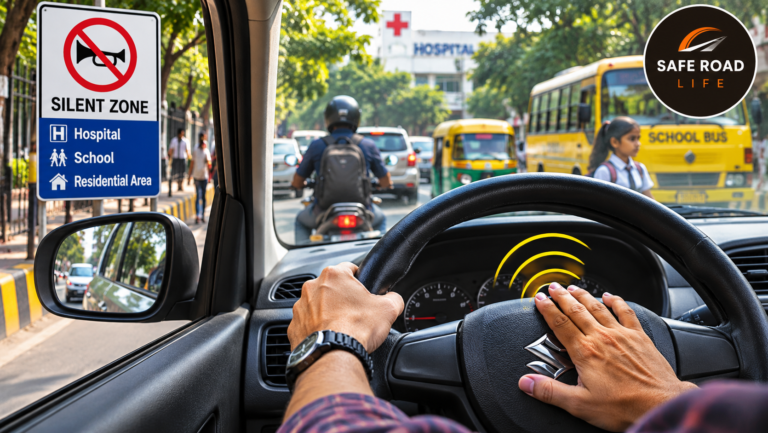
Use indicators early before turning or changing position. Keep your lane and avoid sudden moves. Do not use the horn as a substitute for checking, communicating or giving way. A short warning may alert someone to an immediate danger, but repeated honking cannot establish who has priority.
7. Watch for motorcycles and vehicles hidden by larger traffic
A bus, truck or SUV can conceal a motorcycle, bicycle or pedestrian approaching from the other side. Do not move simply because the first visible lane appears clear. Check again for a second stream of traffic before crossing or turning.
8. Never race another driver into the gap
At a failed signal, several drivers may try to move at once. Avoid competitive starts, squeezing between vehicles or overtaking while approaching the junction. Make eye contact where possible, but do not treat it as a guarantee. Wait for a clear, safe opportunity and let one movement finish before entering another’s path.
9. Report the faulty signal
Once safely stopped or after completing your journey, report the malfunction to the local traffic police or road authority. Share the exact junction, direction of approach and whether the lights are completely off or displaying an abnormal pattern. Do not use your phone while driving or stop in a live lane to take photographs.
For fleet operators and professional drivers
Commercial drivers should be briefed not to treat a signal failure as permission to maintain speed or push through congestion. Fleet supervisors can include uncontrolled-junction scenarios in toolbox talks, remind drivers to protect pedestrian crossings and ensure that incidents involving defective signals are reported through the proper channel. A few minutes of delay is never a reason to put passengers or other road users at risk.
The safest rule is simple: patience before priority
A working signal tells traffic when to move. When it goes dark, safe movement depends on every road user slowing down, reading the junction and respecting others. Do not assume. Do not compete. Do not block the crossing. If you cannot see a safe way through, wait.
DRIVE SAFE. STAY SAFE.
@SafeRoadLife
References
- Ministry of Road Transport and Highways — Motor Vehicles (Driving) Regulations, 2017
- Telangana Police — Road Sense and junction precautions
- Delhi Traffic Police — Duties relating to defective traffic signals
About the Author