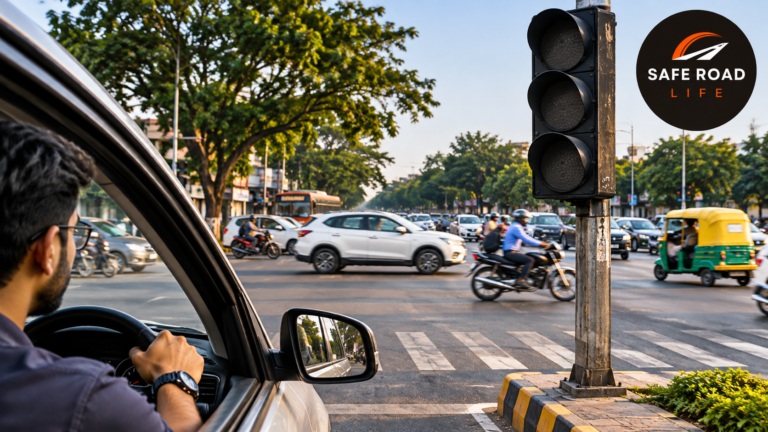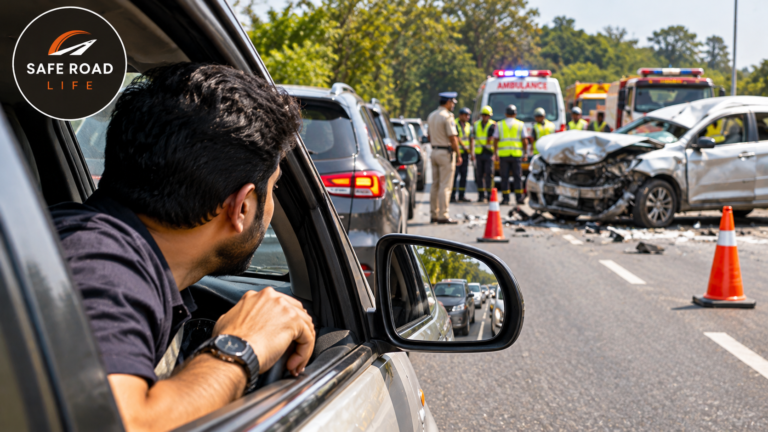
A driver approaches a busy junction. The signal is red, the queue is stationary, and the vehicle ahead has nowhere to go. Yet the horns begin—one after another, louder and longer, as if noise could move traffic. A few seconds later, a pedestrian steps into the road, a cyclist is startled, and a rider makes a hurried manoeuvre. The horn was meant to warn. Instead, it became part of the danger.
A horn is an important safety device, but it is not a tool for expressing impatience, claiming priority or forcing another road user to move. Used at the right moment, it can alert someone to an immediate risk. Used carelessly, it adds noise, stress and confusion to an already demanding road environment.
What a horn is—and what it is not
A short, timely warning can help when another road user may not have noticed your vehicle—for example, when approaching a blind bend on a narrow road, or when a person or vehicle is unintentionally moving into your path. The warning should be brief and proportionate, giving the other person time to understand and respond.
But a horn cannot replace safe speed, observation, braking distance or the duty to give way. It does not make an unsafe overtake safe. It does not give a driver the right to cross a red signal, push through a crowded junction or demand that pedestrians leave a crossing. A loud warning does not transfer responsibility to the person who hears it.
When honking creates more risk
Repeated honking in a traffic queue rarely solves the cause of the delay. It can distract drivers who are checking mirrors, watching pedestrians or listening for emergency vehicles. Sudden, aggressive noise can startle cyclists and two-wheeler riders, sometimes triggering an abrupt steering or braking reaction.
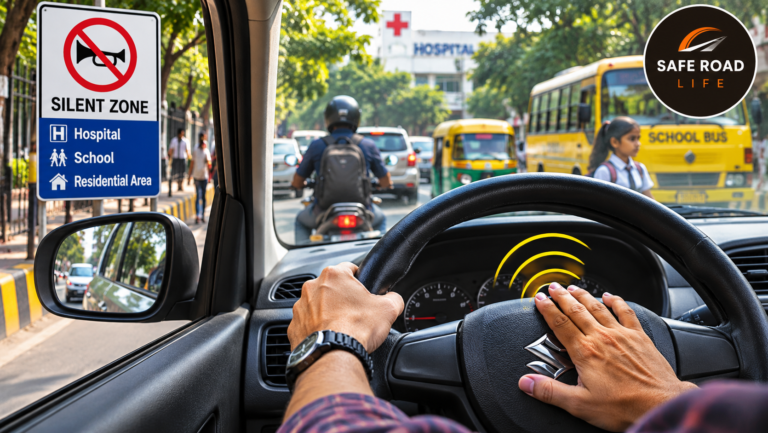
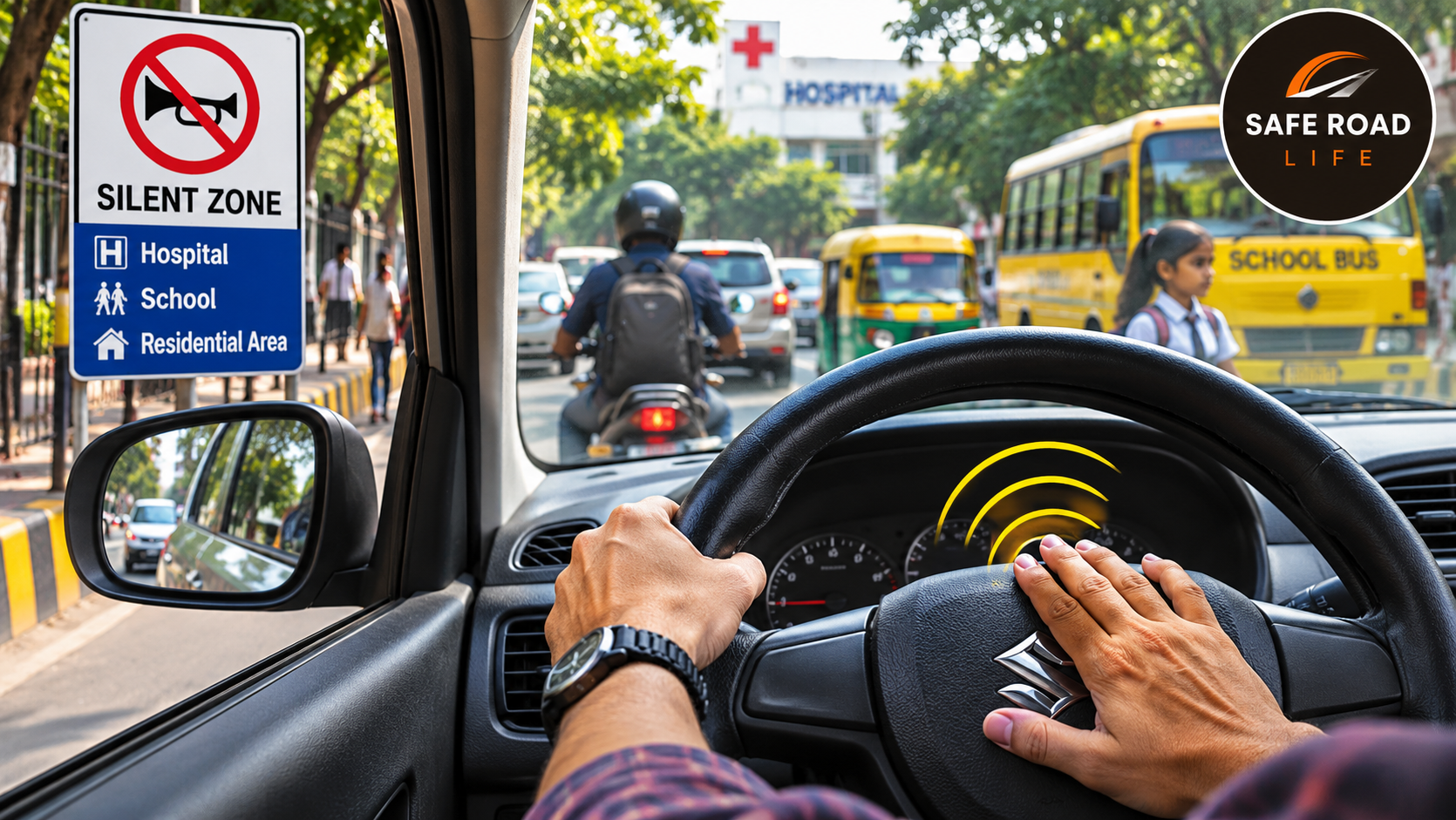
Unnecessary honking is especially harmful near hospitals, schools, residential streets and designated silence zones. It disturbs people who are ill, studying, resting or working. In dense urban areas, continuous noise also makes it harder to distinguish a genuine warning from the background of routine impatience.
Use the horn with judgement
Warn, do not intimidate. If a warning is genuinely needed, use a brief signal. Avoid holding the horn down or repeatedly sounding it at someone who has already acknowledged you.
Slow down first. Near blind corners, narrow lanes, market areas and places with limited visibility, reduce speed and be prepared to stop. A horn is not permission to maintain speed when you cannot see what lies ahead.
Never use noise to claim right of way. At junctions, pedestrian crossings and merging points, follow the applicable priority rules. Give way when required. Do not assume that sounding the horn makes another person responsible for avoiding you.
Do not honk at a stationary queue. If traffic is stopped, maintain a safe gap and wait. The vehicle ahead may be held by a signal, a pedestrian, an obstruction or an emergency. Pressing the horn cannot clear the road.
Be considerate around vulnerable road users. Avoid startling pedestrians, cyclists, older people and children with unnecessary or prolonged honking. Give them space and time. If a warning is essential, make it measured and allow room for a safe response.
Respect silence zones and local rules. Follow posted restrictions and the applicable requirements under the Noise Pollution (Regulation and Control) Rules, 2000, and the Central Motor Vehicles Rules. Do not use pressure horns or multi-toned horns where prohibited. A vehicle horn should never be treated as an entertainment or attention device.
What to do instead of honking
Good road communication begins before a warning is needed. Use indicators early, check mirrors and blind spots, maintain a predictable speed, leave adequate following distance and make eye contact where appropriate without assuming it guarantees that the other person has seen you. At night, use lights correctly. At a junction, slow down and make your intentions clear.
If another driver behaves aggressively, do not enter a contest of horns. Avoid gestures, retaliation and sudden manoeuvres. Create space when safe, keep your attention on the road and let the confrontation pass. Arriving safely matters more than winning an argument.
A quieter road can be a safer road
Every road user has a role in reducing unnecessary noise. Drivers can stop honking at signals, avoid using the horn to rush pedestrians, and ensure that their vehicle has a compliant warning device. Fleet operators can include responsible horn use in driver induction, toolbox talks and periodic safety observations. Passengers can also discourage drivers from treating the horn as a shortcut through congestion.
The next time traffic slows, pause before pressing the horn. Ask yourself whether there is a real and immediate safety reason to warn someone—or whether impatience is making the decision. A horn should communicate danger, not frustration.
DRIVE SAFE. STAY SAFE.
@SafeRoadLife
References
- Ministry of Road Transport and Highways (MoRTH), Government of India — Central Motor Vehicles Rules and vehicle requirements.
- Central Pollution Control Board (CPCB) — Noise pollution guidance and applicable rules.
- Legislative Department, Government of India — Noise Pollution (Regulation and Control) Rules, 2000.
About the Author