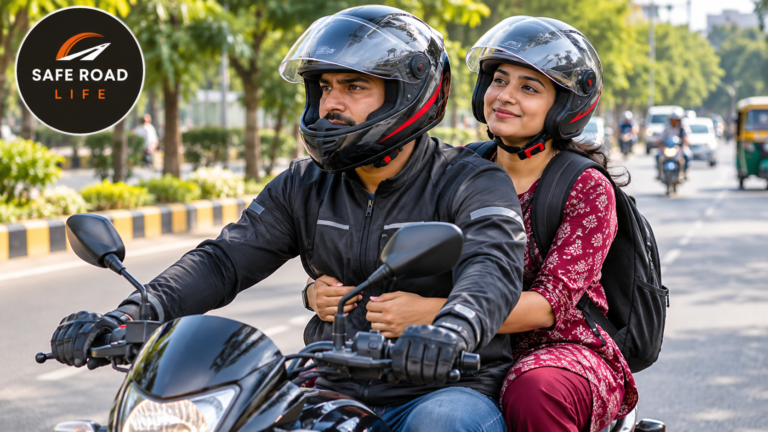
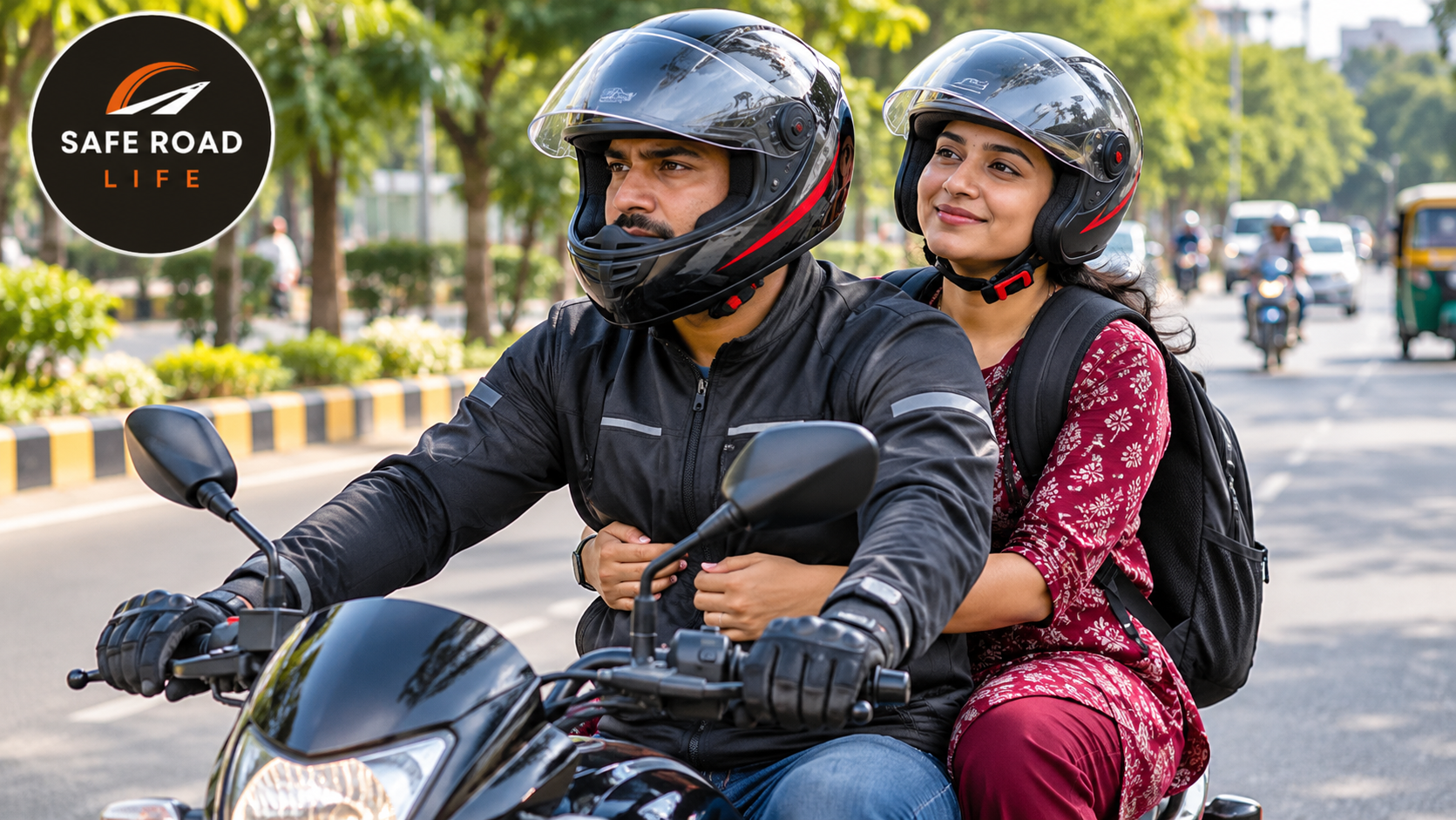
A motorcycle moves through traffic with two people on it. The rider watches the road ahead, but the passenger behind may be holding a bag, sitting sideways, balancing without foot support or wearing a helmet that is not properly fastened. To other road users, it is an ordinary sight. In a sudden stop or sharp turn, those small details can decide whether both people stay safely on the motorcycle.
A pillion passenger is not cargo. They are a person whose safety depends on the rider’s decisions and on their own understanding of how to travel securely. Yet passenger safety is often treated as an afterthought, even though a motorcycle’s balance, braking and handling change when another person is on board.
A helmet must protect the passenger too
Both rider and pillion passenger should wear a properly certified, correctly sized helmet that is securely fastened. A helmet resting loosely on the head or with the chin strap undone can come off during impact. The passenger’s helmet should fit their head—not simply be the spare helmet available under the seat.
Choose a helmet that meets the applicable Indian standards and is in sound condition. A helmet that has suffered a significant impact should be replaced in line with the manufacturer’s guidance, even if visible damage is limited. Do not compromise passenger protection because the journey is short or the road looks quiet.
Footrests are not optional decoration
The passenger should sit astride the motorcycle, face forward and keep both feet on the designated pillion footrests while the vehicle is moving. Letting feet hang, placing them near the wheel or exhaust, or riding with one foot unsupported can cause injury and interfere with balance. Never allow a passenger to sit sideways on a moving motorcycle on an ordinary road.
Before starting, check that the passenger can reach the footrests comfortably and that they are secure. If the motorcycle is not designed or equipped to carry a pillion safely, do not improvise a seating arrangement.
Getting on and off requires coordination
A passenger should mount or dismount only when the motorcycle is fully stopped, stable and in a safe place. The rider should communicate clearly, keep the motorcycle balanced and avoid moving off until the passenger is seated properly with both feet supported. A sudden shift of weight while the rider is balancing the machine can cause a fall, especially on uneven ground or in crowded traffic.
Passengers should not climb on while the motorcycle is moving or step off before it has stopped. Bags, loose clothing and dupattas should be secured well away from the chain, wheel and exhaust. A trailing item can become caught and pull the passenger off balance.
The rider must adjust to the extra weight
A pillion changes the motorcycle’s total weight and how it responds to acceleration, braking and steering. The rider should accelerate smoothly, leave more following distance and allow extra time to slow down. Sudden braking, sharp steering inputs and aggressive cornering can unsettle both people.
Approach bends at a controlled speed and avoid abrupt movements. The passenger should sit naturally, look ahead and move with the motorcycle rather than leaning unexpectedly in the opposite direction. A new or nervous passenger may need a simple explanation before the journey begins: hold securely, keep feet on the rests and avoid sudden body movements.
Never carry more people than the motorcycle is designed for
Triple riding is not a harmless way to save one journey. It can leave passengers without proper seating or foot support, interfere with the rider’s control and affect braking and stability. Follow the vehicle’s approved seating capacity and applicable traffic law. Do not allow children or adults to be squeezed into an unsafe position between the rider and the pillion.
Heavy backpacks or shopping bags should not hang from the passenger’s shoulders or interfere with their movement. Luggage must be secured so it cannot shift, touch the wheel or obstruct the rider. The motorcycle should never be loaded beyond its rated capacity.
Rain, night and poor roads make the passenger more vulnerable
Wet road markings, potholes, loose gravel and sudden braking are harder to manage with a passenger. Reduce speed, increase the gap from vehicles ahead and avoid abrupt manoeuvres. At night, use functioning lights and ensure that clothing or luggage does not cover the rear lamp or number plate. In poor visibility, postpone the trip if conditions make safe travel unreasonable.
Protective clothing matters for the passenger as much as the rider. Full-length clothing, sturdy footwear and gloves can reduce injury if a fall occurs. Sandals, loose scarves and garments that can catch in moving parts are poor choices for a motorcycle journey.
A safe ride begins with a conversation
Before moving, the rider should check the passenger’s helmet fit and strap, confirm that both feet can rest securely, explain how to hold on and agree that the passenger will not shift suddenly. The rider should also make sure the motorcycle’s tyres, brakes, lights and footrests are in good condition.
In India, the Motor Vehicles Act and Central Motor Vehicles Rules govern helmet use, passenger carriage and vehicle requirements. Riders should follow the current legal requirements and local enforcement directions; a short distance or familiar route does not create an exemption from safety.
Someone else’s safety is in your hands
When someone sits behind you, your responsibility grows. They cannot control your speed, choose your braking distance or see every hazard ahead. They trust you to ride within your ability, carry them only in a safe and lawful manner, and never treat their presence as an inconvenience.
Give your passenger a proper helmet, a secure seat and a smooth ride. Make sure they are ready before moving. The destination can wait a few seconds. The person behind you deserves to reach it safely.
DRIVE SAFE. STAY SAFE.
@SafeRoadLife
Sources
- Ministry of Road Transport and Highways, Government of India – Motor Vehicles Act and Central Motor Vehicles Rules
- National Highway Traffic Safety Administration – Motorcycle Safety
- World Health Organization – Helmets: A Road Safety Manual for Decision-Makers and Practitioners
- UK Highway Code – Rules for motorcyclists
About the Author